NVIDIA just locked in the memory supply it needs to keep the AI boom running for years, not quarters. On June 7, 2026, NVIDIA and SK hynix announced a multiyear technology partnership to co-develop next-generation memory for AI factories, spanning everything from Vera Rubin supercomputers to Jetson Thor robotics platforms. Here's what the deal covers, why memory has become the industry's real bottleneck, and what it means for anyone buying AI hardware or hardware-dependent stocks in 2026.

What NVIDIA and SK Hynix Actually Announced
NVIDIA founder and CEO Jensen Huang said in the official announcement that "AI factories are the engines of the next industrial revolution, and advanced memory is essential to their performance," adding that "together, we will codevelop the next generation of memory for AI factories and support the accelerating global expansion of AI infrastructure, from frontier model training to agentic and physical AI." SK Group chairman Chey Tae-won echoed that framing, noting the companies are "applying AI to how we design and manufacture semiconductors," language that signals this isn't just a supply contract but a genuine co-engineering effort. The partnership spans NVIDIA's Vera Rubin supercomputers, Vera CPUs, RTX Spark PCs and Jetson Thor robotics hardware, meaning SK hynix memory will now underpin nearly every tier of NVIDIA's product stack.
Old AI Bottleneck (GPUs) vs New AI Bottleneck (Memory)
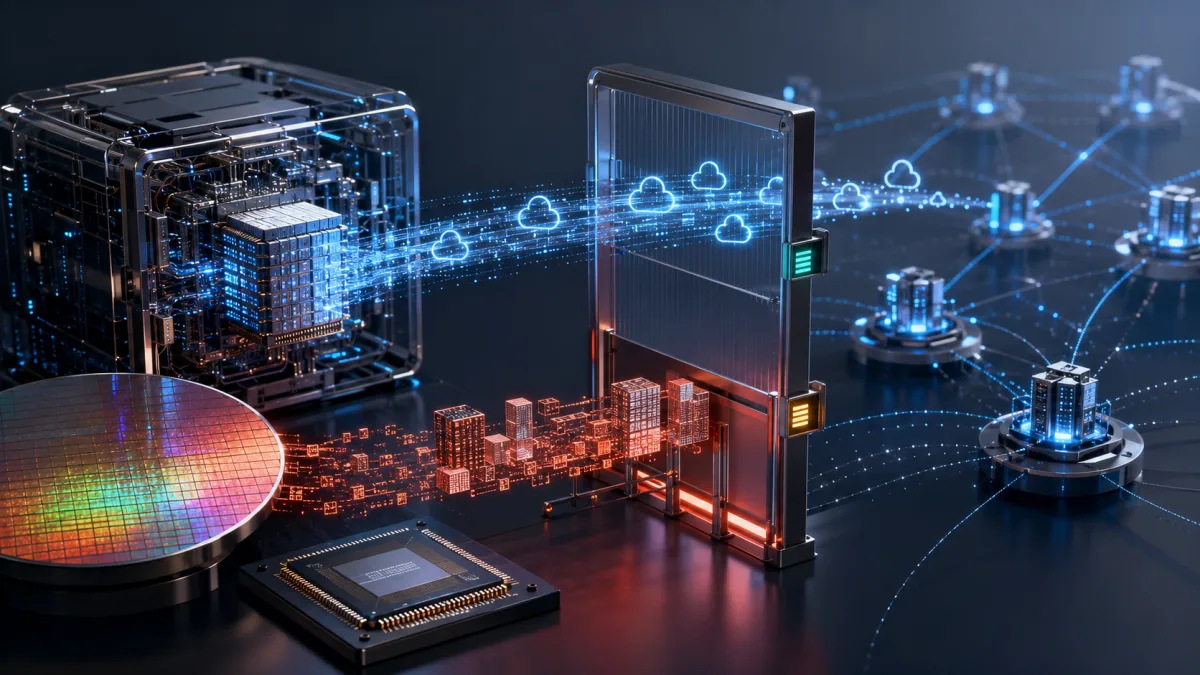
For the past three years, the entire AI hardware conversation centered on GPU scarcity, with NVIDIA unable to make chips fast enough to satisfy hyperscaler demand. That bottleneck is easing as production scales, but a new one has emerged: high-bandwidth memory (HBM), the specialized chips that feed data to GPUs fast enough to keep them from sitting idle. Compare the two shortages: GPU scarcity was primarily a manufacturing capacity problem NVIDIA could largely solve by expanding its own foundry relationships, while HBM scarcity depends entirely on a handful of memory makers, SK hynix, Samsung and Micron, each running years-long capital cycles to build new fabs. That's exactly why NVIDIA needed a formal multiyear commitment rather than just placing bigger purchase orders, similar to the infrastructure thinking we covered in HPE and NVIDIA's agentic AI factory buildout.

What's Actually Happening Behind the Deal
This partnership didn't come out of nowhere. SK hynix has already been NVIDIA's primary HBM supplier for its Hopper and Blackwell GPU generations, and this deal formalizes and extends that relationship years further into NVIDIA's roadmap, covering the upcoming Vera Rubin architecture. For SK hynix, locking in NVIDIA as a co-development partner rather than just a customer secures massive, predictable capital expenditure justification for new fab investment, at a moment when global memory prices have been climbing due to surging AI demand. The knock-on effect is already visible in consumer electronics: RAM and storage prices for laptops and phones have risen as manufacturers compete with AI infrastructure buyers for the same memory production capacity, a dynamic we've also tracked in coverage of AI data centers straining power and supply chains.
What Comes Next in the AI Hardware Race
Watch for Samsung and Micron to announce their own expanded hyperscaler and chipmaker partnerships in response, since none of the big three memory makers can afford to be left out of the AI supercycle. Qualcomm's reported pursuit of AI chip startup Tenstorrent, and continued speculation about further vertical integration moves from Google, Amazon and Microsoft, suggests every major player is racing to secure its own slice of the AI hardware stack rather than depending purely on NVIDIA and its partners. Expect memory pricing pressure to persist through at least 2027 as new fab capacity takes years to come fully online.
There's also a geopolitical layer worth watching. SK hynix's expanded role deepens South Korea's strategic importance to the US AI supply chain at exactly the moment Washington is tightening export controls on advanced chip technology to China, meaning any future US-Korea trade friction could ripple directly into NVIDIA's product roadmap. Analysts tracking the sector expect this to become a recurring theme in earnings calls throughout the rest of 2026, as more of the AI hardware stack gets explicitly tied to specific countries' manufacturing capacity rather than treated as a globally fungible resource.
What This Means for You
If you're buying a new laptop, phone or gaming PC in the next 12 months, expect memory-related price increases to stick around, this isn't a temporary supply hiccup. If you invest in semiconductor stocks, this deal reinforces SK hynix and NVIDIA as the two most entrenched names in AI infrastructure, though it also raises the stakes for competitors trying to break into the same supply chain. And if you work in enterprise IT procurement, budget for continued AI infrastructure cost increases rather than expecting prices to ease anytime soon.
Frequently Asked Questions (FAQs)
Q: What exactly did NVIDIA and SK hynix agree to?
A: A multiyear technology partnership to co-develop next-generation memory for AI infrastructure, covering NVIDIA's Vera Rubin supercomputers, Vera CPUs, RTX Spark PCs and Jetson Thor robotics platforms, announced on June 7, 2026.
Q: Why is memory the new bottleneck instead of GPUs?
A: GPU manufacturing capacity has expanded significantly, but high-bandwidth memory production depends on a small number of makers running multi-year fab construction cycles, making memory supply harder to scale quickly compared to chip fabrication alone.
Q: Will this partnership make consumer electronics more expensive?
A: Likely yes, at least in the near term. Rising demand for AI-grade memory has already pushed up RAM and storage prices for laptops and phones as manufacturers compete with AI infrastructure buyers for the same production capacity.
Q: Is Samsung part of this NVIDIA-SK hynix deal?
A: No, this specific partnership is exclusively between NVIDIA and SK hynix. However, analysts expect Samsung and Micron to pursue their own expanded partnerships with major AI chipmakers in response to this deal.
Q: How does this affect AI chip investment in India?
A: While the deal itself is a US-Korea partnership, it reinforces the strategic importance of semiconductor supply chains globally, adding urgency to India's own chip investments like the CG Semi facility and the broader India Semiconductor Mission.
NVIDIA and SK hynix just bet years of capital on the idea that AI infrastructure demand isn't slowing down, and given how tight memory supply already is, that bet looks safe for now. Watch how competitors respond, and expect the price of anything with a chip in it to reflect this new memory reality for a while. Let us know if you've noticed memory price hikes on your own recent purchases.