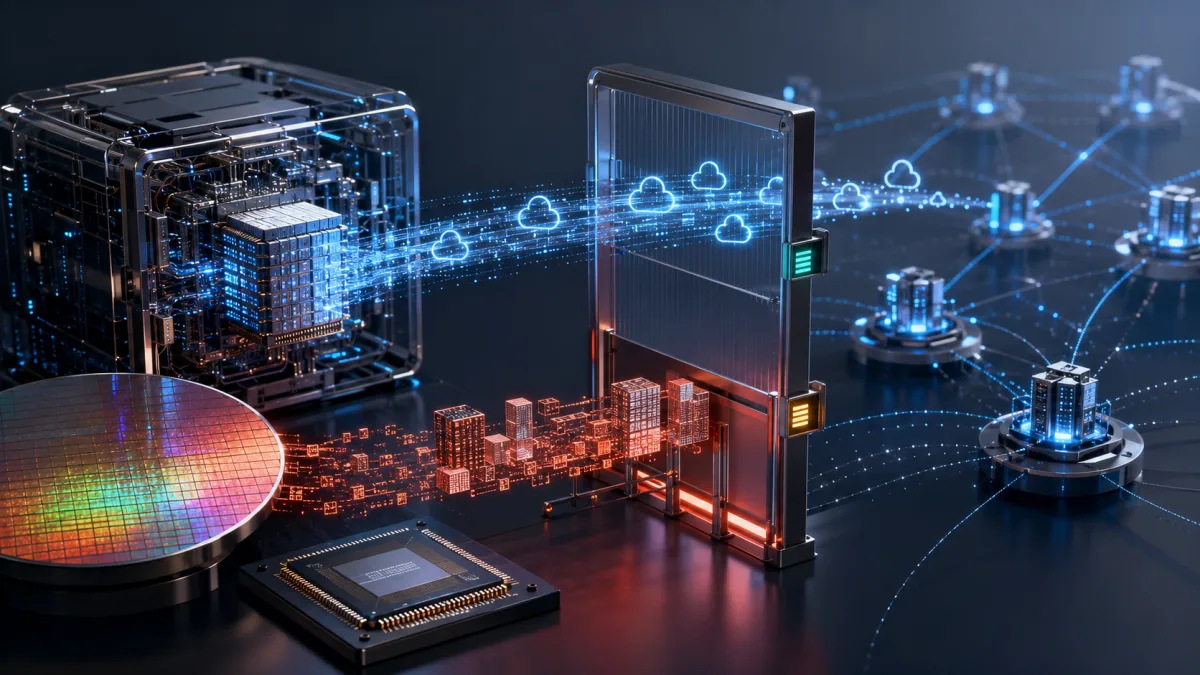
The Federal Energy Regulatory Commission (FERC) issued an order in June 2026 directing US grid operators to fast-track interconnection requests from AI data centers — specifically those that can demonstrate readiness to connect within a defined timeline. The decision cuts years off the approval process for new data center power connections. It's a major win for AI companies burning through electricity at unprecedented rates. And it opens a critical set of questions about energy costs, grid stability, and environmental tradeoffs that are only beginning to be answered.
What FERC Actually Ordered — and Why It Matters
The US electrical grid's interconnection queue was not designed for AI infrastructure growth at this scale. A typical large data center (100–500 megawatts of load) previously waited 4–7 years in the FERC interconnection queue before getting reliable grid access. FERC's June 2026 order creates a priority lane for large-load customers (data centers) meeting specific readiness criteria: demonstrated financial commitment, signed equipment contracts, and proven ability to connect within 24 months of queue entry. Qualifying data centers can now expect interconnection timelines of 18–30 months rather than 4–7 years. "The demand for electricity from AI data centers is the single largest new load category the US grid has seen since the electrification of American industry in the 20th century," said FERC Chairman Willie Phillips in the announcement. FERC cited projections that AI data centers could account for 12% of total US electricity consumption by 2028, up from approximately 3% in 2024 — a fourfold increase in four years. This infrastructure buildout directly enables the expansion plans behind the OpenAI IPO — the company's path to profitability depends partly on data center costs declining as new infrastructure comes online faster.
Why the Power Grid Is AI's Biggest Bottleneck Right Now
A single training run for a frontier model like GPT-5 consumes approximately 50–100 gigawatt-hours of electricity — equivalent to the annual residential electricity consumption of 5,000 US homes. And training is only the beginning: inference at 1.1 billion user scale requires continuous power at massive scale. OpenAI, Google, Microsoft, and Amazon collectively announced AI infrastructure spending plans that could reach $700 billion through 2026–2028. This spending cannot translate into actual capacity without reliable power connections. Before FERC's order, Northern Virginia — the world's largest data center market — had a queue of over 40 gigawatts of pending load connection requests with no clear timeline. Companies including Microsoft, Amazon, and Alphabet had publicly warned investors that power availability, not capital or land, was their binding constraint on AI infrastructure growth. This connects directly to the broader Oracle AI investment story we examined in our Oracle layoffs analysis — AI's economic benefits require physical infrastructure investment at unprecedented scale.
The Environmental Tradeoff Nobody Is Talking About Loudly Enough
The fast-track decision accelerates power connection timelines but does not specify the generation source of that power. A significant portion of rapidly available electricity comes from natural gas peaker plants and existing coal capacity not yet retired — not from renewable sources. Microsoft's 2026 Environmental Sustainability Report acknowledged a 29% increase in carbon emissions versus its 2020 baseline, directly attributing the increase to data center energy consumption growth. Google similarly reported a 48% rise in greenhouse gas emissions over 5 years despite significant renewable energy purchases. The honest assessment: FERC's fast lane accelerates AI infrastructure growth in the near term at the cost of higher interim emissions, with the expectation that renewable energy capacity (solar, wind, nuclear — particularly SMRs) will catch up by 2030. Whether that timeline holds depends on permitting reform for renewable generation — a separate and still-unresolved policy debate.
Who Wins and Who Pays
The direct winners are hyperscalers with large queued data center projects: Microsoft (Stargate consortium), Amazon Web Services, Google Cloud, and Oracle. All four have announced multi-year data center build-outs delayed by interconnection queue backlogs. The fast lane gives them 2–4 fewer years to full operational capacity. Secondary winners include Nvidia (more data centers means more GPU sales), and power infrastructure suppliers like Vertiv and Eaton. The parties absorbing the costs are US electricity ratepayers. Interconnection upgrades — new substations, upgraded transmission lines — are paid for through rate cases that flow to utility customers. Multiple grid operators have filed preliminary analyses suggesting residential electricity rates could rise 8–14% in high-concentration data center markets (Virginia, Texas, Georgia) between 2026 and 2030, directly attributed to transmission infrastructure for large-load customers. India faces analogous challenges: India's Ministry of Power has proposed a similar fast-track mechanism for hyperscale data center connections, modeled partly on FERC's approach, as part of the National Data Center Policy 2026 consultation currently underway.
What This Means for You
If you live in a high data center density area (Northern Virginia, Texas Triangle, Atlanta, Phoenix), expect utility rate increases over the next 3–5 years as grid infrastructure upgrades are amortized. If you're an investor in energy infrastructure, the FERC fast lane is a multi-year tailwind for US transmission and distribution companies. If you work in AI or cloud services, faster data center deployment means your employer's expansion plans are more likely to proceed on schedule. And if you care about the climate math of AI, the next meaningful policy fight is renewable energy permitting reform — the grid can now accept AI's power demand faster, but generating that power cleanly remains an open challenge.
Frequently Asked Questions (FAQs)
Q: What did FERC order for AI data centers in 2026?
A: FERC directed US grid operators to fast-track interconnection for AI data centers meeting specific readiness criteria — reducing connection timelines from 4–7 years to 18–30 months for qualifying facilities.
Q: How much electricity do AI data centers use?
A: FERC projects AI data centers will account for 12% of total US electricity by 2028, up from 3% in 2024. A single frontier AI model training run consumes roughly 50–100 gigawatt-hours of electricity.
Q: Will this increase electricity bills for US consumers?
A: Grid operators estimate transmission infrastructure upgrades could raise residential rates 8–14% in high-concentration markets like Northern Virginia, Texas, and Georgia between 2026 and 2030.
Q: Does India face similar power grid challenges for AI data centers?
A: Yes. India's data center hubs in Mumbai, Chennai, and Hyderabad face analogous power connection delays. India's Ministry of Power has proposed a similar fast-track mechanism modeled partly on FERC's approach, currently in the National Data Center Policy 2026 consultation.
FERC's grid fast lane has partially eased the energy constraint on AI growth and kicked the hard choices forward by a few years. Follow ongoing coverage at our Enterprise AI 2026 hub.