Nvidia Just Lost China's AI Market — Why India Could Be the Biggest Winner in 2026
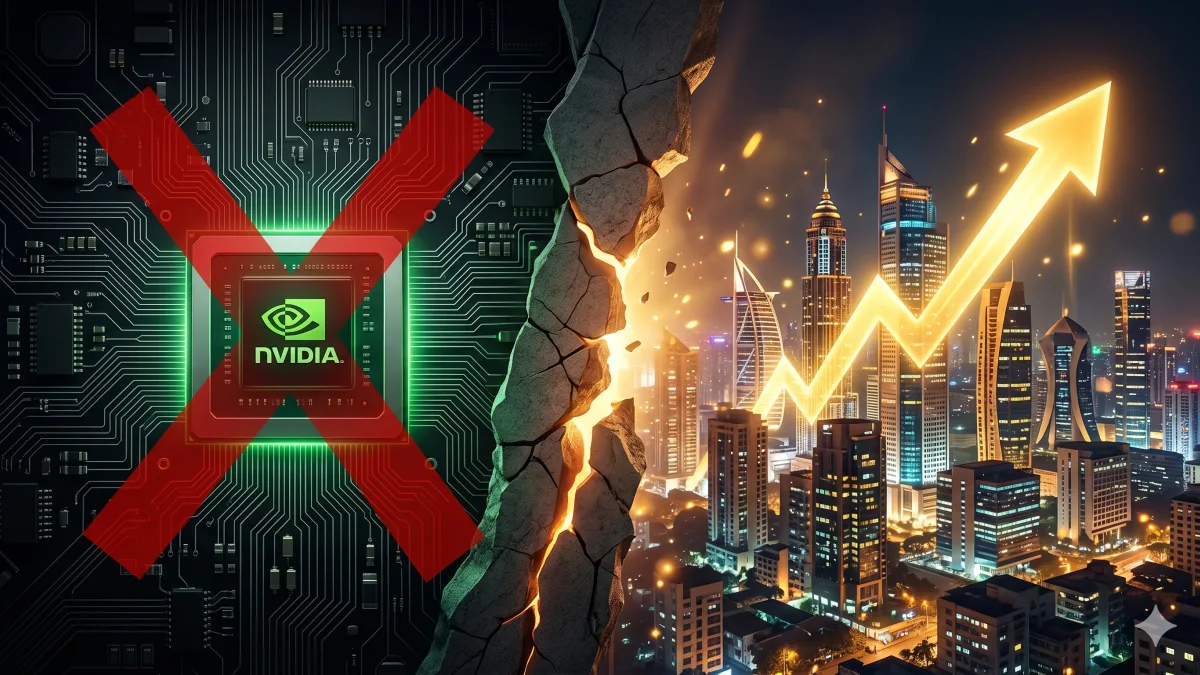
It reads like a corporate thriller. The world's most powerful chip company. The world's largest AI market. And a geopolitical war that wiped out 95% market share overnight. Here is the full story — and the twist nobody saw coming.
Picture this. A packed conference room. Jensen Huang — CEO of Nvidia, the company that almost single-handedly built the AI revolution — stands before investors. Someone asks about China. Huang pauses. Then says the words that sent shockwaves through Silicon Valley.
"We went from 95% market share to 0%. In China, we have now dropped to zero."— Jensen Huang, Nvidia CEO, Citadel Securities Conference, April 2026
And then, in the same breath, he added something equally stunning: US export controls are a policy that "has already largely backfired." The CEO of America's most valuable chip company — publicly disagreeing with US government policy.
This is not just a corporate story. It is the most consequential semiconductor shift of 2026 — and India sits right at the center of the opportunity it has created.Act 1 — How the mightiest fell
To understand why this matters, you need to understand just how dominant Nvidia was in China. In 2024, Nvidia controlled roughly 66% of China's AI GPU market. For the most advanced AI training chips — the kind that power ChatGPT-scale models — the number was closer to 95%.
Every major Chinese AI lab ran on Nvidia silicon. Baidu. Alibaba. ByteDance. Tencent. China was not just a market for Nvidia. It was the market. At peak, China represented 20 to 25% of Nvidia's data center revenue — a division that now generates over $41 billion annually.
Did you know? Nvidia took a $4.5 billion charge in Q1 2026 alone due to export restrictions. That single quarter writedown is larger than the entire annual revenue of most Fortune 500 technology companies.
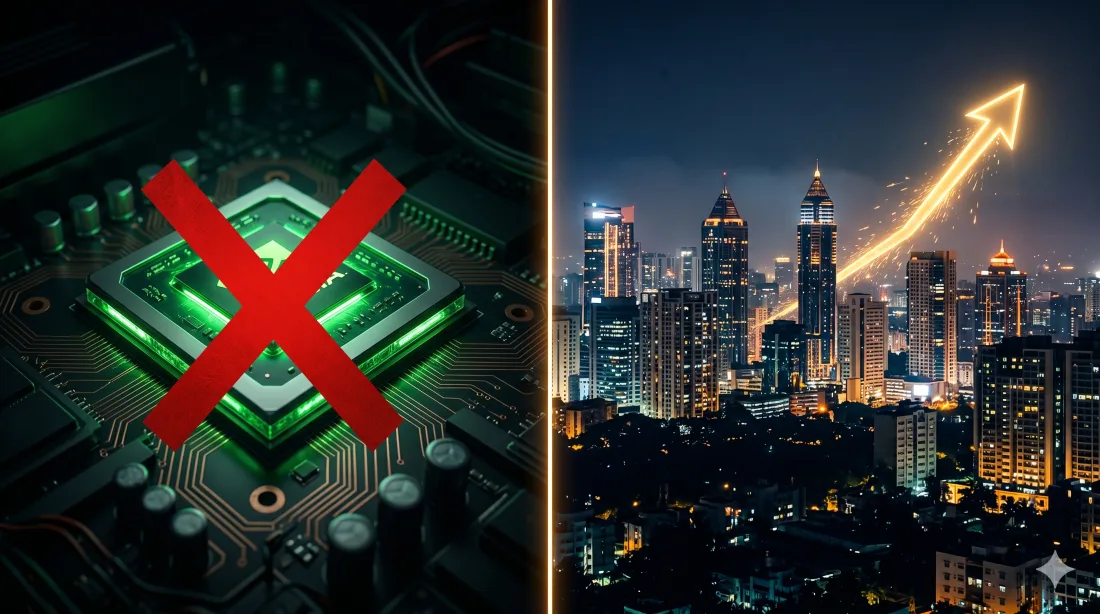
Losing China did not just hurt Nvidia. It amputated a limb. And the collapse happened in roughly two years — one of the fastest market share destructions in semiconductor history.
Act 2 — The collapse nobody predicted
How does a company go from 95% to 0% in two years? The answer is a perfect storm of geopolitics that created an impossible situation for Nvidia from both sides simultaneously.
The US side — export controls that backfired
Washington progressively restricted Nvidia's most advanced chips from reaching China. The Blackwell B200 — Nvidia's current flagship — was blocked entirely. The US later permitted sales of older H200 chips to China. But by then, the damage was already done.
"In all of our forecasts, we're assuming 0% for China. If anything happens in China, it will be a bonus." He also called US export controls a policy that "has already largely backfired" — a remarkable public disagreement from the CEO of America's most valuable chip company.
The China side — a government directive that sealed it
Beijing responded with a directive of its own: Chinese tech companies were told to limit Nvidia chip use to overseas operations only. Domestic data centers were directed to transition to Chinese-made alternatives.
This created a regulatory paradox. US rules required Nvidia chips to only be used inside China. Chinese rules pushed companies to avoid Nvidia domestically. The result: H200 shipments froze entirely. Nvidia had no legal path to sell its permitted chips in China.The competitor that filled the vacuum
Nature abhors a vacuum. So does a $67 billion AI chip market. Huawei moved fast. Its Ascend 950PR chip entered mass production. Cambricon posted Q1 2026 revenue of $423 million. Today, domestic Chinese suppliers satisfy approximately 80% of China's AI chip demand — without Nvidia.
Did you know? Huawei's AI chip revenue is projected to hit $12 billion in 2026 — up 60% from $7.5 billion in 2025. In two years, Huawei went from distant competitor to dominant supplier in the world's second-largest AI market.
Act 3 — The plot twist: why India wins
Here is where the story takes an unexpected turn. Most coverage of Nvidia's China collapse focuses on what Nvidia lost. But geopolitical earthquakes always create winners alongside losers. And for India, this particular earthquake may be the biggest technology opportunity in a generation.

But India must move fast
Opportunity does not wait. The window that Nvidia's China exit has opened for India is real — but it requires deliberate action to capture. Here is what needs to happen:
Speed up semiconductor approvals. The India Semiconductor Mission has attracted interest but approval timelines remain slow. Every month of delay is an opportunity that can shift to Vietnam, Malaysia, or Mexico.India's AI talent base is already world-class — Jensen Huang has publicly praised it. But talent needs infrastructure. GPU clusters at IITs, NITs, and research universities must expand dramatically. Indian AI startups should be building direct relationships with Nvidia's enterprise team now — not buying GPUs through distributors when Nvidia is actively seeking Indian partners.
Did you know? India's AI market is projected to reach $17 billion by 2027, growing at one of the fastest rates in the world. The country already has 30 fintech unicorns and a $51.3 billion fintech market — AI is the next wave.
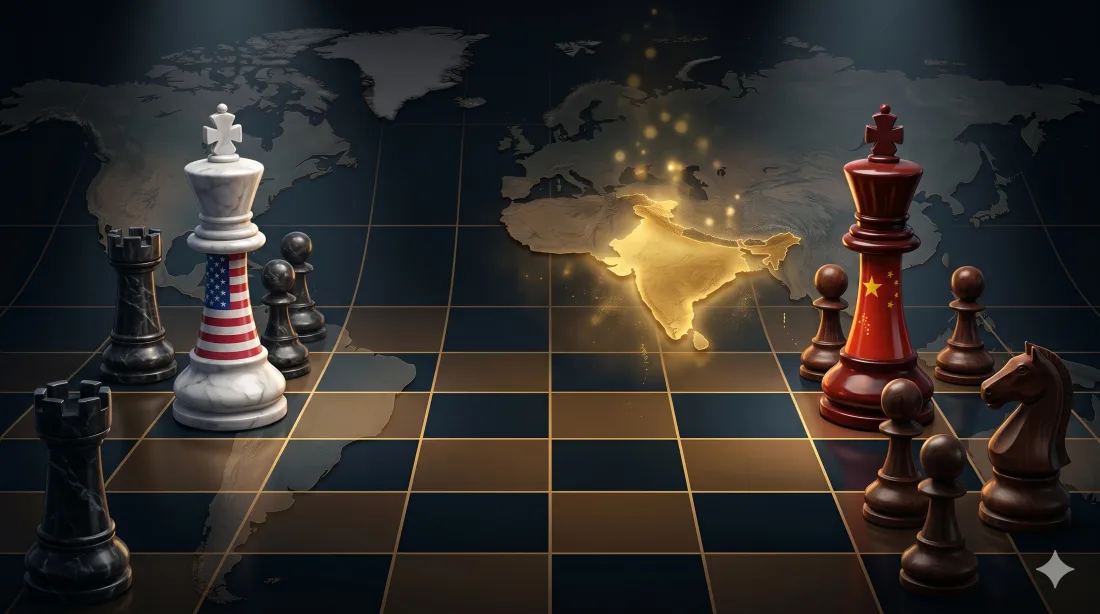
Nvidia losing China is China's loss and potentially India's gain — but only if India treats this moment with the urgency it deserves. The semiconductor mission, the AI talent base, the government partnerships, and the startup ecosystem all need to accelerate simultaneously. When America and China went to war over AI chips, India quietly became the most valuable player on the board. The question is whether India moves fast enough to capitalize.
Frequently asked questions
Why did Nvidia lose China's AI market?
A combination of US export controls blocking Nvidia's advanced chips, and Chinese government directives pushing companies toward domestic alternatives. The two policies created a compliance paradox that froze H200 chip sales entirely. Huawei and domestic competitors filled the gap rapidly.
Is India actually benefiting from Nvidia's China exit?
Yes, concretely. India is now receiving priority GPU allocation previously absorbed by Chinese buyers. Nvidia is actively signing landmark partnerships with Reliance, Tata, and the Indian government. India's position in the US-allied technology ecosystem also gives it structural long-term access to frontier AI technology.
What is India's AI market size in 2026?
India's AI market is estimated at approximately $6–8 billion in 2026, projected to reach $17 billion by 2027 at a growth rate among the fastest in the world. India is consistently ranked among the top three AI economies globally by 2030.
Will Nvidia recover its China market share?
Almost certainly not in the near term. China's government is committed to semiconductor self-sufficiency and has explicitly directed companies toward Chinese alternatives. Even if US export rules ease, the structural shift toward Huawei is unlikely to reverse quickly.