While Wall Street held its breath on Tuesday evening, AMD CEO Lisa Su delivered one of the most impressive earnings reports in the company's history.
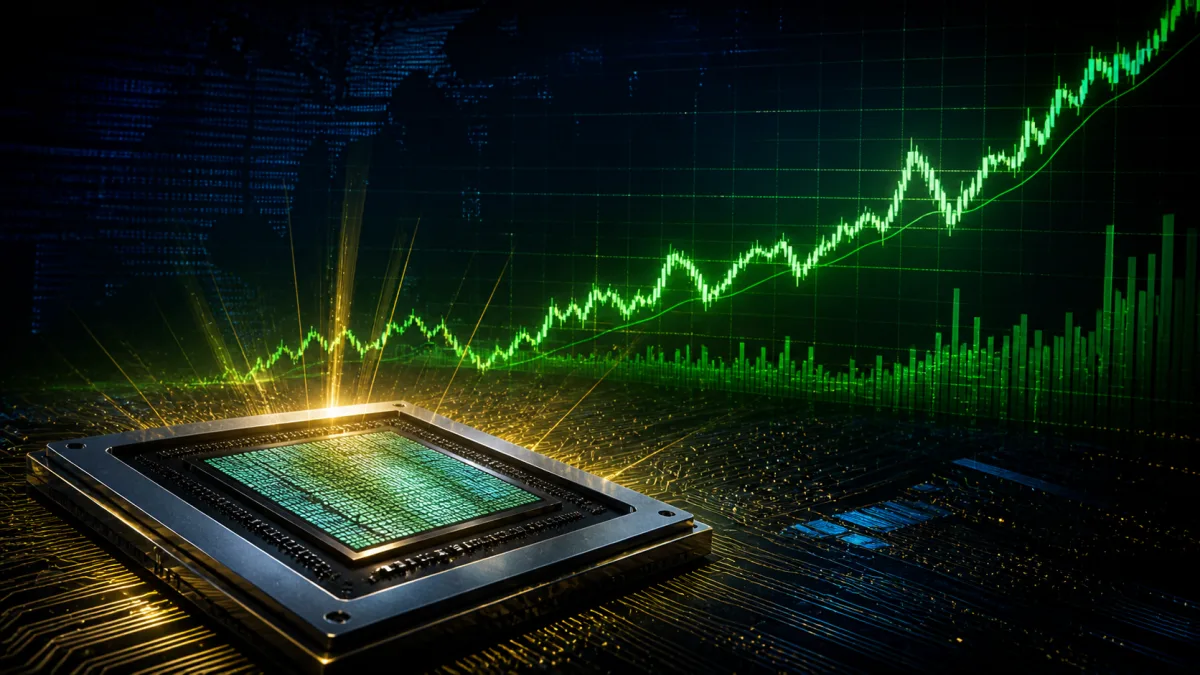
Revenue: $10.3 billion. Estimates: $9.85 billion. Beat. EPS: $1.37. Estimates: $1.27. Beat. Data Center revenue: $5.8 billion. Year-on-year growth: 57%. Stock reaction: all-time high of $379.90.
But here is the question that matters more than the numbers — with Nvidia locked out of China and AMD on a 253% run over the past year, is the best still ahead?
💡 Did you know? AMD's stock has surged 66% in 2026 alone — and 253% over the past year. That makes it one of the best-performing large-cap stocks on any exchange in the world right now.

The Numbers — What AMD Actually Reported
AMD reported its Q1 2026 results after the market closed on May 5. Every headline number came in above expectations.
Revenue reached $10.3 billion against a consensus estimate of $9.85 billion — a beat of over $450 million. That represents 38% year-on-year growth, comfortably above the 32% analysts had modeled.
EPS of $1.37 beat the $1.27 estimate by nearly 8%. CEO Lisa Su said the company delivered "an outstanding first quarter, driven by accelerating demand for AI infrastructure, with Data Center now the primary driver of our revenue and earnings growth."
The number that shocked even the bulls: Data Center revenue of $5.8 billion — up 57% year-on-year in a single quarter.
💡 Did you know? AMD guided Q2 2026 revenue to $11.2 billion — well above the $10.5 billion analysts had expected. That forward guidance, not just the Q1 beat, is what drove the after-hours surge to all-time highs.
Why Data Center Is Everything Now
Three years ago, AMD was primarily known as the scrappy underdog challenging Intel in consumer CPUs. Today, Data Center is the company's entire story — and the numbers prove it.
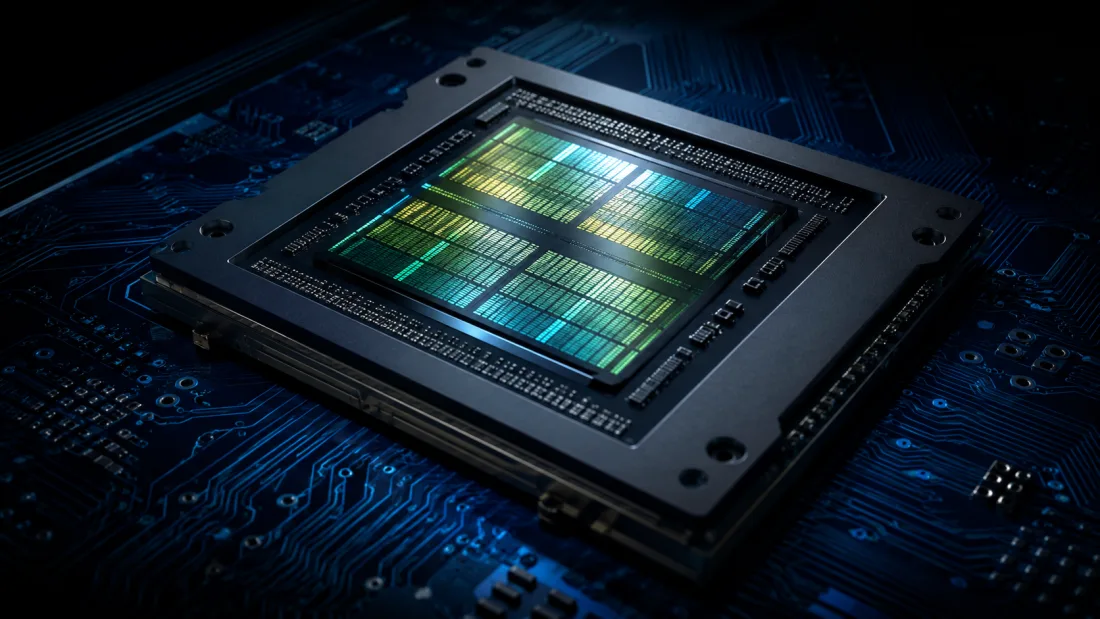
The MI300X GPU — AMD's flagship AI accelerator — is now inside the data centers of Microsoft, Meta, and a growing list of hyperscalers. Lisa Su confirmed "strong and increasing confidence" in reaching tens of billions of dollars in data center AI revenue next year.
For context, Nvidia's data center segment generates over $41 billion annually. AMD is not catching up yet — but the trajectory is unmistakable.
The key insight: every dollar of AI infrastructure spending that does not go to Nvidia has to go somewhere. And AMD is the only credible alternative with production-ready hardware and a maturing software ecosystem.
The Nvidia China Connection — AMD's Hidden Tailwind
Here is where the AMD story gets genuinely interesting — and where it connects directly to the biggest semiconductor story of 2026.
As we covered in our detailed analysis of Nvidia's China exit, Nvidia has gone from 95% AI chip market share in China to zero. The company now assumes zero China revenue in all its forecasts. $4.5 billion was written off in Q1 2026 alone.
That vacuum is partly being filled by Huawei domestically in China. But outside China — in the US, Europe, India, and the rest of the world — every AI infrastructure dollar that was previously split between Nvidia and everyone else is now being fought over more aggressively.
AMD guided approximately $100 million in MI308 GPU sales to China in Q1 — a figure that exists because AMD's chips fall under different export control thresholds than Nvidia's. This is a small but meaningful advantage that could grow.
The bottom line: Nvidia's China problem is not AMD's problem. And every enterprise buyer who wants a credible Nvidia alternative now has more reason than ever to give AMD a serious look.
💡 Did you know? AMD's MI300X chip uses a unified memory architecture that gives it a meaningful advantage over Nvidia's H100 for certain large language model inference workloads — the fastest-growing segment of enterprise AI spending in 2026.

AMD vs Nvidia — Where Things Stand in 2026
| AMD | Nvidia | |
|---|---|---|
| Q1 2026 Revenue | $10.3B | ~$44B+ |
| Data Center Growth | +57% YoY | Declining (China exit) |
| China Revenue | ~$100M (MI308) | $0 (assumed) |
| Stock YTD 2026 | +66% | Mixed |
| AI GPU | MI300X / MI325 | H200 / Blackwell |
| Software Ecosystem | ROCm (maturing) | CUDA (dominant) |
| Q2 Revenue Guide | $11.2B | Not disclosed |
| Biggest customers | Microsoft, Meta | AWS, Google, Microsoft |
What Lisa Su Said on the Earnings Call
Su's language on the earnings call was notably confident — and specific about the AI opportunity ahead.
She said AMD has "strong and increasing confidence" in its ability to reach tens of billions of dollars in data center AI revenue next year "and to exceed our long-term growth target of greater than 80 percent in the coming years."
She also highlighted that demand is being driven by two specific forces: inferencing workloads and agentic AI — both of which require massive compute that AMD's MI-series chips are purpose-built to handle.
The signal investors took from the call: AMD is not chasing the AI wave. It is riding it — and the wave is accelerating.
Should You Be Watching AMD Stock?
This is not financial advice. But here is the context any informed reader should have.
AMD's stock has delivered 253% gains over the past year and 66% in 2026 alone. At $341 following the earnings day reaction — which saw a typical post-earnings dip despite strong results — the stock is trading above its 200-day moving average of $212 but below its 52-week high of $362.79.
HSBC recently downgraded AMD to Hold from Buy — not because of concern about fundamentals, but because the stock ran ahead of analyst price targets after the April surge. The median analyst target sits at $300, now below the current price.
What the bulls see: AI infrastructure demand accelerating, Nvidia's China exit creating a more open competitive landscape, and Q2 guidance of $11.2 billion implying 46% year-on-year growth.
What the bears see: CUDA's software moat remains enormous, AMD's ROCm ecosystem is still maturing, and post-earnings dips are a consistent pattern regardless of results.
✅ TechPopDaily Verdict
AMD's Q1 2026 earnings report is one of the strongest in the company's history — and the Q2 guidance of $11.2 billion signals the momentum is not slowing. The connection to Nvidia's China exit is real but indirect — AMD benefits from a more competitive market, not from directly replacing Nvidia. For anyone following the AI chip space, AMD is now impossible to ignore. Whether you are tracking stocks, building AI infrastructure, or simply trying to understand where the semiconductor industry is heading — Lisa Su's AMD is the most important story in chips right now besides Nvidia itself.
Frequently Asked Questions
What were AMD's Q1 2026 earnings results? AMD reported Q1 2026 revenue of $10.3 billion — beating the $9.85 billion estimate by over $450 million. EPS came in at $1.37 against a $1.27 estimate. Data Center revenue surged 57% year-on-year to $5.8 billion. The stock hit an all-time high of $379.90 in after-hours trading.
How does Nvidia's China exit help AMD? Nvidia has gone from 95% to 0% AI chip market share in China. While Huawei is filling the domestic Chinese gap, AMD benefits globally from enterprises seeking credible Nvidia alternatives and from a more competitive market for AI GPU contracts with hyperscalers like Microsoft and Meta.
What is AMD's Q2 2026 revenue guidance? AMD guided Q2 2026 revenue to approximately $11.2 billion — significantly above the $10.5 billion analyst consensus. Non-GAAP gross margin guidance is 56%. This forward guidance drove the after-hours stock surge to all-time highs.
Is AMD a good investment in 2026? This article does not constitute financial advice. AMD's fundamentals are strong — 38% revenue growth, 57% data center growth, and accelerating AI demand. However, the stock has already surged 253% over the past year. HSBC recently downgraded to Hold noting the stock had run ahead of analyst targets. Always conduct your own research or consult a financial advisor before investing.
What is AMD's main AI chip? AMD's flagship AI accelerator is the MI300X GPU, now deployed in Microsoft Azure and Meta data centers. The upcoming MI325 is expected to extend AMD's AI chip roadmap. Unlike Nvidia's CUDA ecosystem, AMD uses ROCm software — which is maturing but still behind CUDA in enterprise adoption.