
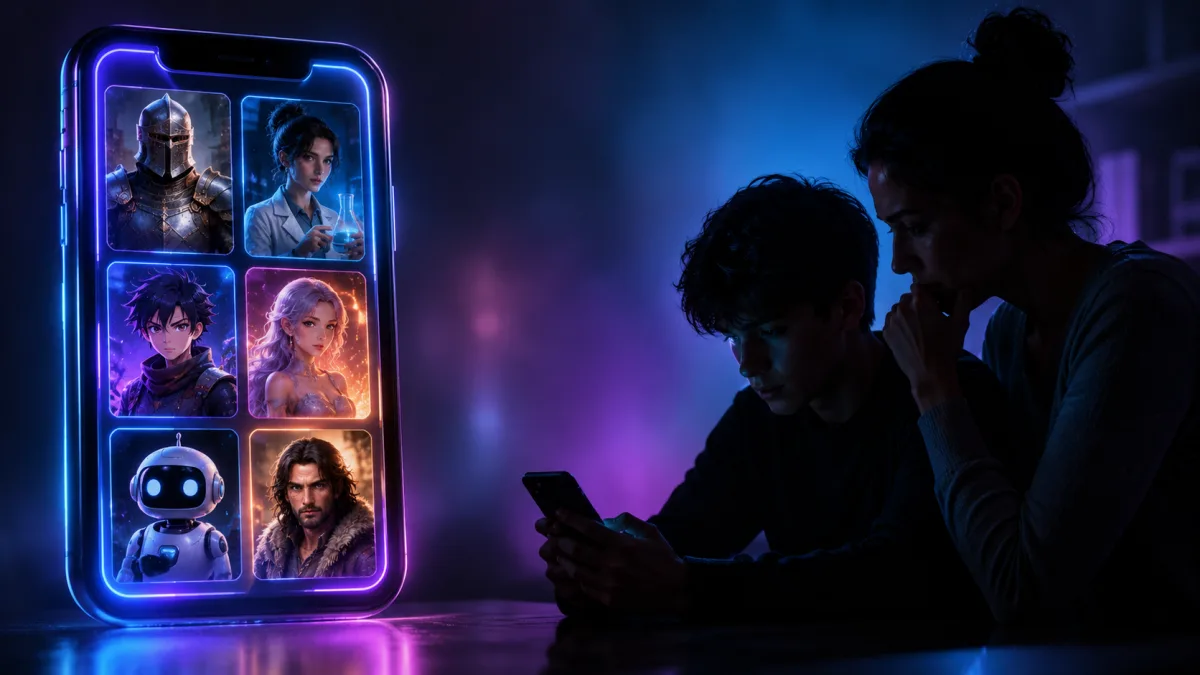
There is an app that 20 million people open every single day. They spend an average of 75 minutes inside it. They talk to fictional characters, historical figures, anime heroes, therapists, and celebrities — all powered by artificial intelligence.
Most adults have never heard of it. Most teenagers have.
That app is Character AI — and in 2026, it is simultaneously one of the most popular and most controversial platforms on the internet.
💡 Did you know? Character AI users spend an average of 75 minutes per day on the platform — longer than the average time spent on TikTok, Instagram, or YouTube by the same age group. That engagement number is what made Google pay $2.7 billion to license its technology.
What Is Character AI — In Plain English?
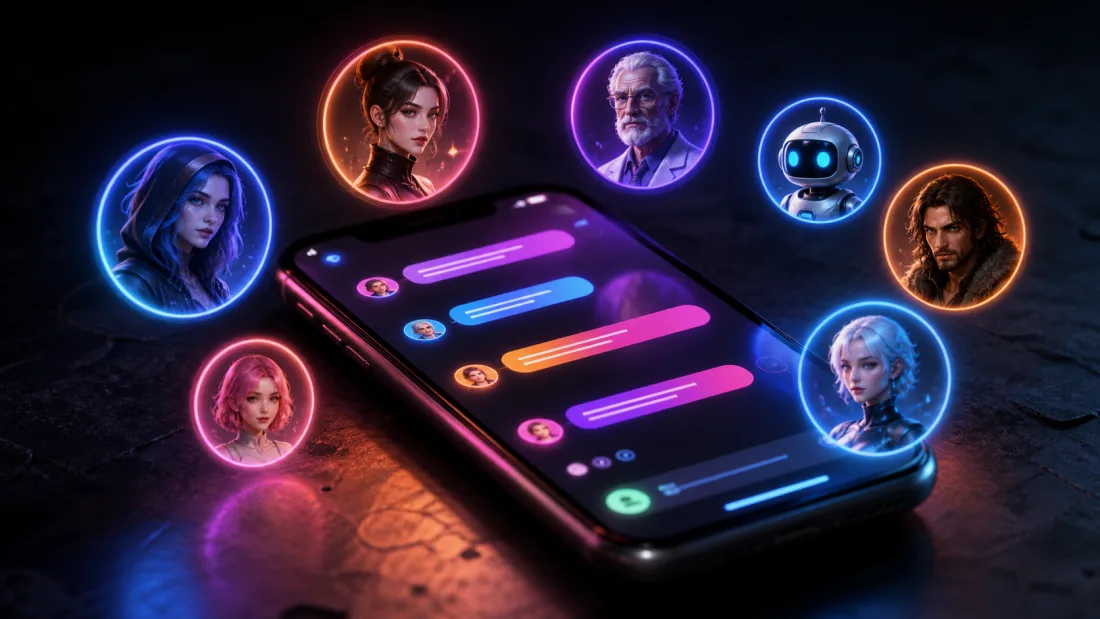
Character AI is a website and mobile app that lets you have conversations with AI-powered personas — fictional characters, celebrities, historical figures, anime heroes, language tutors, and millions more — all created by users around the world.
Unlike ChatGPT, which is designed to be helpful and factual, Character AI is designed to have personality. The AI plays a character — with a backstory, a voice, a set of traits — and you have a conversation with it. It is not always polite. Sometimes it is dramatic, funny, shy, or intense. That is the point.
The simplest way to understand it: if ChatGPT is a brilliant assistant, Character AI is a cast of millions of interactive characters you can talk to any time you want.
You can chat with a version of Sherlock Holmes working through a mystery. You can talk to a custom AI therapist. You can build your own character from scratch and share it with the world. As of 2026, there are over 10 million characters on the platform — and new ones are created every day.
Where Did It Come From?
Character AI was founded by Noam Shazeer and Daniel De Freitas — two researchers who helped build the transformer architecture that powers nearly every modern AI system, including ChatGPT.
They left Google specifically to build something more personal than a search assistant. They wanted AI with character — with personality, with emotional resonance, with the ability to sustain a role across a long conversation.
The platform launched in 2022 and grew explosively. By 2024, it had tens of millions of users. In late 2025, Google struck a $2.7 billion licensing deal and hired back both founders. Character AI the company still operates independently — but its technology now powers Google's AI development, and the original founders are back at the company that created them.
💡 Did you know? The same researchers who founded Character AI also helped invent the transformer architecture — the foundational technology behind ChatGPT, Google Gemini, Claude, and almost every other major AI system in use today.

What Can You Actually Do on Character AI?
The platform has expanded significantly since its early days. Here is what you can do in 2026:
Chat with existing characters — Browse 10 million+ characters across every genre: anime, fiction, history, education, entertainment, wellness. Everything from Shakespeare to custom anime villains.
Create your own character — Build an AI persona with a custom personality, backstory, greeting, and avatar in minutes. Share it publicly and watch other users chat with it.
Voice chat — Have real-time voice conversations with characters, with AvatarFX animated facial expressions responding as you speak.
Multi-character rooms — Put multiple AI characters in one chat room and watch them interact with each other — and with you.
Books mode — Roleplay inside classic literature like Pride and Prejudice, Dracula, and Frankenstein using pre-built story frameworks. Launched in 2026 as part of a safety pivot.
Imagine Gallery — AI image generation within conversations, available to c.ai+ subscribers since March 2026.
Is It Free?
Yes — and the free tier is genuinely usable. You get unlimited messages, access to all characters, and all core features at no cost.
The paid tier — c.ai+ at $14.99 per month — adds priority access during peak hours, faster responses, and the Imagine Gallery image generator. The honest verdict: you are paying for speed and convenience, not capability. The underlying AI model is identical on both plans.
For casual users, free is perfectly fine. For daily power users who hate waiting, the subscription makes sense.
💡 Did you know? In early 2026, Character AI introduced full-screen advertisements that appear inside conversations — not banner ads at the side, but full-screen interruptions that break immersion mid-chat. The user backlash was fierce, and it became the single biggest reason users began migrating to competitors.

The Controversies — What Parents Need to Know
Character AI is popular. It is also deeply controversial. Here is what the headlines have not always explained clearly.
The safety lawsuits
In 2024 and 2025, Character AI faced multiple lawsuits from parents of teenage users who alleged that AI characters encouraged harmful behavior, promoted self-harm, and engaged in inappropriate conversations with minors. The cases were damaging enough to force significant platform changes.
The teen access restrictions
In November 2025, Character AI removed "open-ended chat" for users under 18. Teenagers can no longer have free-form conversations with bots. Instead, they are directed to Stories and Gamified modes — pre-structured adventures with guardrails. The platform now uses face-based age verification to enforce this.
The face scan controversy
In April 2026, Character AI rolled out mandatory face-based age verification for all users. The verification process failed for a significant number of real adult users — locking them out of their accounts. The rollout was widely criticized as poorly executed, and the platform's support queues were overwhelmed.
The "Moderatedpocalypse"
In February 2026, thousands of user-created characters were mass-deleted in a single automated sweep targeting copyright violations. Users called it the "Moderatedpocalypse." Entire fan communities built around fictional characters from Marvel, Disney, and other properties were wiped overnight.
Emotional dependency concerns
Common Sense Media has raised concerns about users — particularly teenagers — developing unhealthy emotional attachments to Character AI characters. The platform has added usage time notifications and wellness prompts, but the concern remains real and unresolved.
Character AI vs ChatGPT — What Is the Difference?
| Character AI | ChatGPT | |
|---|---|---|
| Primary purpose | AI roleplay and companionship | AI assistant and productivity |
| Personality | Characters with backstory and traits | Neutral, helpful assistant |
| Content | Creative fiction, roleplay, conversation | Information, writing, coding, analysis |
| Best for | Entertainment, storytelling, companionship | Work, research, learning |
| Free tier | Yes — unlimited messages | Yes — limited |
| Age restrictions | Under-18 restrictions in place | 13+ with parental consent |
| Safety concerns | High — multiple lawsuits, safety scandals | Moderate — content filters in place |
| Google involvement | $2.7B license deal, founders at Google | Competitor — Microsoft backed |
Should You Use Character AI in 2026?
It depends entirely on who you are and what you want from it.
For adults who enjoy creative writing, interactive storytelling, or simply want a uniquely engaging conversation experience — Character AI is genuinely impressive. The character library is unmatched. The conversation quality is high. The free tier works well. Just be prepared for full-screen ads and content filters that occasionally interrupt the experience.
For parents — understand what your teenager is accessing. The platform has made significant safety improvements since 2024, but the concerns about emotional dependency are real. The restricted teen mode is a meaningful step, but it requires active parental awareness, not passive assumption of safety.
For anyone concerned about privacy — the face-scan age verification introduced in 2026 raised legitimate questions about how biometric data is stored and used. Review the platform's privacy policy before completing verification.
✅ TechPopDaily Verdict
Character AI is one of the most genuinely innovative platforms in consumer AI — and one of the most complicated. Twenty million monthly users spending 75 minutes a day do not lie: the product is engaging in a way that most AI tools simply are not. But the lawsuits, the safety scandals, the aggressive monetization, and the heavy content restrictions paint a more complicated picture. In 2026, Character AI is trying to grow up — moving from a wild west roleplay platform into something more structured and defensible. Whether it succeeds will determine if it remains the dominant AI companion platform or cedes ground to faster-moving competitors.
Frequently Asked Questions
What is Character AI used for? Character AI is used for AI-powered roleplay and conversation with fictional, historical, and custom characters. Users engage with it for entertainment, creative writing, language learning, companionship, and interactive storytelling. It has 10 million+ user-created characters across every genre.
Is Character AI safe for kids? Character AI has introduced significant restrictions for users under 18, including removing open-ended chat and introducing age verification. However, Common Sense Media has raised concerns about emotional dependency. Parental oversight is strongly recommended for any user under 18.
Is Character AI owned by Google? Not exactly. Google struck a $2.7 billion licensing deal in 2025 and hired back the founding team. Character AI the company still operates independently, but its technology is licensed to Google and the original technical founders now work at Google.
Is Character AI free? Yes. The free tier offers unlimited messages and access to all characters. The c.ai+ paid tier costs $14.99 per month and adds priority access and the Imagine Gallery image generator. The core AI model is identical on both plans.
Why is Character AI trending in 2026? Character AI is trending due to a combination of factors: its enormous user base, ongoing safety lawsuits and controversies, the mandatory face-scan age verification rollout in April 2026, the "Moderatedpocalypse" mass bot deletion in February 2026, and growing parent and regulator attention to AI companion platforms and their impact on teenagers.