We’ve all been there. You add that trending item to your cart, go to checkout, and boom—Out of Stock. Or, on the flip side, you walk into a big-box store and see aisles overflowing with clearance items nobody wants.
For decades, the US retail supply chain has been a guessing game. But overnight, the internet has become obsessed with a permanent fix.
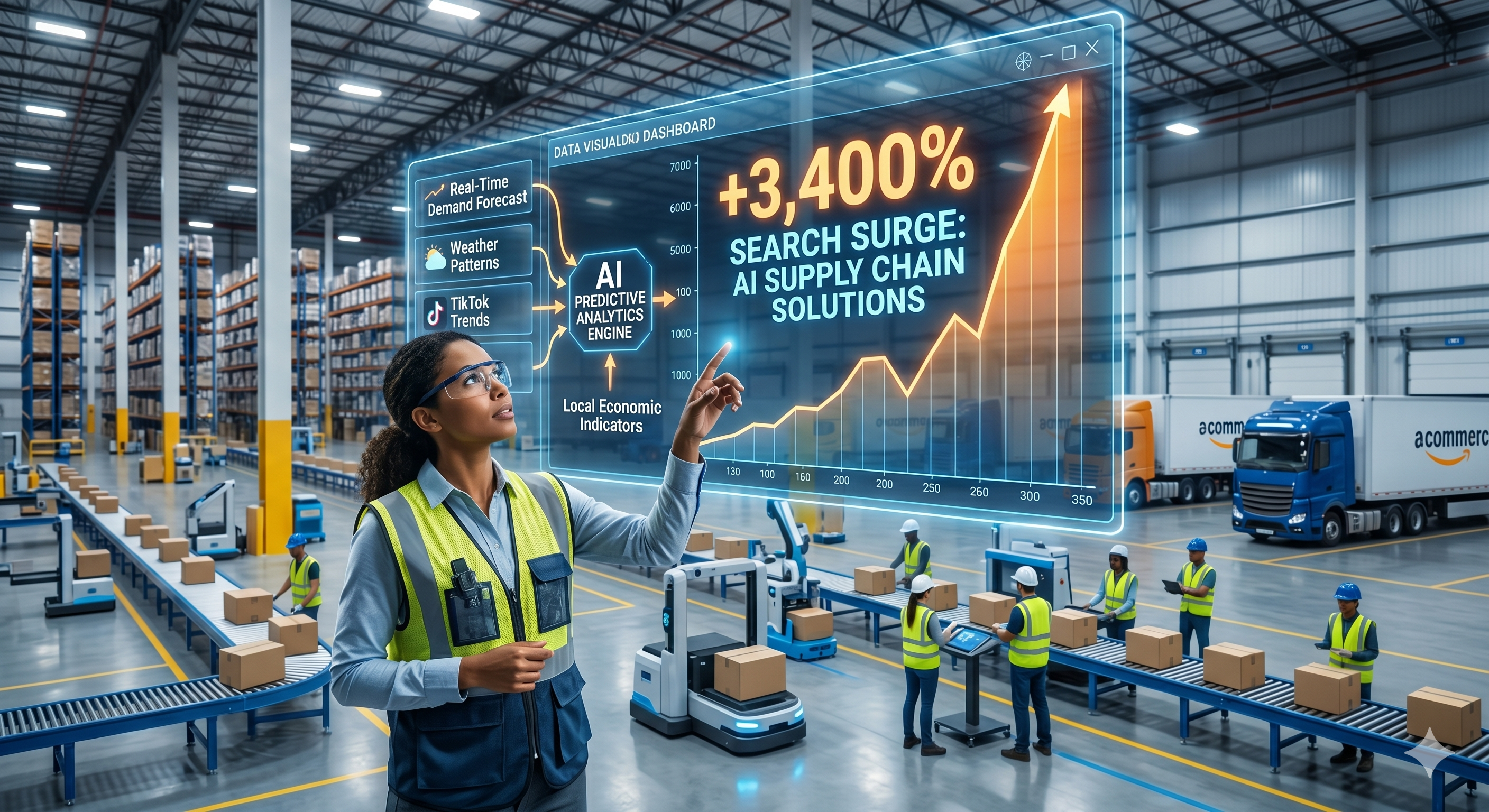
Over the last 24 hours, US search traffic for how large online retailers can use AI to “improve supply chain efficiency and ensure products are always in stock without overordering” has skyrocketed by an absurd 3,400%.
Whether this spike is from tech students trying to pass an exam or logistics managers at major e-commerce brands scrambling for a solution, the answer points to one massive shift in retail tech: Predictive Analytics AI.
The End of the "Guessing Game"
Historically, retailers looked at past sales to predict the future. If a specific winter coat sold out in Chicago last November, they ordered more for this November.
But traditional models can't handle the chaos of modern consumer habits. Enter Predictive Analytics. Instead of just looking at last year's spreadsheets, this AI application ingests real-time data from everywhere. It looks at:
Micro-weather patterns (Are unexpected cold fronts moving through the Midwest?)
Social media sentiment (Did a TikTok influencer just make a random water bottle go viral?)
Local economic indicators and shipping port delays.
The AI digests millions of data points and tells the retailer exactly how much inventory to push to a specific local fulfillment center.
Why the Panic Now?
The 3,400% spike tells us that the pressure is on. Warehouse space in the US is at a premium, and the cost of holding unsold inventory (what the industry calls "dead stock") is crippling profit margins. Retailers can no longer afford to over-order "just in case."
By implementing predictive AI, companies aren't just saving millions in storage fees; they are ensuring that when you finally hit "Buy Now," your item is actually sitting in a distribution center just a few miles from your house.
The next time your package arrives with eerie speed, don't just thank the delivery driver. Thank the algorithm that knew you were going to buy it before you did.