Texas Roadhouse Is Going High-Tech — And It Is Working
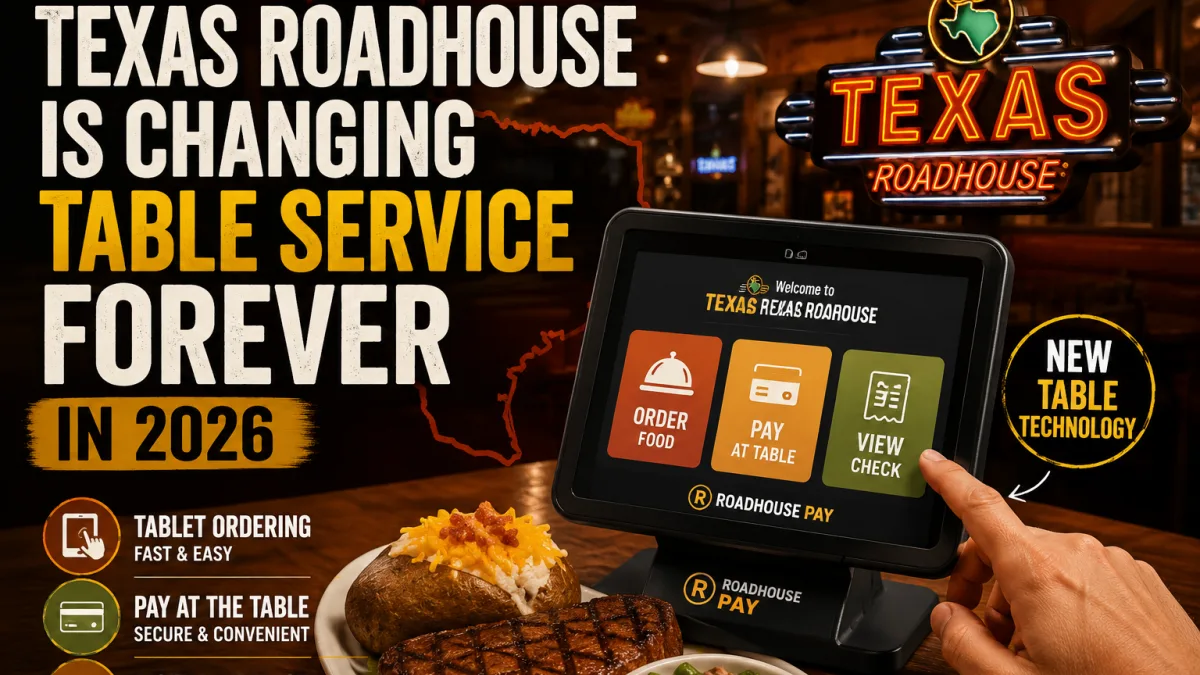
Texas Roadhouse, the beloved casual dining chain famous for its hand-cut steaks, fresh-baked bread, and cheerful chaos, is quietly staging one of the most significant technology transformations in restaurant industry history. The company is rolling out a multi-layered technology upgrade across all of its locations in 2026 — and early data suggests it is driving some of the best same-store sales results the chain has seen since 2024.
Four Technologies Changing How Texas Roadhouse Operates
The upgrade consists of four interconnected systems being rolled out simultaneously. First is Roadhouse Pay — a table-side digital payment kiosk that lets diners settle their bill by card without waiting for a server to bring a paper check. Originally piloted in 2022, the goal is now to have Roadhouse Pay active in every location by year end. Second are digital kitchen display systems that replace paper tickets with screens, dramatically improving order accuracy and kitchen coordination — especially during peak hours when paper systems become a bottleneck.
Third are handheld server tablets that allow wait staff to send orders directly to the kitchen the moment they are placed, eliminating the walk back to a stationary terminal. And fourth is a digital waitlist and online check-in system that lets guests add themselves to the waitlist from their phones before they even arrive at the restaurant — reducing lobby crowding and frustration.
Why Now? The Competitive Pressure on Casual Dining
Texas Roadhouse's technology push is not happening in a vacuum. The casual dining sector faces mounting pressure from fast-casual competitors that have long offered mobile ordering, app-based loyalty programs, and streamlined digital experiences. Brands like Chili's and Darden's Olive Garden have invested heavily in table-side technology for years. Texas Roadhouse, which built its identity on warm, human-centered hospitality, has historically resisted the tech wave — but the company now recognizes that technology and hospitality are not mutually exclusive.
Crucially, Texas Roadhouse's approach preserves the human element. The handheld tablets speed up service, but servers still take orders in person. The digital check-in reduces lobby chaos, but the famous peanuts and line-dancing are still there. The goal is not to replace the Texas Roadhouse experience — it is to remove the friction points that frustrate guests without changing what makes the restaurant special.

What This Means for the Restaurant Industry
Texas Roadhouse's technology rollout signals something important for the broader restaurant industry: even the most experience-driven, tech-resistant casual dining brands are now concluding that digital service tools are no longer optional. Consumers have been trained by fast-casual and QSR brands to expect speed, accuracy, and frictionless payment. Full-service restaurants that cannot match those expectations on the logistics side — while maintaining their quality and warmth advantage — risk losing market share. With 20 new locations planned for 2026 and technology upgrades accelerating, Texas Roadhouse appears to have found the right balance.