India's private space sector hit a significant milestone in May 2026 when Skyroot Aerospace closed a $60 million funding round and crossed the unicorn valuation threshold. The Hyderabad-based rocket company, which became the first private Indian firm to launch a rocket to space when its Vikram-S suborbital vehicle flew in November 2022, has now added another first to its record: India's inaugural space technology unicorn. The achievement signals that India's liberalised space policy is producing commercially viable private companies capable of attracting serious international investor confidence — not just national pride.
India's Private Space Sector Reaches a New High
Skyroot's unicorn status carries significance beyond the headline valuation. For India's startup ecosystem, which has navigated a funding slowdown in many sectors over the past two years, a unicorn in a deep technology, long-gestation industry like aerospace demonstrates that patient capital is available for companies solving genuinely hard engineering problems. Consumer internet and SaaS valuations have compressed globally; the Skyroot milestone suggests that deep tech with real physical assets and defensible technical moats is finding a receptive investor audience in 2026.
For the global space industry, Skyroot's rise validates India as an emerging hub for low-cost rocket development — a position that has been building since ISRO's extraordinary track record demonstrated India's ability to execute complex space missions at a fraction of Western programme costs. The Chandrayaan-3 lunar landing in 2023 and the Aditya-L1 solar observatory mission in 2024 captured global attention; Skyroot's commercial success now demonstrates that India's space capability extends beyond government programmes into a self-sustaining private ecosystem.
Who Is Skyroot and What Have They Built?
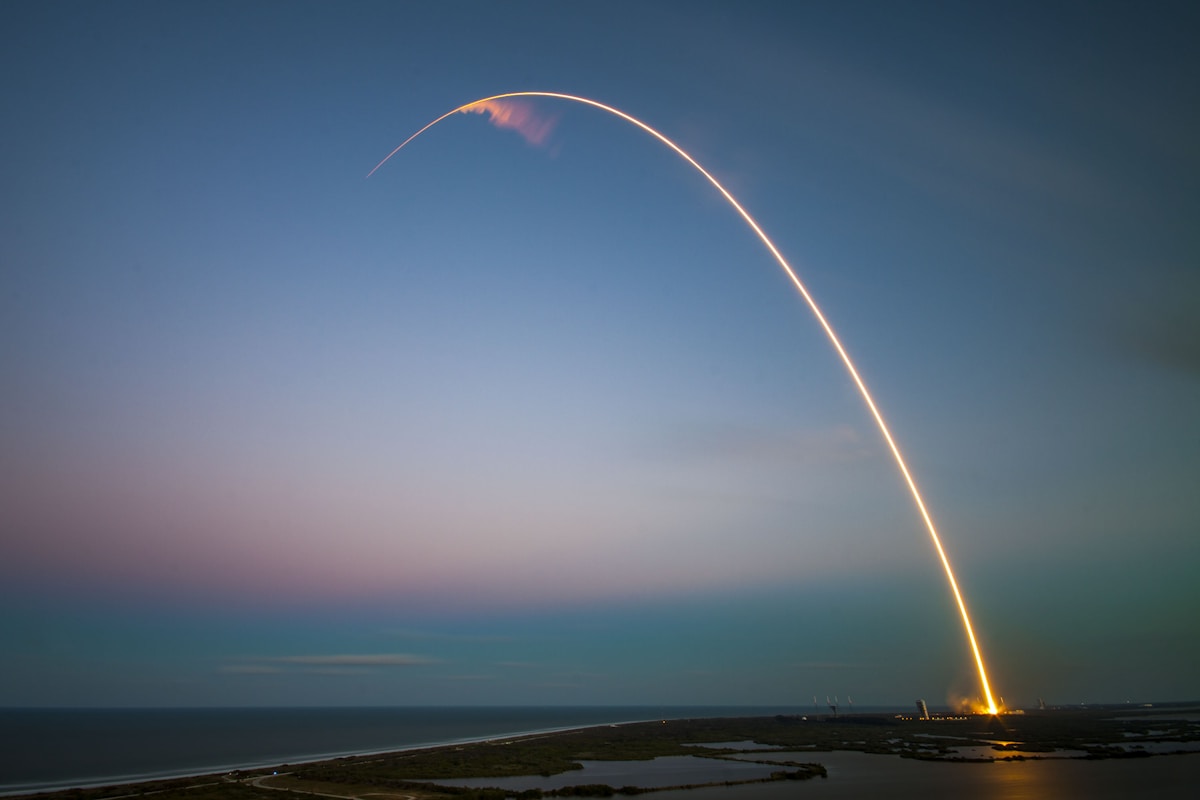
Skyroot was founded in 2018 by Pawan Kumar Chandana and Naga Bharath Daka, both former ISRO scientists who applied their institutional knowledge to building rockets optimised for the commercial small satellite launch market. The company's Vikram series of rockets are designed to be modular, increasingly reusable, and manufactured at a cost structure competitive with global small launch providers. The Vikram-1, Skyroot's primary commercial vehicle, is designed to deliver up to 480 kilograms to low Earth orbit — capacity targeting the rapidly growing small satellite constellation market.
The technical approach is distinguished by two choices that reflect the founders' ISRO background. First, Skyroot has made extensive use of carbon-fibre composite materials to reduce structural mass, giving the Vikram-1 a mass fraction competitive with far more expensive Western vehicles. Second, the upper stage uses cryogenic propellants — liquid oxygen and liquid natural gas — a technically demanding choice that delivers higher specific impulse and therefore better payload performance than storable propellant alternatives. Developing and operationalising cryogenic stage technology is a capability very few private companies globally have mastered, and it gives Skyroot a meaningful performance advantage in the payload-to-orbit ratio that satellite operators care about most when selecting launch providers.
The Funding Round and India's Space Investment Landscape
Skyroot's $60 million round reflects a maturing investor base for Indian deep technology. The round included Indian and international participants with the sophistication to underwrite multi-year aerospace development cycles — a meaningful shift from the consumer internet and SaaS-focused venture capital that dominated Indian startup funding in the previous decade. The broader context for Indian space investment is encouraging: the Indian government's IN-SPACe framework, which liberalised private sector space participation in 2020, has created a clear regulatory pathway giving investors confidence that commercial space ventures can operate with appropriate government support without excessive bureaucratic interference.
A dedicated space fund announced under Union Budget 2025-26 with a corpus of Rs 1,000 crore provides additional institutional backing for early-stage space technology companies — giving Indian space startups access to patient, mission-aligned capital alongside commercial venture funding. BigEndian Semiconductors, which raised $6 million in the same period for custom AI chips for aerospace applications, reflects the deepening of India's spacetech supply chain beyond launch vehicles into enabling technologies.
India's Broader Spacetech Ecosystem
Skyroot's success is part of a broader acceleration in India's private space sector. Agnikul Cosmos successfully tested its Agnibaan rocket in 2024, powered by the world's first single-piece 3D-printed engine — a manufacturing breakthrough that significantly reduces engine production costs and lead times. Pixxel, a hyperspectral imaging satellite company, has deployed multiple satellites and is generating commercial remote sensing revenue from agricultural, environmental, and defence customers. Dhruva Space, Ananth Technologies, and Bellatrix Aerospace are building complementary capabilities in satellite manufacturing, propulsion systems, and orbital services that collectively constitute an increasingly self-sufficient domestic space supply chain.
ISRO's commercial subsidiary, NewSpace India Limited, is acting as a market-maker for this ecosystem — aggregating domestic small satellite launch demand and creating commercial opportunities for Indian private launch providers. The organisation is also facilitating technology transfer from ISRO's established programmes to private companies, accelerating capability development that would otherwise require a decade to build from scratch. The symbiosis between India's public space programme and its emerging private sector mirrors the relationship between NASA and companies like SpaceX and Rocket Lab in the United States, but with distinctly Indian characteristics shaped by India's cost discipline and engineering culture.
The Global Competitive Picture
Skyroot enters a challenging but genuinely large global market. The small satellite launch market is projected to grow from approximately $8 billion in 2025 to over $30 billion by 2035, driven by constellation deployment for broadband internet, Earth observation, and IoT connectivity. The market is led by Rocket Lab's Electron vehicle, with emerging players in Europe — Isar Aerospace, RFA One — the US, and China competing aggressively. India's cost advantage in engineering talent gives Skyroot a structural advantage in development economics, allowing competitive pricing without sacrificing margin. Achieving reliable, cadenced launches at ten or more per year by 2027 would establish Skyroot as a credible global provider — the trajectory its investors are betting on, and the milestone that would truly validate India's arrival as a commercial space power.