
When Mukesh Ambani announced that Reliance and Jio would invest Rs 10 lakh crore — approximately $110 billion — in artificial intelligence over the next seven years, he did not frame it as a corporate strategy. He framed it as India's transformation. The announcement, made at the India AI Impact Summit 2026 in New Delhi, is the largest single AI investment commitment ever made by an Indian company and one of the largest globally. It reframes what Indian tech can build — and who it can build it for.

What Rs 10 Lakh Crore Actually Gets You
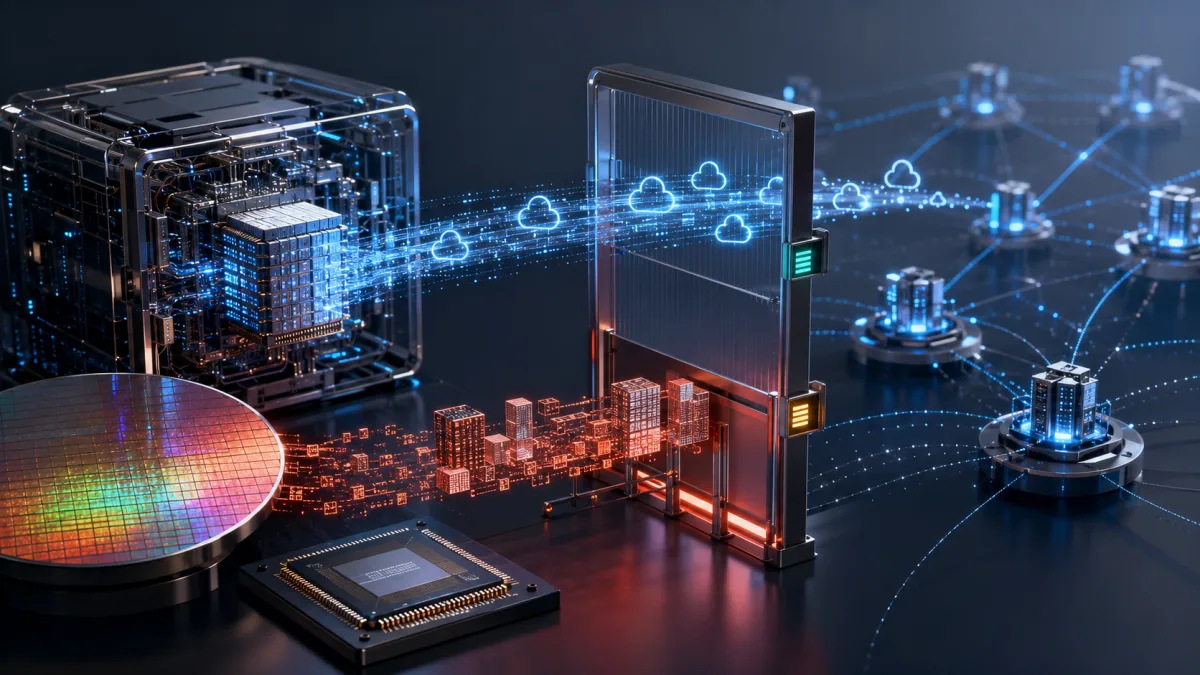
Ambani's plan has three pillars. The first is data center infrastructure: construction has already begun on multi-gigawatt AI-ready data centres in Jamnagar, Gujarat, with over 120 megawatts expected to come online in the second half of 2026. Reliance plans to leverage up to 10 gigawatts of surplus green power — primarily solar — from Kutch and Andhra Pradesh to run this infrastructure. Unlike the US data center boom straining coal and gas grids, Jio's build is designed around renewable energy from day one. The second pillar is green energy integration, giving India a structural advantage: AI compute powered by solar at scale is both cheaper long-term and more politically sustainable. The third pillar — the most consequential for everyday Indians — is Jio AI Bharat: a multilingual AI system designed to work across Hindi, Tamil, Telugu, Bengali, Marathi, and more. According to TechCrunch's reporting, Jio AI Bharat is explicitly aimed at enabling farmers, artisans, and students to interact with AI in their mother tongues.
Why the Multilingual Strategy Is a Bigger Deal Than the Money
India has 22 officially recognized languages and approximately 560 million internet users who primarily use non-English languages online. The current generation of frontier AI models — GPT-5.5, Gemini, Claude — perform significantly better in English than in regional Indian languages. Before Jio AI Bharat: AI tools accessible primarily to urban, English-educated professionals. After: potentially 400+ million users with access to AI assistance in their native language for agriculture, healthcare queries, government services, and education. The comparison to Jio's 4G disruption is instructive. When Jio launched free data in 2016, it added 100 million users in six months and fundamentally restructured the Indian telecom market. The IndiaAI Mission's own data shows over 90% of India's 2 lakh startups now use AI in some form — but the consumer-facing opportunity in regional languages remains almost entirely uncaptured.
What the Jamnagar Data Center Build Means for the Ecosystem
India currently has the IndiaAI Mission's 34,000 GPU pool available to startups at Rs 115–150 per GPU-hour, with plans to scale to 1 lakh GPUs by end of 2026. Reliance's independent data center build adds private-sector compute capacity to what has been primarily a government-led infrastructure effort. For Indian AI startups, more compute options mean less dependency on US cloud providers like AWS and Azure. Jio's data center build, if it opens capacity to third parties, could be the catalyst that makes India a genuine AI compute hub. See our earlier coverage of India's IndiaAI Mission GPU access program for startups for the government side of this equation.
The Talent Strategy Behind the Summit
Gaurav Aggarwal, Chief AI Scientist at Jio, was actively recruiting frontier AI talent at the India AI Impact Summit 2026. India produces approximately 1.5 million engineering graduates annually, and a significant portion of the world's AI researchers at Google Brain, OpenAI, Meta AI, and DeepMind are of Indian origin. Ambani's pitch is straightforward: build something of this scale, in India, for India. That pitch has never been more compelling than in 2026, when visa uncertainties in the US are pushing some NRI researchers to evaluate returning. See our analysis of India's AI talent strategy in 2026 for the broader picture.
What This Means for You
If you are an Indian consumer: Jio AI Bharat is likely to arrive first as an integrated feature in JioPhone and JioFiber services — watch for announcements in H2 2026. If you are an Indian startup founder: the Jamnagar compute build could significantly expand affordable GPU access within 18 months. If you are an investor: Reliance's AI pivot makes it one of the most interesting plays on India's AI decade — as infrastructure and distribution owner across energy, compute, connectivity, and consumer AI.
Frequently Asked Questions (FAQs)
Q: What is Jio AI Bharat and what languages does it support?
A: Jio AI Bharat is Reliance Jio's multilingual AI platform, designed to deliver AI assistance in Indian languages including Hindi, Tamil, Telugu, Bengali, and Marathi. It is aimed at making AI accessible to farmers, students, artisans, and regional-language users — not just English-speaking urban professionals.
Q: How much is Reliance investing in AI in India and over what timeframe?
A: Mukesh Ambani announced Rs 10 lakh crore (approximately $110 billion USD) in AI investment over seven years, covering data center infrastructure, green energy for compute, and the Jio AI Bharat platform. The first data centers in Jamnagar are expected to go live in H2 2026.
Q: How does Jio's AI investment compare to India's government IndiaAI Mission?
A: The IndiaAI Mission is a government program allocating Rs 10,371 crore (~$1.25 billion) for sovereign AI infrastructure including 34,000 GPUs for startups at subsidized rates. Jio's investment is roughly 10x larger and private-sector-led, covering data centers, green energy, and consumer AI. The two are complementary rather than competing.
Q: Will Indian startups get access to Jio's data center infrastructure?
A: No official third-party access program has been announced yet. However, Reliance has historically opened its infrastructure to third parties. Industry analysts expect some form of cloud or colocation offering from Jio's Jamnagar facility within 24 months of launch.
Q: How does the Rs 10 lakh crore AI investment affect Indian consumers in 2026?
A: In the near term, it accelerates development of Hindi and regional-language AI tools via Jio AI Bharat. Medium term, it expands India's domestic AI compute capacity, reducing costs and latency for Indian AI products. Long term, it positions India as an AI infrastructure hub rather than purely a consumer of Western AI technology.
Ambani has made transformative infrastructure bets before — and they have repeatedly exceeded expectations. India's AI decade may be the biggest yet. Stay tuned for H2 2026 announcements from Jamnagar.