

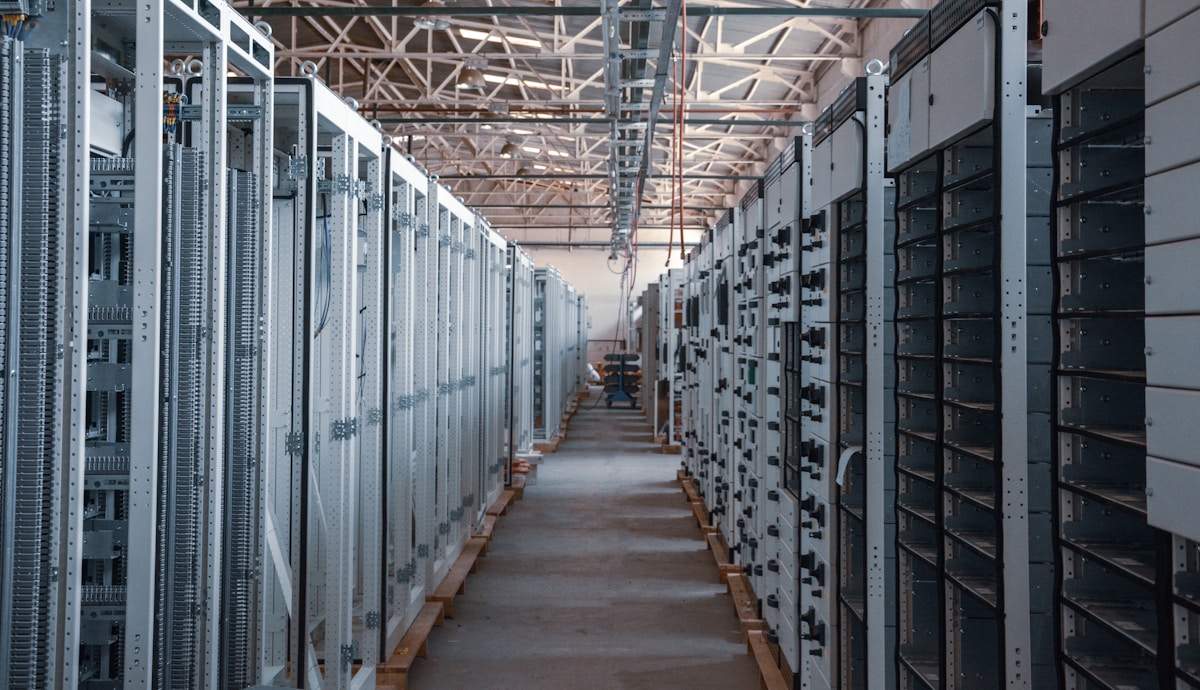
Meta has expanded its planned El Paso, Texas AI data center from a $1.5 billion regional facility into a $10 billion mega-campus targeting one gigawatt of compute capacity by 2028. The six-fold investment increase makes Meta's West Texas project the single largest committed AI infrastructure investment at any individual site in the world. It is a concrete demonstration of what the AI infrastructure arms race looks like when translated from vision statements into steel, concrete, and electrical switching gear at planetary scale.
The Scale That Rewrites What a Data Center Can Be
One gigawatt of data center capacity is almost incomprehensibly large. A typical hyperscale campus — the kind AWS, Google, and Microsoft operate across dozens of global sites — runs between 50 and 200 megawatts. Meta's El Paso facility at 1,000 megawatts will be five to twenty times that size, all concentrated on a single site. When it opens in 2028, it will likely require more electricity than the entire city of Buffalo, New York consumes annually. Meta has also referenced a $13 billion financing package in connection with the project's expanded scope, suggesting the ultimate investment may exceed even the $10 billion headline.
The acceleration in scope reflects the genuinely enormous capital requirements of frontier AI training. Meta has been expanding the El Paso commitment on a near-quarterly cadence — from $1.5 billion in October 2025 to $10 billion by March 2026 — driven by competitive urgency relative to Google, Microsoft, and Amazon, each of which began large-scale AI infrastructure investment several years earlier. Catching up requires not incremental expansion but step-change investment.
Why El Paso? The Strategic Geography of AI Infrastructure
El Paso's selection reflects a careful analysis of factors that matter more for AI compute than for traditional cloud workloads. West Texas offers abundant land at low cost, a developing renewable energy ecosystem anchored by solar and wind generation, and proximity to the ERCOT grid that has attracted significant clean energy investment. The city also benefits from a growing technical workforce connected to the University of Texas at El Paso and from state tax incentives making large-scale infrastructure investment significantly more economical than in coastal markets.
Meta's El Paso campus is its 29th data center globally and its third in Texas — reflecting a broader Texas infrastructure strategy aligned with the state's energy abundance and business-friendly regulatory environment. The company has signed contracts to add more than 5,000 megawatts of clean energy to the Texas grid, a scale of renewable energy procurement that will materially shift the state's electricity generation mix over the next five years and position Meta as one of the largest clean energy buyers in North America.
Jobs, Construction, and Community Impact
The immediate economic impact is significant. Meta has committed to 300 permanent jobs at the El Paso facility, with more than 4,000 construction workers required at peak building activity. For El Paso — a border city with GDP per capita roughly 60 percent of the US national average — a project of this scale represents a meaningful economic catalyst. The supply chain for data center construction includes electrical contractors, mechanical systems suppliers, networking equipment installers, and local service businesses that collectively benefit from multi-year construction cycles.
Longer term, the infrastructure leaves behind real physical assets: upgraded electrical substations, improved road access, and broadband buildout in surrounding areas — all of which can attract adjacent technology businesses and accelerate regional economic development. Historical patterns from Amazon, Google, and Microsoft data center campuses suggest that the initial direct employment impact is modest relative to capital invested, but the infrastructure catalytic effect on surrounding regions is often substantial over a ten-year horizon.
What 1 Gigawatt of AI Capacity Means in Practice
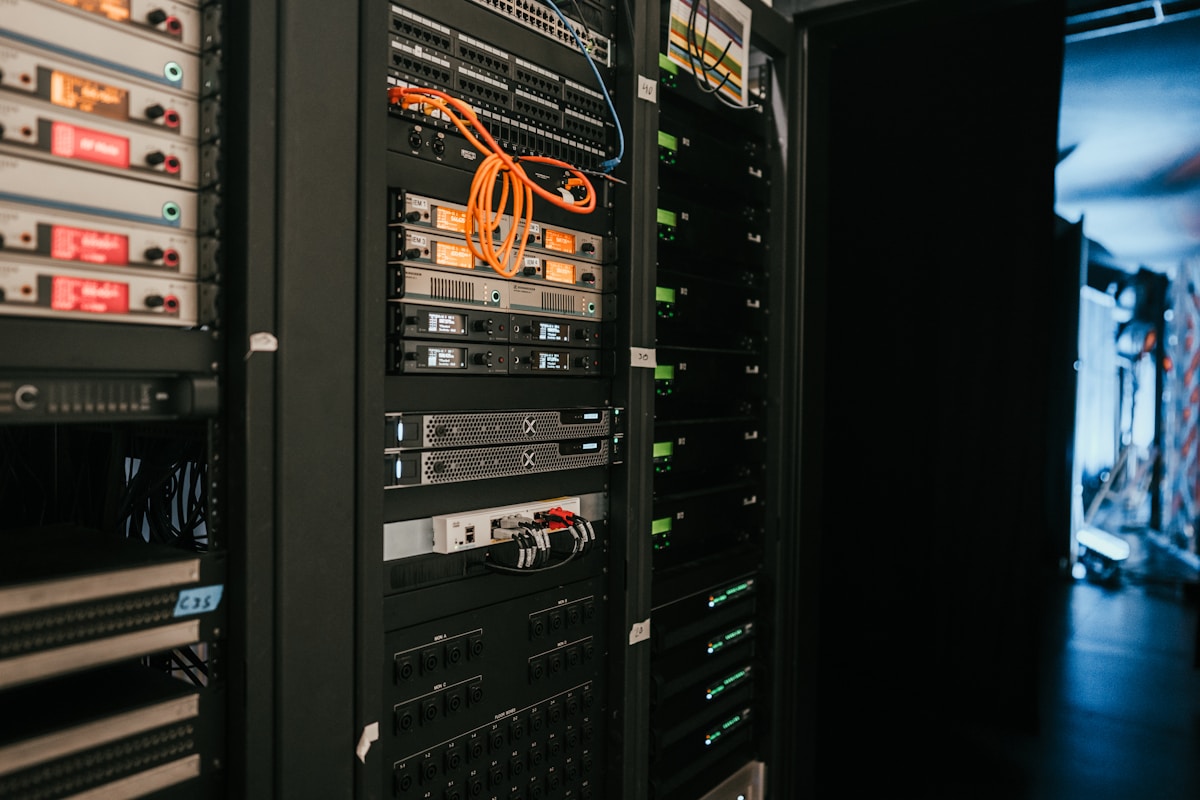
At full capacity running Nvidia H100 or successor GPU clusters at peak utilisation, a one-gigawatt facility could train multiple frontier-scale AI models simultaneously. For context, the training run for GPT-4 is estimated to have consumed approximately 50 megawatts sustained over several months. A one-gigawatt facility could theoretically run twenty such training runs simultaneously — or power inference for hundreds of millions of daily active users of Meta's AI products across WhatsApp, Instagram, Facebook, and Threads.
This matters because AI capability is increasingly correlated with training compute. The models defining the AI landscape in 2028 are being planned and resourced now. Meta's El Paso investment is, at its core, a bet that owning frontier training infrastructure allows it to develop models competitive with OpenAI, Google DeepMind, and Anthropic without depending on those organisations' APIs — a strategic independence that Mark Zuckerberg has identified as central to Meta's long-term positioning. Combined with Meta's continued investment in open-source Llama models, the Texas campus represents the supply-side foundation of Meta's ambition to shape the AI ecosystem rather than merely participate in it.
Competitive Implications
Meta's Texas investment is part of a broader hyperscaler infrastructure race reshaping the economics of AI development. Microsoft has committed to $80 billion in AI data center investment for 2025 and 2026 combined. Google has announced over $75 billion in 2026 capital expenditure, heavily weighted toward AI. Amazon has signalled comparable ambitions through AWS. In this context, Meta's $10 billion El Paso commitment — while enormous by any conventional standard — is a catching-up move. The race to build the infrastructure layer of the AI economy is accelerating, and the gap between companies that own frontier training infrastructure and those that do not will define competitive outcomes across AI product markets for the next decade.