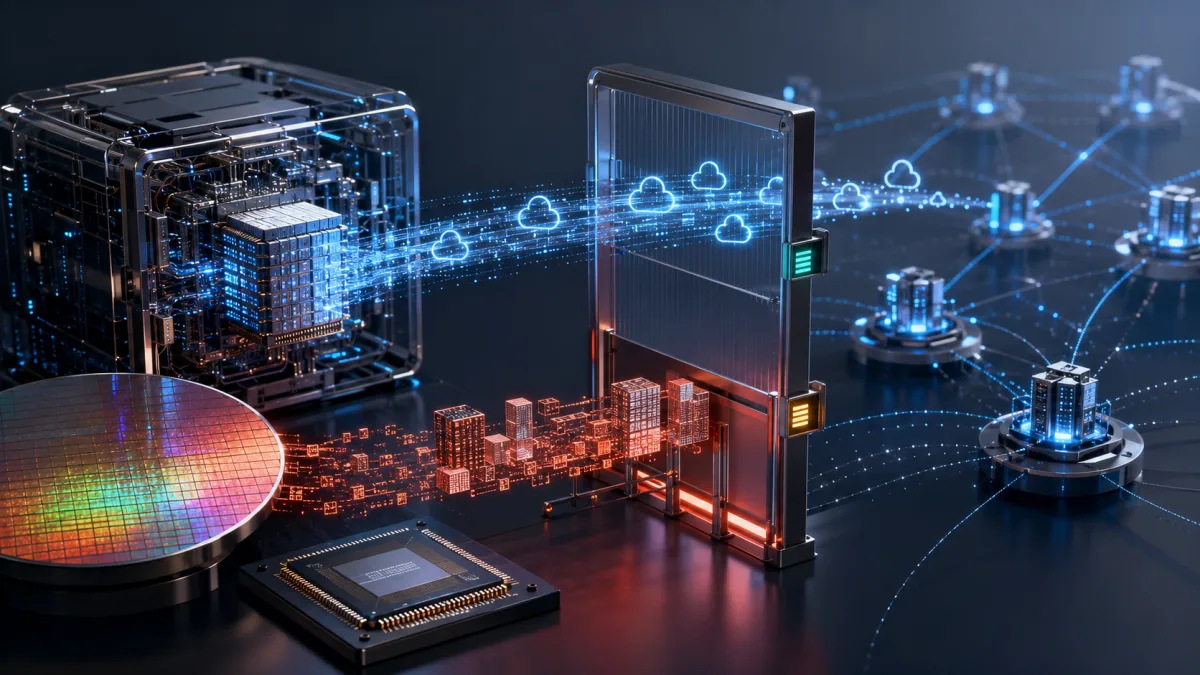
A number that would have seemed impossible five years ago is now official: Indian startups have secured a record $50 billion in global AI funding as of June 2026. This is not a projection — it is a documented milestone driven by top-tier international investment, a maturing domestic ecosystem, and the Indian government's IndiaAI Mission, which has systematically lowered the barrier to entry for AI-focused founders. For a country where startup funding was under $10 billion annually as recently as 2019, this represents a structural transformation of the Indian technology economy.

The Numbers Behind the Record
According to Tracxn's Q1 2026 India AI ecosystem report, Indian AI startups raised $1.48 billion in Q1 2026 alone, with AI accounting for 38% of all startup funding in India that quarter — nearly two in five funding dollars going to AI companies. This marks a decisive shift from the e-commerce, fintech, and edtech dominance of 2018–2022. The government's IndiaAI Mission has been a catalytic force: by providing 34,000 GPUs at Rs 115–150 per GPU-hour (approximately 42% below market rates), it has enabled early-stage founders to train and fine-tune models without the capital requirements that previously gated serious AI work. Y Combinator's 2026 India cohort — the largest ever at 23 Indian-founded companies — is heavily weighted toward AI applications.
Where the $50 Billion Is Going — and Who's Writing the Checks
International capital is the dominant force. SoftBank, Tiger Global, Sequoia Capital India, and a2 Capital have all made multiple India AI investments in 2025–2026. The India AI Impact Summit generated over $200 billion in multilateral investment commitments tied to India's AI ecosystem. The domestic investor community has also expanded: Blume Ventures, Elevation Capital, and Nexus Venture Partners have all raised new India-focused AI funds in 2026. The 2025–2026 AI wave is structurally different from the 2020–2022 boom: more investment is in early and mid-stage companies, more is in enterprise revenue-generating businesses rather than consumer platforms dependent on subsidy, and a larger share comes from strategic investors with operational interest in Indian AI success. Before this wave, India's AI startups were primarily building for international markets. After: a growing share are building for the 1.4 billion-person domestic market, in local languages, for local problems.
IndiaAI Mission: The Infrastructure Bet Paying Off
The IndiaAI Mission's Rs 10,371 crore ($1.25 billion) program is the most consequential AI policy initiative India has undertaken. Its GPU access program — 34,000 units at subsidized rates — has already had a measurable market impact. The government has committed to scaling to 1 lakh (100,000) GPUs by end of 2026. Previously, a competitive AI training setup cost $500,000–$2 million in US cloud credits before a founder could build a meaningful proof of concept. At IndiaAI Mission rates, the same compute costs $60,000–$150,000. Sarvam AI, selected under the IndiaAI Mission to build India's first homegrown sovereign large language model, is the flagship example — built by IIT alumni specifically optimized for Indian languages and use cases. See our analysis of Sarvam AI and India's sovereign LLM ambitions.
The Risks Embedded in the Record
A portion of the $50 billion figure includes announced commitments from the India AI Impact Summit that have not yet been deployed — the actual capital transferred to Indian startup bank accounts is lower. Additionally, concentration is significant: Tracxn data shows the top 15 Indian AI startups account for approximately 65% of total funding. The infrastructure gap also persists: India's domestic compute capacity remains heavily dependent on the IndiaAI Mission program, and private cloud GPU capacity is underdeveloped relative to demand. Reliance Jio's $110 billion investment addresses this long-term, but the near-term gap is real. See our overview of India's startup ecosystem challenges in 2026.
What This Means for You
If you are an Indian founder: the funding environment for AI is the best in Indian startup history. The IndiaAI Mission GPU program is underutilized — apply now at indiaai.gov.in/hub. If you are a job seeker in tech: AI roles in Indian startups are growing faster than any other segment. If you are an investor: the shift toward enterprise AI, away from consumer-subsidy models, makes this vintage of Indian AI startups structurally more interesting than the 2021 cohort.
Frequently Asked Questions (FAQs)
Q: How much AI funding have Indian startups raised in 2026?
A: Indian startups have secured a cumulative record of $50 billion in global AI funding as of June 2026. In Q1 2026 alone, Indian AI startups raised $1.48 billion, with AI accounting for 38% of all startup funding that quarter.
Q: What is the IndiaAI Mission GPU program and how can Indian startups apply?
A: The IndiaAI Mission provides 34,000 GPUs to Indian startups at Rs 115–150 per GPU-hour — approximately 42% below commercial cloud rates. Applications are accepted through indiaai.gov.in/hub. The government plans to scale to 1 lakh GPUs by end of 2026.
Q: Which Indian AI startups have raised the most funding in 2026?
A: The top-funded Indian AI startups include Sarvam AI, Krutrim, and several enterprise AI players in healthcare, fintech, and B2B SaaS. The top 15 companies account for roughly 65% of total funding.
Q: Is India's $50 billion AI funding milestone real or inflated by commitments?
A: The figure includes both deployed capital and announced commitments from the India AI Impact Summit 2026. The actual capital transferred to startups is lower, but the trend in actual investment is strongly upward — Q1 2026's $1.48 billion was the highest single quarter ever recorded for Indian AI startups.
Q: How does India's AI startup funding compare to China and the US in 2026?
A: The US leads globally with AI startup investment measured in hundreds of billions. China's AI investment has been constrained by export restrictions on advanced chips. India at $50 billion cumulative is now among the top 3 global AI investment destinations — a position it did not hold as recently as 2023.
India's AI funding story is real, and the structural drivers suggest this is a decade-long trend rather than a single-year spike. The $50 billion record will be broken again. The question for Indian founders is whether the capital translates to products that serve India's own 1.4 billion people.