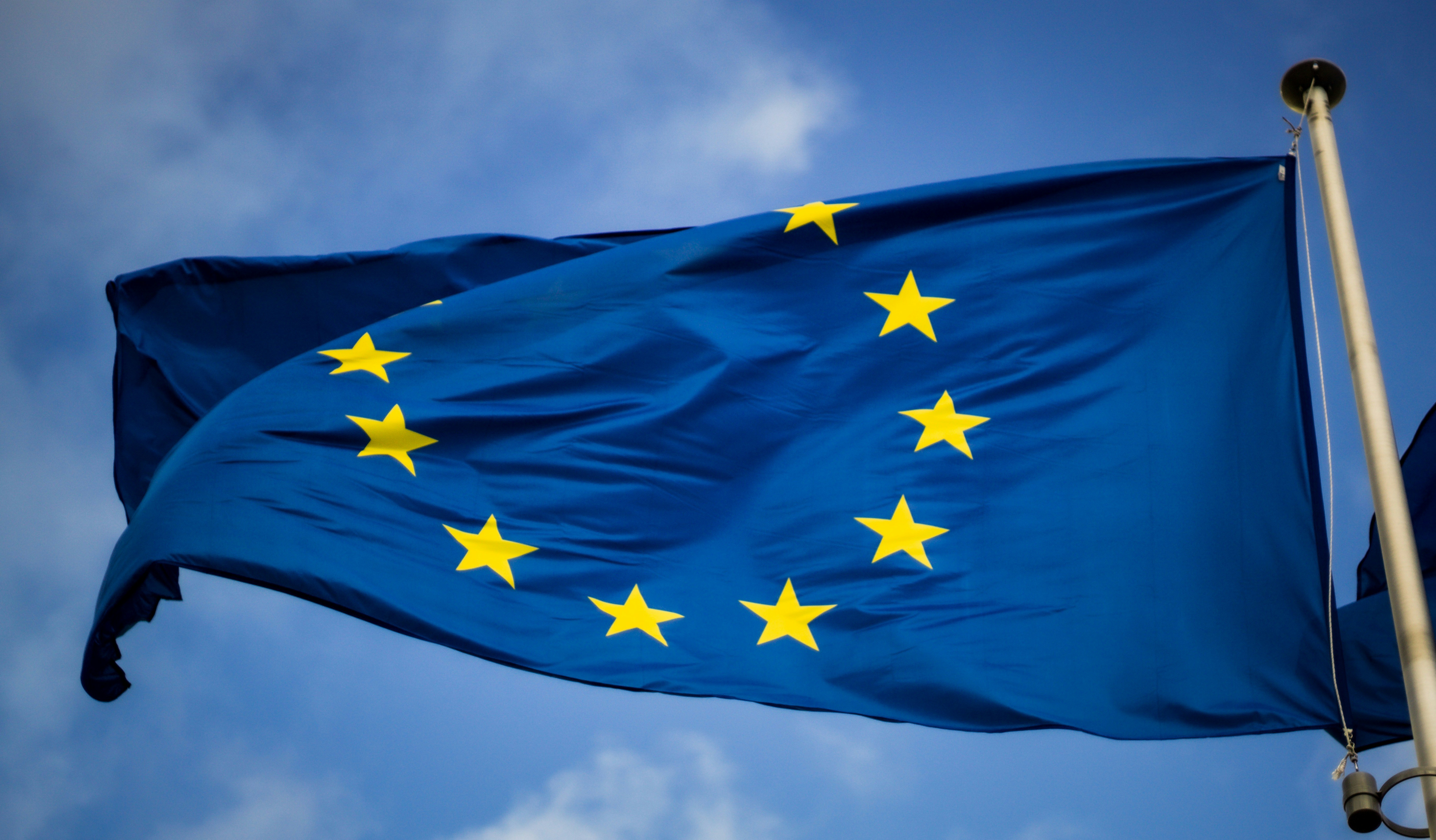
The European Union's AI Act — the world's first comprehensive legal framework for artificial intelligence — has been significantly amended in 2026, just as its initial requirements approached their first major enforcement date. On May 7, 2026, EU negotiators reached a provisional agreement on the Digital Omnibus on AI, delivering the first formal amendments since the Act's adoption. Deadlines have been extended, new prohibitions added, and compliance requirements clarified. If your business uses AI in any way that touches EU users — whether you're based in California, Bengaluru, or Berlin — here is exactly what changed and what you must do before August 2026.
The Four Key Changes Businesses Must Understand Now
Four changes matter most in 2026. First, the deadline for high-risk AI system compliance has been pushed back: standalone Annex III systems (AI used in employment, education, law enforcement, and migration decisions) now have until December 2, 2027 — a 16-month extension. Annex I embedded systems (AI integrated into regulated products like medical devices) have until August 2, 2028. The extension exists because the technical standards bodies (CEN/CENELEC) have not yet finalized the harmonized standards businesses need to benchmark compliance against. Second, the transparency and watermarking obligations under Article 50(2) remain on their original timeline: by August 2, 2026, AI systems generating images, video, or audio must embed machine-readable watermarks identifying content as AI-generated. This applies to any service accessible to EU users — US and Indian companies are in scope. Third, two new prohibited practices take effect December 2, 2026: AI generating non-consensual intimate imagery ("deepfake" sexual content) and AI producing child sexual abuse material (CSAM) — both now carry criminal liability in member states. Fourth, the amendments clarify the overlap between the AI Act and EU Machinery Regulation, giving AI components in industrial equipment a single compliance pathway instead of dual obligations. According to Gibson Dunn's analysis of the Digital Omnibus agreement, the extensions reflect a pragmatic acknowledgment that industry standards development has lagged behind the legislative timeline — not a weakening of the policy intent.

What This Means Specifically for Indian Companies in the EU Market
India's tech sector has significant EU exposure. Infosys, Wipro, TCS, and HCLTech collectively manage AI implementations for hundreds of European enterprises — from insurance claims processing to HR screening tools. Many of these involve what the AI Act classifies as high-risk AI systems: employment screening, credit assessment, healthcare diagnostics. These Indian IT companies are deployers under the Act and now have until December 2027 for standalone high-risk applications. But the August 2026 watermarking deadline is immediate. Any Indian SaaS company generating AI content (images, video, audio) for EU customers — and there are hundreds in marketing tech, media, and e-learning — must implement machine-readable watermarking on AI-generated outputs by August 2, 2026. GDPR taught Indian companies that EU regulation has real teeth; the AI Act's enforcement regime is modeled similarly, with fines up to €35 million or 7% of global annual turnover for prohibited practice violations. "Despite the extensions, it is critical that businesses continue their AI Act compliance efforts and finalize AI governance frameworks as soon as possible," note legal analysts at Gibson Dunn. This connects to the broader AI governance picture we examined in our analysis of the US FERC power grid fast lane ruling — the US is removing infrastructure barriers to accelerate AI, while the EU is installing compliance guardrails to govern it. Both regions are shaping the global AI regulatory landscape simultaneously.
US State Regulation: Colorado and California Moving Faster Than Federal
While the US federal government focuses on AI security and export controls rather than domestic regulation, US states are filling the gap. Colorado enacted a revised AI Act (SB 26-189) signed May 14, 2026, taking effect January 1, 2027. Colorado's law requires deployers of high-risk AI systems making "consequential decisions" (employment, credit, housing, education, healthcare) to provide pre-use disclosures and post-decision explanations to affected individuals, with civil penalties up to $20,000 per violation. California has similar requirements with opt-out mechanisms. For US businesses, the practical implication is that EU AI Act compliance frameworks — being more comprehensive — largely satisfy US state requirements as well. Building for EU compliance first is the efficient approach for globally operating companies.

What AI Governance Actually Needs to Look Like in 2026
The regulatory discussion sometimes obscures what businesses actually need to do. A practical 2026 AI governance framework for any company using AI in customer-facing or employment decisions requires four elements. First, an AI system inventory: map every AI tool touching customer decisions, hiring, or content generation. Most companies using AI have not done this systematically. Second, risk classification: for each system, determine whether it is prohibited, high-risk, limited-risk, or minimal-risk under the EU framework. Third, vendor contracts: ensure AI vendor agreements specify compliance with transparency and bias evaluation requirements — liability can flow up or down the supply chain. Fourth, human oversight mechanisms: high-risk AI systems must have documented processes showing human judgment was exercised on significant decisions, with audit trails. The compliance window for most high-risk systems is now December 2027 — 18 months from today. Enterprise compliance projects at this scale typically take 18–24 months. The extension feels generous; the timeline is not.
What This Means for You
For US businesses: the August 2026 watermarking deadline is your most immediate priority — if you use AI to generate images or video in products accessible to EU users, you need machine-readable watermarking in place now. For Indian IT companies serving EU clients: begin AI Act compliance assessments for high-risk deployments immediately. For individual users globally: AI-generated content you encounter online will increasingly carry invisible watermarks, making AI content detection more reliable and reducing deepfake risk. And for investors in AI compliance tooling companies: the EU AI Act is creating a multi-year compliance software market estimated at €2–4 billion annually by 2027.
Frequently Asked Questions (FAQs)
Q: When does the EU AI Act go into full effect?
A: The AI Act is partially in effect already. Prohibitions on unacceptable AI practices took effect February 2, 2026. Transparency and watermarking obligations take effect August 2, 2026. High-risk AI compliance requirements are now pushed to December 2, 2027 for most systems following the 2026 amendments.
Q: Does the EU AI Act apply to companies based in India or the US?
A: Yes. The EU AI Act applies to any AI system affecting EU users or deployed in the EU, regardless of where the company is headquartered. Indian SaaS companies, US AI providers, and any company with EU customers are all in scope for relevant provisions.
Q: What is AI watermarking and does my business need to implement it?
A: AI watermarking embeds an invisible machine-readable signal in AI-generated images, video, or audio identifying the content as AI-generated. Under Article 50(2) of the EU AI Act, this is mandatory from August 2, 2026 for any AI system generating synthetic media accessible to EU users. Check your AI vendor's compliance status — most major tools (Adobe Firefly, Midjourney, OpenAI DALL-E) are implementing this at platform level.
Q: What are the fines for violating the EU AI Act in 2026?
A: Fines for prohibited AI practices (including the new deepfake ban) can reach €35 million or 7% of global annual turnover, whichever is higher. High-risk AI non-compliance carries fines up to €15 million or 3% of global turnover. Providing incorrect information to regulators carries fines up to €7.5 million or 1.5% of global turnover.
EU AI Act compliance is not optional — and the 2026 amendments have made the timeline more complex, not simpler. Start your compliance mapping now. Follow global AI regulatory developments at our Cybersecurity & Privacy hub.