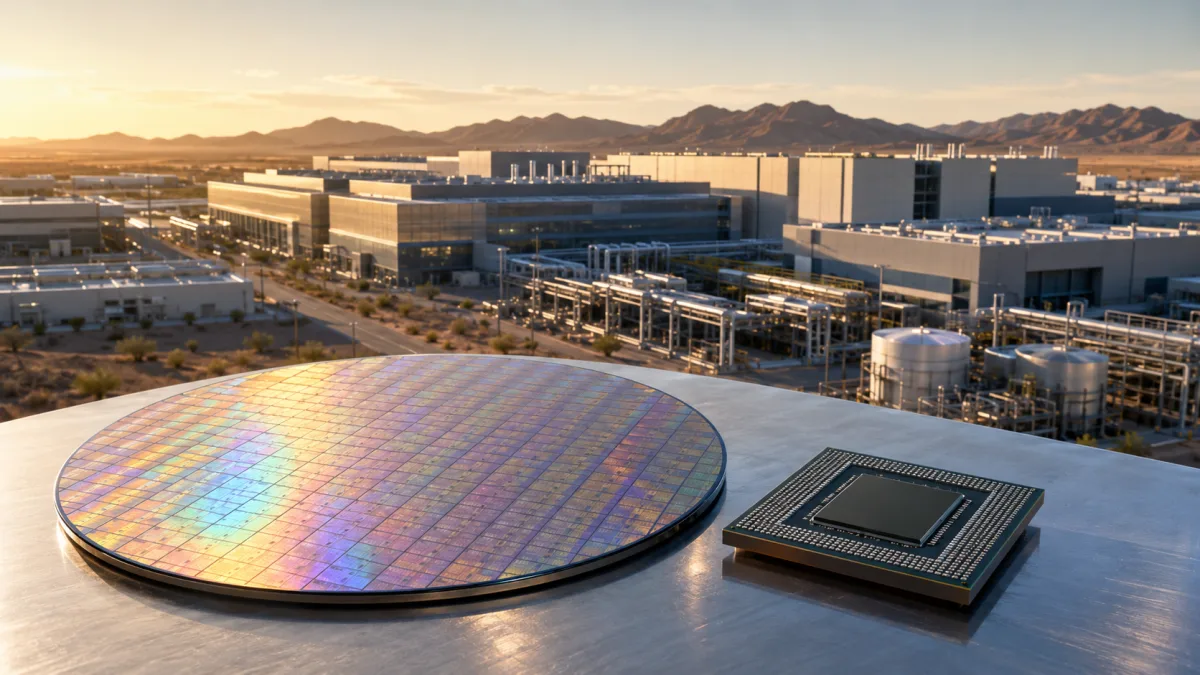
On July 4, 2026, Prime Minister Narendra Modi pressed the button that started commercial chip production at CG Semi's OSAT facility in Sanand, Gujarat — and India officially became a country that packages semiconductors at scale. Built with an investment of more than ₹7,500 crore, the plant will start at 200 million chips a year and scale to 500 million. In this article, you'll learn what this facility actually does, why "OSAT" matters more than most headlines suggest, who the plant serves, and what it means for Indian jobs, startups and electronics prices.

200 Million Chips a Year — India's Third Semiconductor Facility Goes Live
The CG Semi plant is an Outsourced Semiconductor Assembly and Test (OSAT) facility — the stage where fabricated silicon wafers are cut, packaged, wired and tested into the finished chips that go into cars, phones and industrial equipment. It is the third packaging facility to come online under the India Semiconductor Mission, after Micron and Kaynes Semicon, according to the Ministry of Electronics and IT.
The numbers are significant: over ₹7,500 crore invested, initial capacity of 200 million chips annually with a roadmap to 500 million, and a technology partnership with Japan's Renesas Electronics alongside Indian and Thai partners. The plant will produce both legacy packages (QFN, QFP) and advanced ones (FC-BGA, FC-CSP) used in automotive, telecom, consumer electronics and power management.
"This integrated partnership is going to give entirely new momentum to India's semiconductor journey," Modi said at the inauguration, congratulating the team for building India's chip capability "step by step, brick by brick, and chip by chip."
Before vs After: What Changes for India's Electronics Supply Chain
Until recently, every chip inside an Indian-assembled product made a round trip: fabricated in Taiwan or Korea, packaged in Malaysia or China, then imported into India. India assembled phones; it didn't touch the silicon.
The contrast now is real, if early. With Micron, Kaynes and CG Semi operational — and a target of five semiconductor plants running by the end of 2026 — a meaningful share of packaging and testing can happen domestically. That shortens supply chains, reduces import dependence for strategic sectors like automotive and defence, and captures more value per device inside India.
It's the same trajectory we mapped in our deep dive on India's Semiconductor Mission 2.0: packaging first, then progressively harder steps up the value chain. No country jumped straight to leading-edge fabs — Taiwan, Malaysia and China all started exactly where Sanand is starting today.
Why Sanand Is Becoming India's Chip Cluster

Sanand, once known mainly for the Tata Nano factory, is quietly turning into a semiconductor cluster. Micron's assembly and test plant is nearby, suppliers of gases, chemicals and precision components are setting up around the anchor units, and the Gujarat government has built dedicated infrastructure corridors for the industry.
Modi framed the ambition explicitly at the launch: "Our goal is not limited to establishing a single factory, but to building an entire ecosystem. India is now focusing on the complete semiconductor value chain." He added that as production scales, demand for materials and components within India will rise — "creating the biggest opportunity for domestic industries."
That ecosystem effect is where the jobs are. OSAT plants directly employ thousands of technicians and engineers, but the multiplier sits in the supplier network: chemicals, substrates, logistics, testing services and design houses that grow around every cluster. For engineering graduates, semiconductor packaging is becoming a genuine domestic career path for the first time.
What to Watch Next: Five Plants by End-2026
The government's stated target is five operational semiconductor facilities by the end of 2026. The pipeline includes more OSAT units and the Tata-PSMC fab in Dholera — the project that moves India from packaging chips to actually fabricating them. Alongside hardware, compute infrastructure is scaling too, as we covered in the IndiaAI Mission's GPU buildout — chips and compute are two halves of the same national strategy.
The key signals to track: whether CG Semi hits its 500-million-chip scale-up on schedule, whether anchor customers in automotive and telecom commit long-term volumes, and how fast the Dholera fab progresses. Packaging is the beachhead; fabrication is the war.
What This Means for You
If you work in electronics, automotive or manufacturing, domestic chip packaging means shorter lead times and, over time, more stable component pricing in rupees rather than dollars. If you're an engineering student or job seeker, OSAT plants and their supplier ecosystems are hiring across Gujarat — semiconductor skills (packaging, test engineering, quality) are now employable inside India. If you're an investor, watch the listed companies in the CG Semi ecosystem and the supplier base forming around Sanand and Dholera. India's chip story is no longer a policy document — it's a production line.
Frequently Asked Questions (FAQs)
Q: What does the CG Semi plant in Sanand actually make?
A: It packages and tests semiconductors — taking fabricated wafers and turning them into finished chips. It produces legacy packages like QFN and QFP plus advanced FC-BGA and FC-CSP packages for automotive, industrial, consumer electronics, telecom and power management applications.
Q: Is India now manufacturing its own chips?
A: Partly. Sanand handles assembly, testing and packaging (OSAT) — the final stages of chipmaking. Wafer fabrication still happens abroad, but the Tata-PSMC fab under construction in Dholera, Gujarat aims to bring that step to India as well.
Q: How many semiconductor plants does India have in 2026?
A: CG Semi's Sanand facility is the third to begin operations under the India Semiconductor Mission, after Micron and Kaynes Semicon. The government has said five plants should be operational by the end of 2026.
Q: How much was invested in the CG Semi Sanand facility and who are the partners?
A: The facility was built with an investment of more than ₹7,500 crore. CG Semi (part of the CG Power/Murugappa group ecosystem) developed it in partnership with Japan's Renesas Electronics, with additional Indian and Thai collaboration.
India resolved to build chips, and Sanand is the proof of concept rolling off the line at 200 million units a year. The next milestone — a working Indian fab — will decide how far this journey goes. Think India hits its five-plant target by December? Share your take and pass this on to someone following Make in India.