
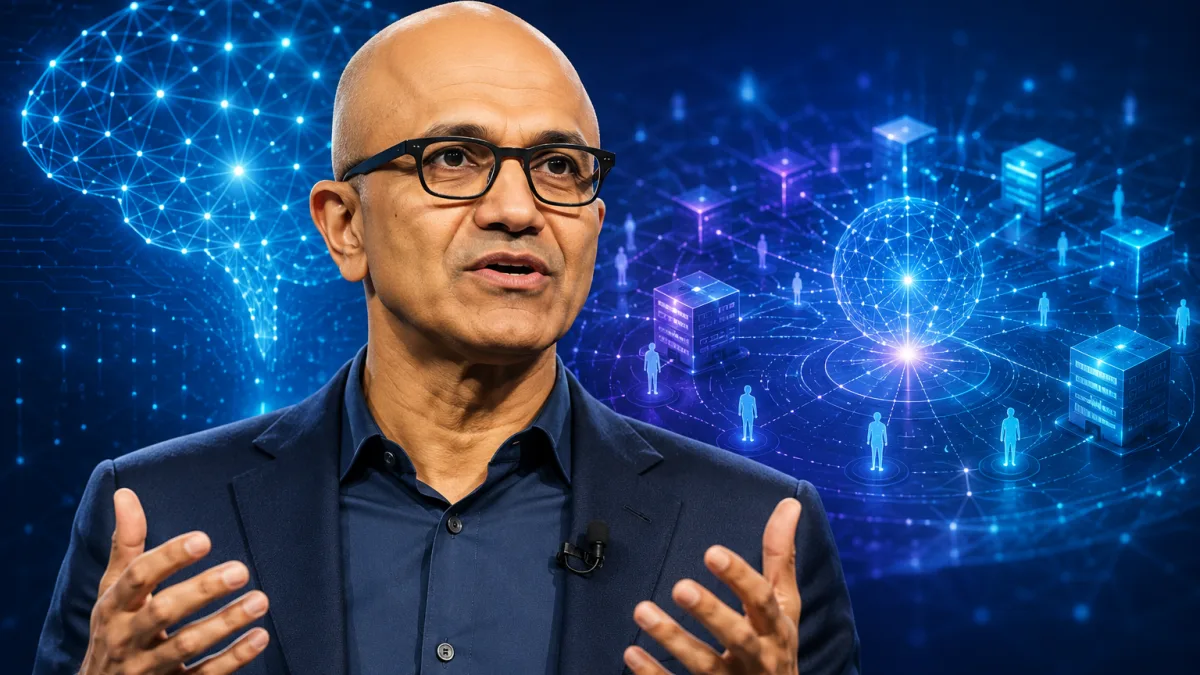
Why Satya Nadella Warned About AI Monopolies
Artificial intelligence is rapidly transforming industries worldwide. As AI adoption accelerates, concerns are growing that a few companies may gain excessive control over the technology.
Recently, Microsoft CEO Satya Nadella highlighted the risks of AI monopolies and stressed the importance of competition in shaping the future of artificial intelligence.
Healthy competition in AI benefits users, businesses, and innovation.
📷 Insert Content Image 1 Here
What Are AI Monopolies?
AI monopolies occur when a small number of companies control critical AI infrastructure, computing power, data, or distribution channels.
Such concentration can:
- Reduce competition
- Slow innovation
- Increase costs
- Create barriers for startups
Why Did Satya Nadella Raise Concerns?
According to industry experts, competition drives technological progress. When multiple companies innovate, consumers receive better products at lower prices.
The AI industry currently includes major players such as Microsoft, Google, OpenAI, Anthropic, and Meta.
📷 Insert Content Image 2 Here
How AI Competition Benefits Users
Competition in AI leads to:
- Better products
- Faster innovation
- Lower prices
- Greater accessibility
- Increased transparency
Users ultimately benefit when companies compete to build better AI systems.
The Future of AI Regulation
Governments around the world are now discussing AI regulations to ensure fairness, transparency, and competition.
The coming years will determine whether AI remains an open ecosystem or becomes concentrated in the hands of a few powerful organizations.
Did You Know?
💡 Training advanced AI models requires enormous computing resources.
💡 Open-source AI models are rapidly improving.
💡 AI regulation is becoming a major global policy discussion.
Conclusion
Satya Nadella's warning highlights an important challenge for the future of artificial intelligence: balancing innovation with competition.
As AI continues to evolve, ensuring a fair and competitive ecosystem will be critical for businesses, developers, and everyday users.