
Indian AI startup Sarvam AI closed a $350 million Series B round on June 3, 2026 — the largest single AI funding round in the history of India's startup ecosystem. The round was led by Lightspeed Venture Partners and Peak XV Partners, with participation from Khosla Ventures, Google, and — in a significant first — the Government of India's IndiaAI Mission fund. Here is what Sarvam actually builds, why investors are betting this scale of capital on it, and what the raise signals about where India stands in the global AI race.
What Sarvam AI Actually Builds
Sarvam AI is not trying to build a general-purpose model that competes with GPT or Gemini. Its focus is India-specific: large language models trained from scratch on Indian language data, rather than multilingual fine-tunes of English-primary models. The company's flagship open model — Sarvam-2B — is optimized for 10 Indian languages and has consistently outperformed GPT-4o and Gemini Pro on benchmarks for Hindi, Tamil, Telugu, Kannada, and Marathi in third-party evaluations. These five languages alone represent over 600 million native speakers, the majority of whom have been poorly served by AI products designed primarily for English. The commercial product is Sarvam APIs — a suite of enterprise voice and text AI services. Current enterprise customers include HDFC Bank, Airtel, and several Indian state government agencies running citizen services on Sarvam's voice AI infrastructure. The voice product handles calls in regional languages with dialect recognition — a capability that English-trained voice AI systems cannot replicate without significant degradation in accuracy.

Why Investors Put $350 Million Into a Language-Focused AI Company
The investment thesis for Sarvam AI rests on a clear market gap: India has 1.4 billion people, 22 constitutionally recognized languages, and a massive digital economy — yet virtually every AI product deployed at scale in India is built on models optimized for English. The commercial opportunity in voice AI alone is enormous: India's call center industry processes over 11 billion customer service calls annually, and the majority of these are in regional languages that English-trained AI handles poorly. Lightspeed partner Bejul Somaia confirmed in a statement that the firm views Sarvam as "the infrastructure layer for Indian AI" — the same position that hyperscalers occupy in global cloud, but specific to India's language and cultural context. The IndiaAI Mission's participation — a first for a private company — signals that the Government of India views Sarvam as aligned with national AI sovereignty goals, similar to how France has backed Mistral AI. This overlap of venture capital and government strategic interest creates a moat that pure-commercial AI startups cannot easily replicate. We covered the broader context of Indian startup funding in our analysis of India's startup funding decline in Q1 2026 — Sarvam AI is a notable counter-trend to that broader slowdown.
What $350 Million Buys Sarvam AI
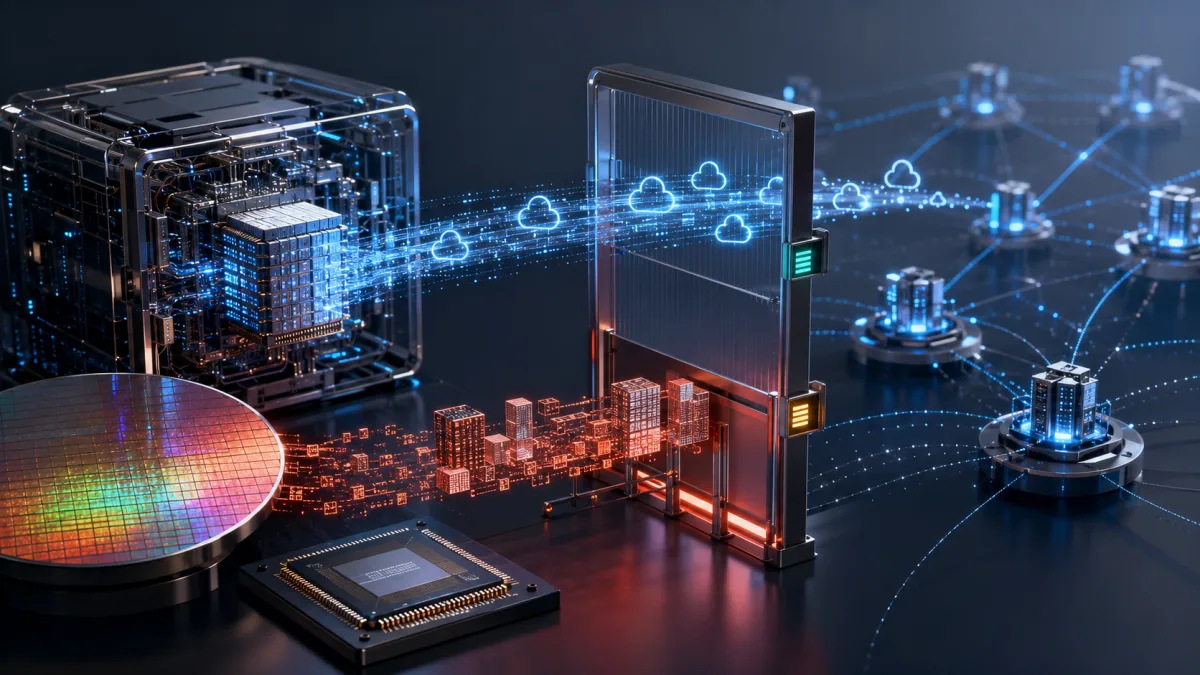
Sarvam AI's CEO Vivek Raghavan outlined four priorities in a post-announcement interview. First, India's first sovereign AI data center cluster: Sarvam will build its own GPU compute infrastructure in India rather than renting capacity from AWS or Azure, addressing data sovereignty requirements for its government customers. Second, a hiring push of 500 researchers — a significant scale-up from the current team of approximately 200. Third, expanding the Sarvam-2B model to cover all 22 scheduled Indian languages, from the current 10. Fourth, international expansion of the enterprise API business to Indian diaspora markets — particularly UK, US, and Middle East — where large Hindi-speaking populations have limited access to native-language AI services. The data center investment is the most strategically significant. Building sovereign compute capacity removes Sarvam's dependency on US cloud providers for its most sensitive government contracts, and positions the company as India's AI infrastructure provider in a way that a pure API-layer business could not.
What This Means for India's Place in the Global AI Race
India has lagged behind the US, China, and the UK in foundational AI investment — primarily because the country's startup ecosystem has been focused on SaaS and services rather than foundational research. Sarvam AI's $350 million round, combined with the Government of India's IndiaAI Mission (which has committed ₹10,372 crore — roughly $1.25 billion — to AI infrastructure and research), marks a genuine inflection point. The comparison to France and Mistral AI is instructive. France backed Mistral as a European sovereign AI alternative to US models. India is taking a similar approach with Sarvam — building a language AI capability that is not dependent on US infrastructure or US training data. This is consistent with the trajectory we described in our piece on India's Q1 2026 startup funding landscape: the category that is growing despite overall funding headwinds is deep-tech AI infrastructure.
Frequently Asked Questions (FAQs)
Q: What does Sarvam AI build and what is its core product?
A: Sarvam AI builds large language models specifically trained for Indian languages. Its flagship products are the Sarvam-2B open model optimized for 10 Indian languages, and Sarvam APIs — enterprise voice and text AI services used by major Indian banks, telecom companies, and government agencies.
Q: Who invested in Sarvam AI's $350 million round?
A: The round was led by Lightspeed Venture Partners and Peak XV Partners, with participation from Khosla Ventures, Google, and the Government of India's IndiaAI Mission fund.
Q: How does Sarvam AI compare to global AI companies?
A: Sarvam AI focuses on the Indian language AI market. Its Sarvam-2B model outperforms GPT-4o and Gemini Pro on benchmarks for Hindi, Tamil, Telugu, Kannada, and Marathi.
Q: What will Sarvam AI do with the $350 million funding?
A: Sarvam will build India's first sovereign AI data center cluster, hire 500 researchers, expand to all 22 scheduled Indian languages, and scale enterprise API services internationally.
Sarvam AI's $350 million raise is the most significant single event in India's AI story in 2026. Whether the company delivers on its sovereign AI infrastructure ambitions will determine whether India builds a lasting competitive position in AI — or remains dependent on US and Chinese platforms for its AI future. TechPopDaily will track Sarvam's data center build and model rollout over the coming months.