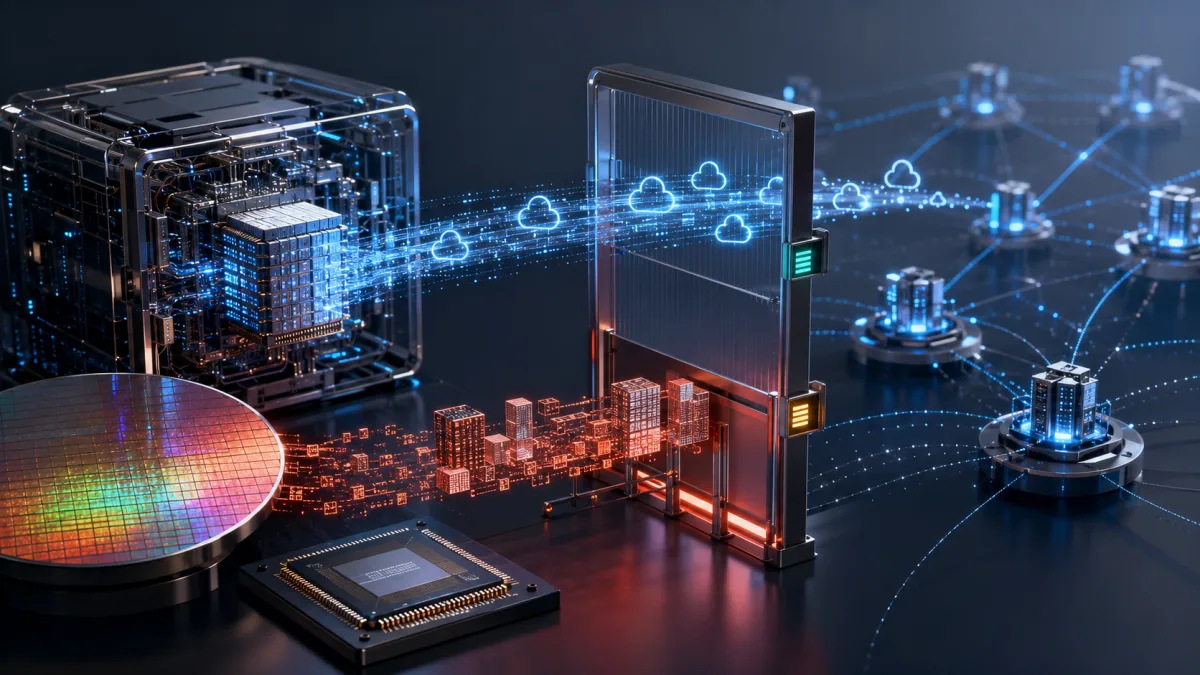
On June 10, 2026, OpenAI did something that would have seemed impossible three years ago: it filed a confidential S-1 registration statement with the SEC, beginning the formal process to become a public company. The targeted valuation is approximately $1 trillion — which would make it one of the five largest US IPOs in history. Before you add this to your watchlist, there are things about OpenAI's financials, competitive position, and structural risks that every investor must understand first.

The Financial Reality Behind the $1 Trillion Number
OpenAI reports approximately $2 billion in monthly revenue as of early 2026, annualizing to roughly $25 billion — confirmed by Fortune. ChatGPT crossed 800 million weekly active users. Enterprise revenue (ChatGPT Enterprise, API) is scaling rapidly. But the spend side is equally extraordinary: OpenAI reportedly loses more than it earns per dollar of revenue. Every dollar of revenue currently costs more than a dollar to produce, primarily due to the compute required for training frontier models and running inference at ChatGPT's scale. Microsoft's ~$13 billion investment and a $40 billion SoftBank-led round have kept cash flowing, but the path to profitability is not obvious or imminent. Underwriters Goldman Sachs, Morgan Stanley, and JPMorgan will tell a growth-over-profits story — but 2026 public markets are significantly more demanding about credible profitability paths than 2021 was.
The OpenAI Corporate Structure: Not a Normal Company
OpenAI began as a nonprofit, created a "capped profit" subsidiary where investor returns are capped at 100x, and converted to a Public Benefit Corporation (PBC) structure in 2025. What this means for public investors: voting rights and control structures may give insiders and the nonprofit board influence over decisions that traditional shareholders would normally control. Before/after the PBC conversion: Before, the nonprofit parent had absolute veto over commercial decisions. After, that influence is reduced but not eliminated. Read the S-1 governance section with extreme care — this is not a criticism of OpenAI's mission, but a factual note about what kind of equity you'd actually own.

The Competitive Threat From Four Directions Simultaneously
Microsoft launched seven in-house MAI models including MAI-Code-1-Flash — directly competing with GPT-4o on enterprise coding use cases. Google's Gemini 3.1 Flash-Lite launched the same week at $0.25/million tokens. Anthropic (Claude) is the preferred enterprise choice for reliability-critical applications. And China's DeepSeek released models in early 2026 matching GPT-4 class performance at a fraction of training cost, raising questions about long-term AI model pricing power. As we broke down in our analysis of enterprise AI market dynamics in 2026, the AI model market is moving from monopoly to oligopoly to commodity. Commodity markets don't sustain trillion-dollar valuations on a sustainable basis. Also notable: Anthropic disclosed its own IPO plans on June 1 — just nine days before OpenAI's S-1 filing — creating a direct public market comparison that will force investors to choose.
What the IPO Timeline Looks Like
OpenAI's expected listing window is September–Q4 2026, though the company has said it may wait longer. The confidential S-1 filing process allows SEC review before any public financial disclosure. Once the S-1 goes public, investors globally will see OpenAI's actual gross margins, compute costs, and segment revenue for the first time. That moment of transparency will be the most important data point for valuation — and it may significantly move the $1 trillion target in either direction. Indian investors on platforms like INDmoney and Groww that offer US stock trading will be able to participate via the RBI's Liberalised Remittance Scheme (LRS) at up to $250,000 annually per individual.
What This Means for You
For US retail investors: wait for the actual public S-1 before deciding. Read the governance section, the risk factors, and the path-to-profitability analysis before committing. For Indian investors: the same risks apply, and the IPO "pop" trade is far less reliable in the current market environment than in 2020–2021. For enterprise AI buyers: OpenAI's IPO preparation will likely accelerate commercial pivot — expect faster product development, potentially higher pricing, and more aggressive enterprise sales in H2 2026, which is a signal to lock in pricing terms now.
Frequently Asked Questions (FAQs)
Q: When will OpenAI's IPO actually happen?
A: OpenAI filed a confidential S-1 on June 10, 2026, targeting a September–Q4 2026 listing window. The company has said it may wait longer depending on market conditions. A confidential filing means financial details remain private until the S-1 is made public.
Q: What is OpenAI's valuation for the IPO?
A: The targeted IPO valuation is approximately $1 trillion — roughly 3x its most recent private funding round valuation of $300 billion from the $40 billion SoftBank-led round in early 2025.
Q: Can Indian investors buy OpenAI stock after its IPO?
A: Yes. Once listed on US exchanges, OpenAI stock will be purchasable through platforms like INDmoney, Groww, or Vested under the RBI's Liberalised Remittance Scheme (LRS), with an annual limit of $250,000 per individual.
Q: Is OpenAI profitable?
A: OpenAI is not yet profitable. With approximately $25 billion in annualized revenue, the company reportedly spends more than it earns per dollar of revenue due to high compute costs for model training and inference at ChatGPT's scale.
Q: What is the biggest risk in buying OpenAI stock at IPO?
A: Three primary risks: (1) the PBC/nonprofit governance structure where the nonprofit parent retains significant influence; (2) commoditization of AI models threatening long-term pricing power; and (3) current loss-making status at extraordinary scale requiring continued revenue growth to justify a trillion-dollar valuation.
The OpenAI IPO will be the most talked-about stock offering of 2026. Whether it's the opportunity of the decade or a cautionary tale depends entirely on which trajectory OpenAI's financials take in the next 12–24 months. Read the full S-1 when it goes public. All of it.