On June 8, 2026, OpenAI confirmed it had submitted a confidential draft S-1 to the SEC — the first formal step toward going public. The company was last valued at $852 billion post-money, and insiders say it's targeting a $1 trillion valuation at listing. This is the most anticipated technology IPO since Google in 2004. Here are the five things every investor must understand before the shares hit the market.
OpenAI's Revenue Numbers Are Extraordinary — And Still Growing
CFO Sarah Friar confirmed in January 2026 that annualized revenue had passed $20 billion, up from $6 billion in 2024 — a 233% increase in roughly 18 months. That growth rate is faster than Google's early years and comparable only to Nvidia's recent AI-driven surge. OpenAI earns from ChatGPT subscriptions (reportedly over 100 million paid users), enterprise API deals, and large one-off licensing agreements with governments and corporations.
Notably, the $500 billion Stargate AI infrastructure project with SoftBank and Oracle is structured partly as an OpenAI partnership, providing a long-term revenue stream that doesn't depend purely on consumer products. According to CNN Business's June 2026 IPO analysis, OpenAI's revenue diversification is more sophisticated than most pre-IPO tech companies at this stage.
The $600 Billion Infrastructure Problem — And Why It Could Hurt Margins
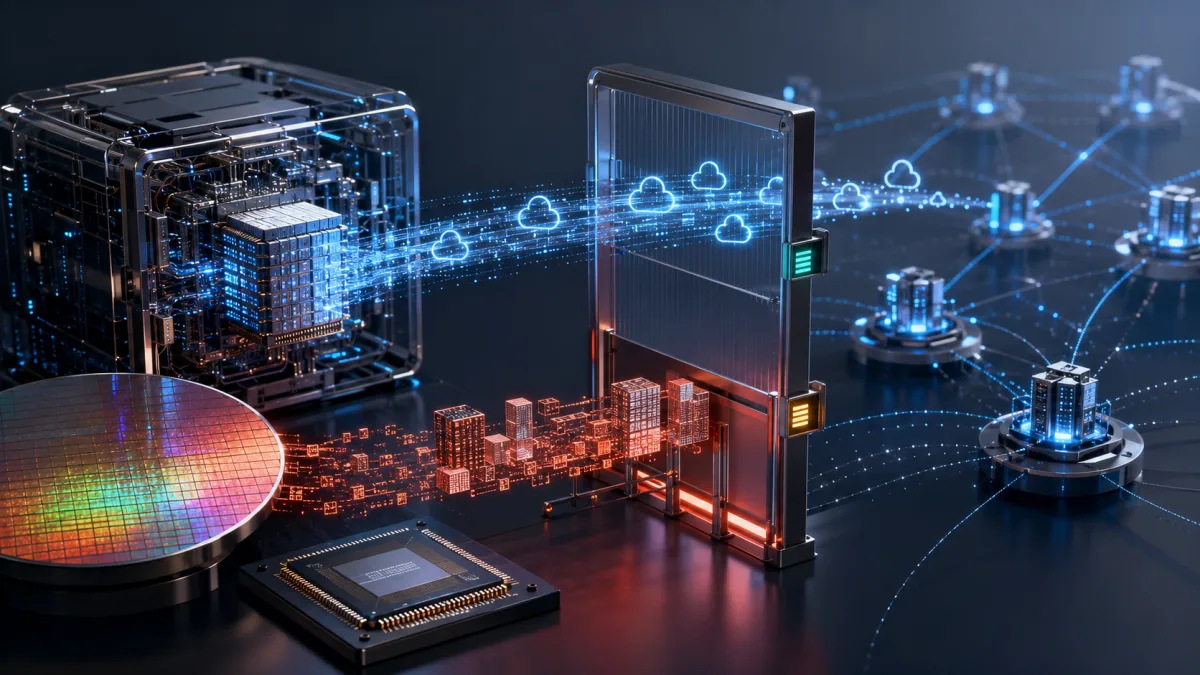
Here's the number that should give investors pause: OpenAI has reportedly told investors it plans to spend $600 billion on computing power by 2030. Training and running frontier AI models requires enormous compute — and OpenAI competes with Google, Microsoft, and Amazon, all of which own their own data center infrastructure. OpenAI does not.
The comparison is stark: Google's capital expenditure on data centers runs roughly $50–70 billion per year with decades of infrastructure advantage. OpenAI is effectively trying to build the equivalent from scratch while simultaneously serving hundreds of millions of users. Gross margins at OpenAI are estimated to be significantly below typical software norms, though exact figures haven't been disclosed in the confidential S-1.
As we covered in our analysis of how AI is reshaping the economy in 2026, the infrastructure race is becoming as important as the model race — and whoever controls compute controls the AI future.
Sam Altman's Equity and the Governance Question
One of the most unusual aspects of OpenAI's structure is its history as a nonprofit-turned-capped-profit-then-full-for-profit entity. CEO Sam Altman, who was briefly fired by the board in late 2023 before being reinstated within days, now stands to hold significant equity in the public company. The exact structure of his compensation package — reportedly including a multi-percent stake — will be one of the most watched disclosures in the S-1.
Governance is a central question. The original OpenAI board had a "mission-first" mandate that created the 2023 crisis. The restructured company has moved toward a more conventional corporate governance model, but investors will scrutinize board composition, voting rights, and whether any mission-alignment clauses remain that could conflict with profit maximization.
Who the Competition Is — and Why It Matters for Valuation
OpenAI doesn't trade in isolation. Its IPO will be compared to Anthropic (also expected to go public in 2026), Google's Gemini business within Alphabet, and Microsoft's $13 billion OpenAI investment. The $852B pre-money valuation means OpenAI is already priced like one of the most valuable companies in history — before a single share has traded publicly.
At $852B, OpenAI would be more valuable than Berkshire Hathaway, JPMorgan, and TSMC at their current market caps. That leaves limited upside at IPO unless revenue growth maintains its current velocity. The Wall Street Journal reported the IPO is being laid out for Q4 2026 — meaning pricing decisions will happen in a market environment that is currently pricing AI optimism at historic highs.
What This Means for You
If you're a retail investor eyeing OpenAI's IPO, wait for the public S-1 before making any decisions — the financials, governance structure, and use of funds will change the risk picture significantly. Watch for margin figures specifically: if compute costs are eating too much of revenue, the $1 trillion target valuation becomes very hard to justify. Consider that Microsoft (which owns ~49% of OpenAI's commercial entity) is already publicly traded and provides indirect exposure. As always with high-profile AI IPOs, the question isn't whether the technology is real — it clearly is — but whether the price reflects the risk appropriately.
Frequently Asked Questions (FAQs)
Q: When will OpenAI go public?
A: OpenAI filed a confidential S-1 on June 8, 2026. The Wall Street Journal reported the company is targeting a Q4 2026 IPO, but no official listing date has been confirmed. The S-1 must become public before shares are offered.
Q: What is OpenAI's valuation for the IPO?
A: OpenAI was last valued at $852 billion post-money after closing a $122 billion funding round. The company is reportedly targeting a $1 trillion valuation at the time of public listing.
Q: How much revenue does OpenAI make in 2026?
A: As of January 2026, OpenAI's annualized revenue exceeded $20 billion, up from $6 billion in 2024 — a 233% increase in roughly 18 months, driven by ChatGPT subscriptions, enterprise APIs, and government licensing deals.
Q: Can retail investors buy OpenAI stock at IPO?
A: Yes, once OpenAI lists publicly, retail investors can purchase shares through standard brokerage accounts. However, IPO allocations at offering price typically go to institutional investors first. Most retail investors buy in the secondary market after listing.
Q: What are the biggest risks of investing in OpenAI's IPO?
A: The primary risks are the massive planned compute spending ($600 billion by 2030), intense competition from Google and Microsoft, governance uncertainty, and a valuation that already prices in years of optimistic growth before a single public quarter is reported.
OpenAI's IPO is shaping up to be the defining financial event of the AI era. But history shows that the most hyped tech IPOs don't always reward early public investors. Do your due diligence, read the full S-1 when it's released, and don't let the hype override the math.