
Why the Vera Rubin Platform Is NVIDIA's Most Ambitious Bet Yet
NVIDIA's Jensen Huang used the stage at CES 2026 to unveil the company's most ambitious hardware roadmap to date: the Vera Rubin platform, a computing architecture set to begin replacing the current Blackwell generation in the second half of 2026. Named after the pioneering astronomer who discovered evidence for dark matter, Vera Rubin represents a complete ground-up redesign of NVIDIA's AI compute stack — encompassing the Vera CPU, the Rubin GPU, and four new networking and storage chips designed to work together in a tightly integrated system.
The significance of this announcement cannot be overstated. Blackwell GPUs are already the most powerful AI accelerators in commercial production, yet demand for them has so far outstripped supply that NVIDIA has been on allocation since launch. Vera Rubin is designed to be substantially more powerful — and more efficient — than Blackwell, targeting the next generation of AI workloads that require reasoning at scale, agentic multi-step processing, and real-time inference for large multimodal models.

The Vera CPU: NVIDIA's First Custom Processor for AI
For the first time, NVIDIA is launching its own CPU alongside its GPU. The Vera CPU is a custom Arm-based chip designed specifically to manage the data movement, orchestration, and pre-processing demands of modern AI workloads. Current NVIDIA systems pair Blackwell GPUs with AMD EPYC or Intel Xeon CPUs — an architecture that creates bottlenecks as the CPU becomes the limiting factor in feeding data to the GPU fast enough.
By designing the Vera CPU in-house with AI workload optimization as the primary constraint, NVIDIA aims to eliminate this bottleneck. Early performance projections suggest a 2–3x improvement in end-to-end AI inference throughput compared to paired Blackwell/EPYC systems, with particularly strong gains on memory-bandwidth-intensive workloads like large language model serving.
The NVIDIA Agent Toolkit: Open-Source Enterprise AI
Alongside the hardware roadmap, NVIDIA announced the NVIDIA Agent Toolkit at GTC 2026 — an open-source platform for building autonomous enterprise AI agents that can operate across multiple systems and APIs. The Toolkit is designed to integrate with NVIDIA's NIM microservices architecture, allowing developers to deploy agents that run efficiently on NVIDIA hardware both in the cloud and at the edge.
For US enterprises, the Agent Toolkit lowers the engineering barrier to building production-grade AI agents. Rather than assembling custom frameworks from scratch, developers can use pre-built agent components for planning, memory management, tool use, and multi-agent coordination. Several Fortune 500 companies in manufacturing, logistics, and financial services have already deployed early versions through NVIDIA's enterprise program, with results including 40% reduction in manual data processing time and 25% improvement in supply chain decision accuracy.
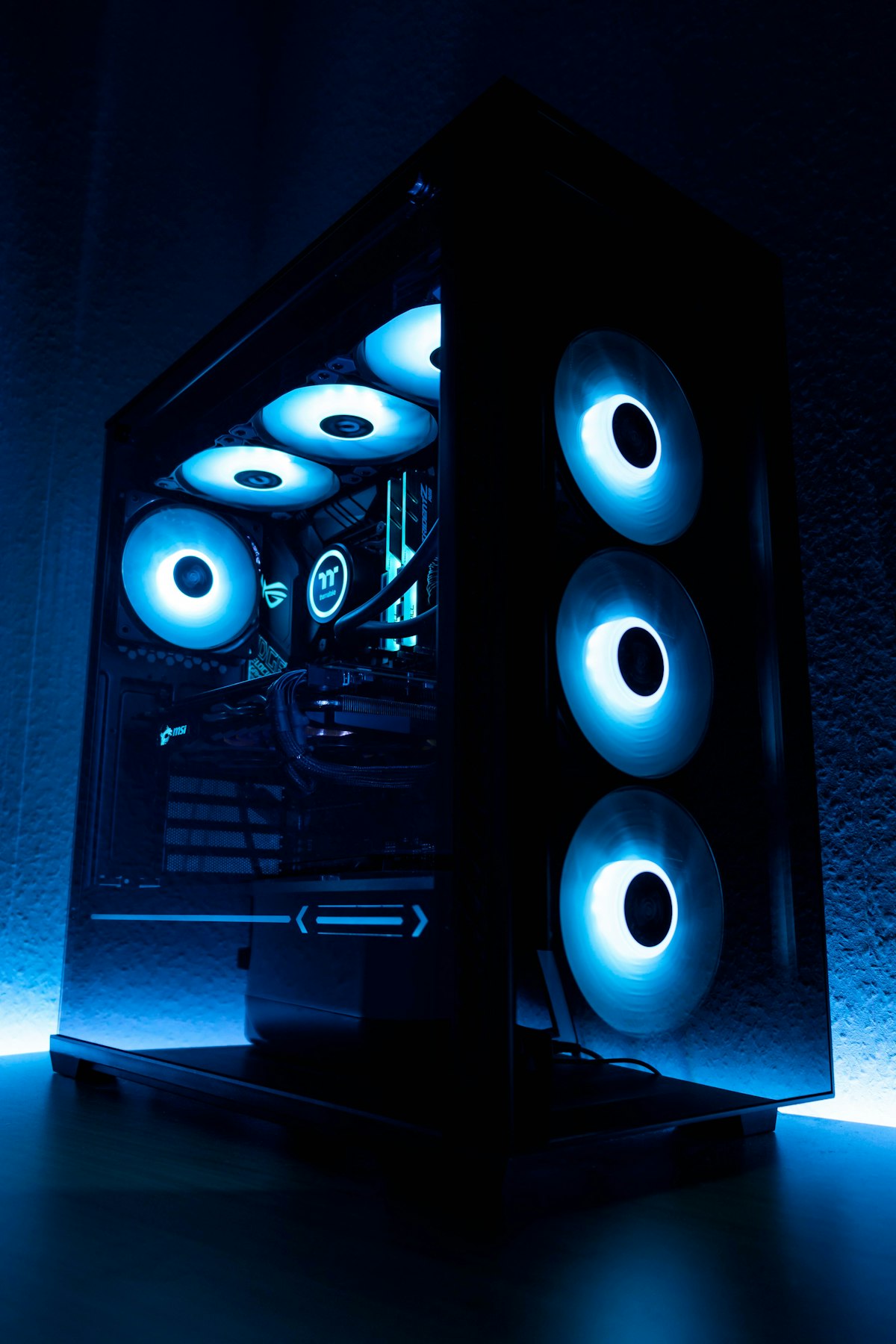
Competition: AMD's 6th Gen EPYC on TSMC 2nm
NVIDIA's dominant position in AI chips faces its most credible competitive pressure from AMD, which has kicked off production of its 6th Generation EPYC processors on TSMC's 2nm process technology — the first high-performance computing product to enter production at this node. AMD's strategy differs from NVIDIA's: where NVIDIA controls the entire AI stack from chip to framework to cloud service, AMD is targeting data center CPU workloads and positioning its Instinct MI-series GPUs as a more open, standards-based alternative for enterprises wary of NVIDIA vendor lock-in.
The question is whether AMD can translate production leadership at 2nm into meaningful market share gains in AI compute before NVIDIA ships Vera Rubin at scale. The window is likely 12–18 months — after which NVIDIA's architectural advantages at the system level may once again dominate performance benchmarks.
Investment and Supply Chain Considerations for Enterprise Buyers
For US enterprise IT and procurement teams, the Vera Rubin announcement creates a familiar dilemma: buy Blackwell now to meet current AI compute demands, or wait for Vera Rubin's significantly improved performance and efficiency. NVIDIA's historical upgrade cycle suggests Vera Rubin systems will carry premium pricing at launch, with prices normalizing 12–18 months later as supply scales. Organizations with immediate AI deployment timelines should proceed with Blackwell procurement while planning for Vera Rubin in their 2028 refresh cycles. Those with more flexibility may benefit from waiting, particularly if their primary AI workloads involve large model inference rather than training — the area where Vera Rubin's efficiency improvements are expected to be most dramatic.