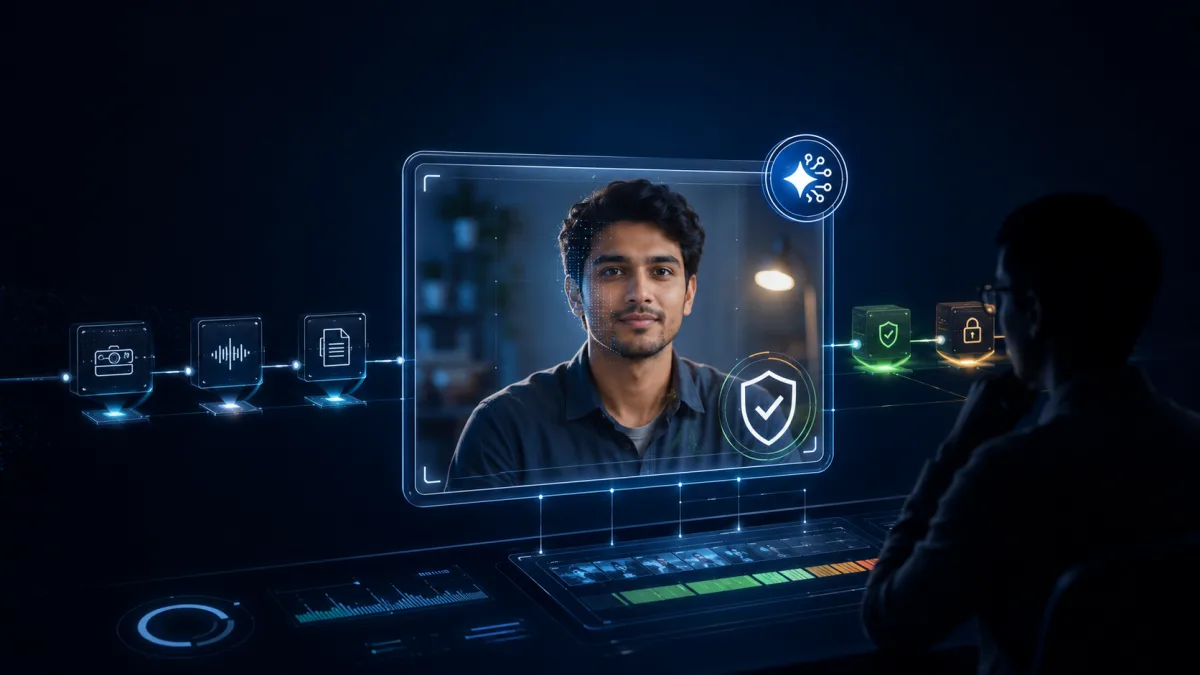
India's Unified Payments Interface (UPI) was already the world's most successful real-time payments network. Now it's getting something no other payments system at this scale has attempted: a dedicated AI layer. The National Payments Corporation of India (NPCI) has developed FiMI (Financial Middleware Intelligence), an AI system designed specifically for UPI that manages dispute resolution, fraud detection, mandate management, and natural-language support across 12 Indian languages. With 500 million active users and over 21 billion monthly transactions — more than all US card transactions combined — UPI's AI upgrade isn't a fintech experiment. It's the most significant AI deployment in financial infrastructure anywhere in the world.
What FiMI Actually Does
FiMI operates as an intelligence layer between UPI's transaction rails and the applications and banks that sit on top of them. Before FiMI, dispute resolution on UPI was a largely manual process: a user reported a failed transaction or fraudulent charge, a bank representative reviewed the case, and resolution could take days or weeks. At 21 billion monthly transactions, even a 0.1% dispute rate means 21 million cases per month — a volume that no manual system can handle efficiently. FiMI automates the majority of this dispute resolution pipeline. It can identify the root cause of a failed transaction (network failure, insufficient balance, technical timeout, or suspected fraud) within seconds, classify the dispute, route it to the appropriate resolution path, and in many cases resolve it automatically without human intervention. For genuine fraud cases, FiMI's pattern recognition can flag suspicious transaction sequences that would be invisible to rule-based fraud systems — like a series of small test transactions preceding a large fraudulent transfer, or unusual geographic patterns in mandate usage. The mandate management capability is particularly important for India's growing subscription economy: UPI mandates allow users to pre-authorize recurring payments for services like streaming, insurance premiums, and loan EMIs. Managing the lifecycle of hundreds of millions of active mandates — creation, modification, cancellation, and failure handling — requires the kind of scale-aware intelligence that only an AI system can provide.
The 12-Language Capability Is Underrated
One of FiMI's most important features gets less attention than the fraud and dispute capabilities: multilingual support across 12 Indian languages. India has 22 officially recognized languages and hundreds of dialects. For UPI to serve its full potential user base — which includes farmers in rural Odisha, street vendors in Tamil Nadu, and small business owners in Gujarat — the AI assistant layer cannot function only in Hindi and English. FiMI's 12-language capability means that a user can ask "मेरा पैसा क्यों कटा?" (why was my money deducted?) in Hindi, or the equivalent in Tamil, Telugu, Bengali, or Marathi, and receive an accurate AI-generated response explaining the transaction status. This is not just a user experience improvement — it's a financial inclusion mechanism. The next 200 million UPI users are more likely to be comfortable in regional languages than English, and AI-powered multilingual support lowers the barrier to adoption more effectively than any marketing campaign could. For comparison, no major Western payments system has deployed multilingual AI support at this scale. Visa and Mastercard's customer-facing AI is primarily English-first with limited language coverage. FiMI's 12-language deployment positions UPI as a model for payments AI in multilingual markets globally — which includes most of Southeast Asia, Sub-Saharan Africa, and Latin America.

Cambodia-India Cross-Border UPI: What Happened on June 3
On June 3, 2026, NPCI International (NPCI's global arm) enabled cross-border UPI transactions between India and Cambodia — a milestone that extends UPI's reach into Southeast Asia and validates India's payments infrastructure as an export product. The Cambodia linkage follows earlier cross-border UPI deployments in Singapore, UAE, Nepal, Bhutan, and Malaysia. The significance is not just geographic expansion. Each cross-border linkage creates a real-world test environment for FiMI's capabilities in cross-border fraud detection — where transaction patterns are inherently more complex than domestic payments because they involve currency conversion, correspondent banking relationships, and regulatory compliance across two jurisdictions. FiMI's ability to manage fraud and disputes in cross-border contexts is what makes UPI's international expansion credible. Without AI-powered dispute resolution, cross-border payment failures — which are more common than domestic ones — would create user experience problems that undermine adoption. As we explored in our analysis of India's AI startup ecosystem, the combination of multilingual AI capability and large-scale financial data makes India uniquely positioned to build AI tools for emerging markets that Western companies have not prioritized.
What This Means for You
If you are a UPI user, the FiMI deployment means faster dispute resolution and better fraud protection — particularly for mandate-based payments like subscriptions and EMIs. If you have experienced failed UPI transactions that took days to reverse, the AI-powered resolution pipeline should make those cases significantly faster to resolve. If you are a business accepting UPI payments, the improved mandate management means fewer failed recurring payment attempts — which directly affects subscription revenue for any business relying on UPI AutoPay for recurring billing. If you are a developer building on UPI's APIs, NPCI's AI layer creates new possibilities for intelligent payment experiences: AI-assisted payment setup, natural language payment confirmation, and fraud-aware transaction flows. The FiMI developer documentation is expected to be published to NPCI's developer portal later in 2026.
Frequently Asked Questions (FAQs)
Q: What is NPCI FiMI and what does it do?
A: FiMI (Financial Middleware Intelligence) is NPCI's AI layer for the UPI payments network. It handles dispute resolution, fraud detection, mandate lifecycle management, and multilingual customer support across 12 Indian languages. FiMI is designed to manage the scale of 21 billion monthly UPI transactions with AI-powered automation rather than manual review processes.
Q: How many users and transactions does UPI handle in 2026?
A: As of 2026, UPI serves approximately 500 million active users and processes over 21 billion monthly transactions. This makes UPI the world's largest real-time payments network by transaction volume — larger than all US card transactions combined. The network has grown from 1 billion monthly transactions in 2019 to 21 billion in 2026.
Q: Is India's UPI being used outside India?
A: Yes. NPCI International has enabled cross-border UPI payments in Singapore, UAE, Nepal, Bhutan, Malaysia, and as of June 3, 2026, Cambodia. India is actively expanding UPI's global footprint through bilateral payment linkages and is positioning UPI as a payments infrastructure export product for other countries to adopt or interoperate with.
Q: How does FiMI's fraud detection work?
A: FiMI uses pattern recognition to identify suspicious transaction sequences that rule-based fraud systems miss — for example, a series of small test transactions preceding a large fraudulent transfer, unusual geographic patterns in mandate usage, or anomalous account behavior. Unlike traditional fraud rules that can only catch known fraud patterns, FiMI's AI can identify novel fraud techniques by recognizing statistical anomalies in transaction behavior at scale.
FiMI represents something rare in the history of AI deployment: a genuine large-scale infrastructure application rather than a consumer feature. With 500 million users and 21 billion monthly transactions as its proving ground, the lessons NPCI learns from FiMI will shape how AI gets deployed in financial infrastructure globally. India isn't just building for itself — it's building the playbook for payments AI in the next billion connected users. Follow our coverage for ongoing updates on India's fintech and AI developments.