The Day Microsoft Stopped Building Assistants and Started Building Agents
On June 2, 2026, Satya Nadella walked onto the Fort Mason Center stage in San Francisco and delivered a message the software industry had been circling for two years: AI is no longer about answering questions—it is about running the work. Microsoft Build 2026 was a declaration that the PC era is giving way to an agent era. Microsoft processed more than 100 billion AI-assisted tasks in Q1 2026 alone across its enterprise customer base—a figure expected to triple by year-end.
Project Polaris: Microsoft Cuts the OpenAI Cord on Copilot
The most consequential announcement was Project Polaris—Microsoft's own in-house AI reasoning model built to replace GPT-4 Turbo as the default engine for GitHub Copilot. Starting August 2026, every Copilot subscriber will run on Polaris. Microsoft has invested $13 billion into OpenAI since 2019, but Polaris signals the company intends to own the full stack—from silicon to model to developer experience—with optimization specifically for code reasoning, multi-step planning, test generation, and autonomous debugging loops.

Copilot Workspace Goes Generally Available
GitHub's Copilot Workspace—the agentic programming environment where Copilot reasons across an entire repository—exited beta at Build and is now generally available to all GitHub Enterprise customers. Workspace can propose multi-file edits, run tests, interpret failures, and iterate autonomously. Early adopters report 40–60% reduction in time-to-PR. Goldman Sachs piloted Workspace across 200 engineers in Q1, with junior developers completing tasks previously reserved for seniors.
Windows Agent Framework and Azure Agent Mesh
Microsoft open-sourced the Windows Agent Framework (WAF)—a runtime letting AI agents invoke native Windows APIs, manage files, and control applications without custom integrations. Azure Agent Mesh is the cloud-side orchestration layer for multi-agent workflows, coordinating fleets of specialized sub-agents in parallel through a shared memory layer. Enterprise pricing starts at $0.08 per 1,000 agent steps.

NVIDIA RTX Spark: The On-Device AI PC Hardware
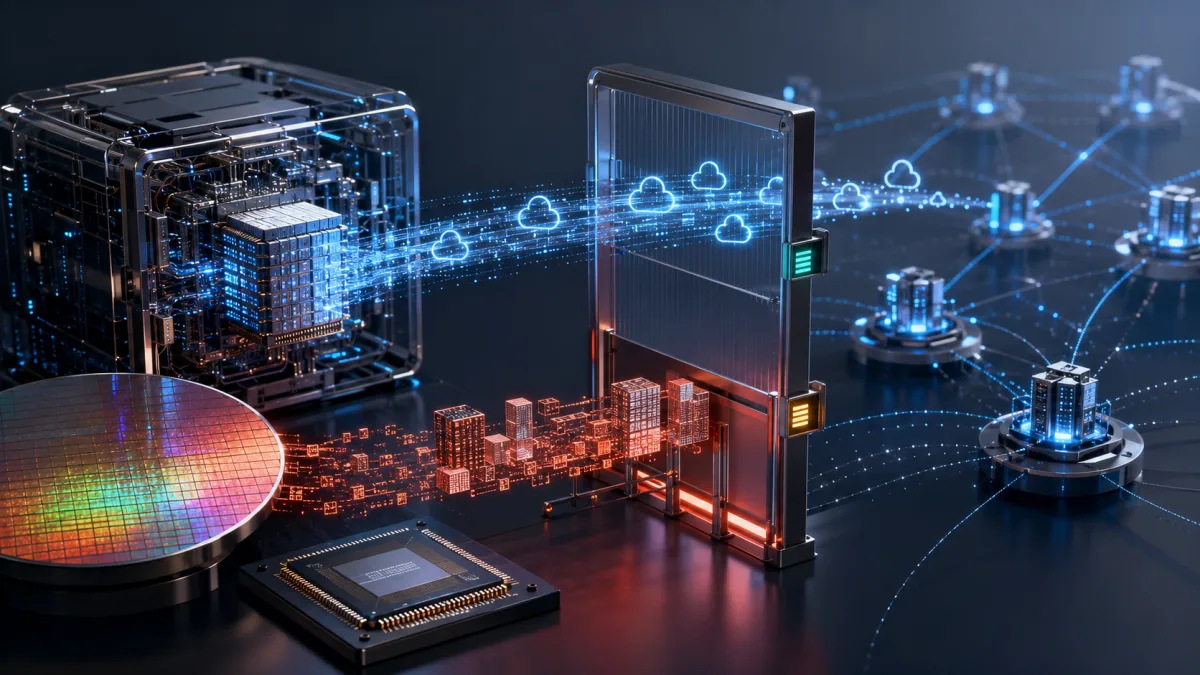
Microsoft and NVIDIA jointly announced RTX Spark—an SoC variant of NVIDIA's Blackwell architecture for ARM-based Windows PCs, delivering 200 TOPS of on-device AI compute to laptops under $1,500 from Surface and Dell this fall. This is the hardware layer that makes Windows Agent Framework viable without a cloud connection.
What This Means for Enterprise IT in 2026
The cumulative effect is a fundamental restructuring of the enterprise software stack. Windows is no longer a platform for running applications—it is a platform for running agents that run applications on the user's behalf. IT departments should expect changes in software license consumption, security policy enforcement, and productivity measurement. For developers, the skills that matter most are now agent design, prompt engineering at scale, and multi-agent orchestration. Microsoft has bet its next decade on this transition—and based on today's announcements, the bet looks well-placed.