
When AI Defends at the Speed AI Attacks
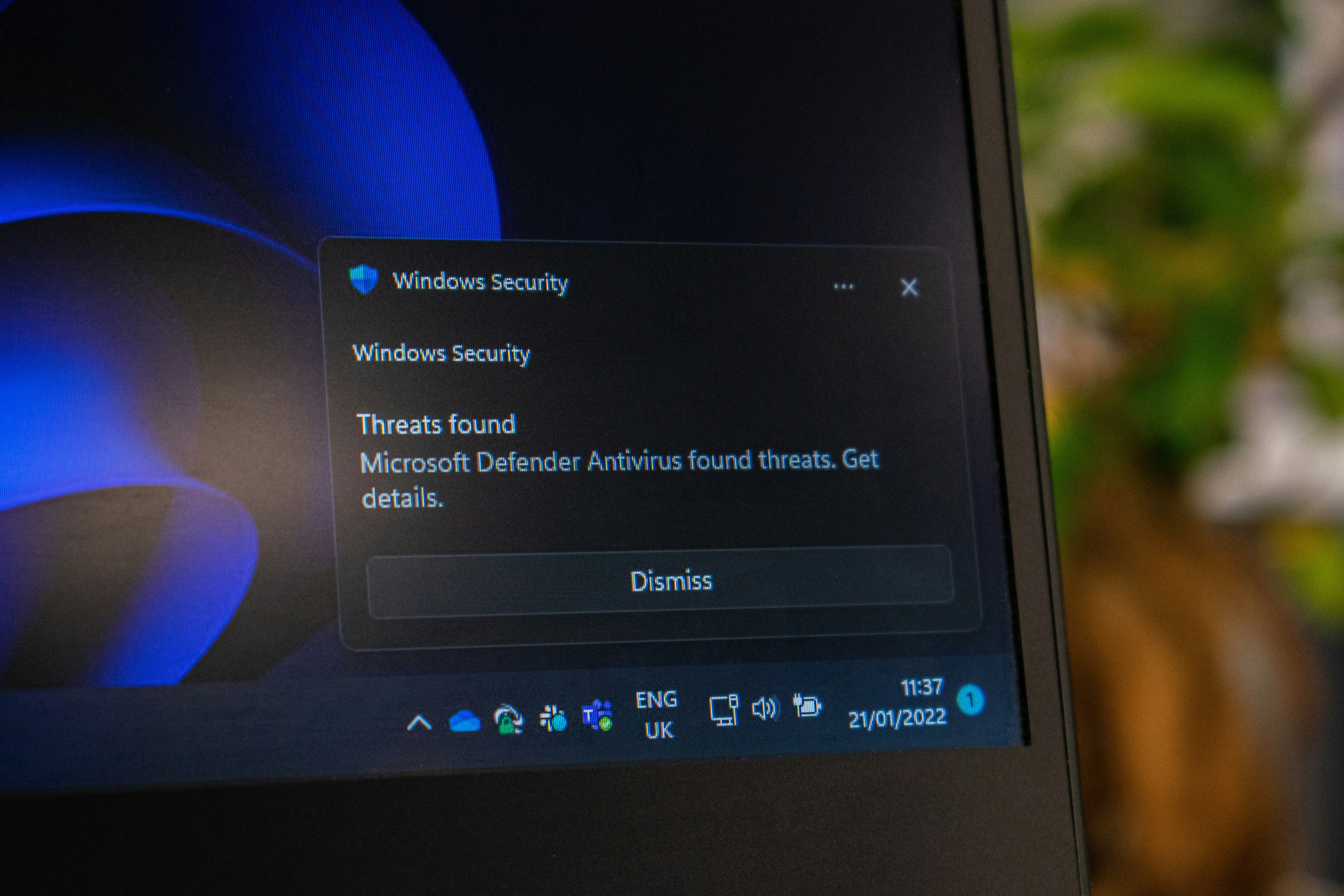
The asymmetry has been the defining problem of enterprise cybersecurity in 2026: AI-powered attacks can identify and exploit vulnerabilities in hours, while human security analysts take days or weeks to investigate and respond. Microsoft's answer, unveiled in a May 12 Security Blog post, is a multi-model agentic security system that operates at machine speed — triaging alerts, correlating threat intelligence, escalating genuine incidents, and filtering false positives continuously, without human intervention at the detection layer. The results from Microsoft's internal testing have turned heads across the security industry: 96% recall on 28 Microsoft Security Response Center cases spanning five years of Windows kernel vulnerabilities, and 100% recall on a separate benchmark covering seven years of TCP/IP stack vulnerabilities.
How the Multi-Model Architecture Works
Unlike single-model security tools that apply one AI system to all threat detection tasks, Microsoft's approach chains specialized models in an agentic pipeline. A triage model performs rapid initial classification of incoming alerts. A correlation model cross-references flagged signals against threat intelligence databases, historical incident data, and behavioral baselines. A reasoning model applies contextual analysis to determine whether correlated signals constitute a genuine threat pattern. A remediation model generates prioritized response recommendations and, for certain threat categories, executes automated containment actions. Each model is optimized for its specific role, and the pipeline is designed so that no single model failure cascades into a system-wide miss — a critical design requirement given that false negatives (missed real threats) are far more costly than false positives in high-stakes environments.

The Benchmark Numbers in Context
A 96% recall rate on vulnerability detection means Microsoft's system correctly identified 96 out of every 100 genuine security incidents in the test set — a figure that compares favorably to human SOC analyst performance, which typically ranges between 65% and 85% recall depending on analyst experience and alert volume. The 100% recall on TCP/IP vulnerability cases is particularly notable because network-layer vulnerabilities are notoriously difficult to detect without deep packet inspection and protocol expertise. For enterprise security teams drowning in alert fatigue — the average large enterprise SOC receives over 11,000 alerts per day — a system that can accurately triage at that scale without analyst burnout is not a nice-to-have; it's an operational necessity.
Available Now: Included in Existing Defender Licensing
The system is now generally available to Microsoft Defender for Endpoint and Microsoft Sentinel customers at no additional cost above existing enterprise licensing. For US enterprises already running Microsoft security stacks — which account for roughly 60% of the Fortune 500 — this is a significant capability upgrade with zero incremental procurement. Organizations not already on Microsoft security platforms will need to evaluate the total licensing cost against the operational value, but given the current threat environment, the ROI calculation is straightforward. Microsoft Security General Manager Vasu Jakkal described the launch as "the most significant advancement in automated threat detection since the introduction of SIEM platforms a decade ago."
Limitations and What Human Analysts Still Do
Microsoft has been careful to position the system as an augmentation of human analysts rather than a replacement. The 4% of cases the system missed in benchmark testing — and the cases where automated remediation is not appropriate — still require experienced human judgment. The system does not make final decisions on incident response actions that could affect production systems; those decisions require human authorization. Additionally, the system's performance is optimized for Windows-centric environments and Microsoft cloud infrastructure; organizations running complex multi-vendor, multi-cloud environments with significant non-Microsoft footprint will see variable performance. Microsoft's roadmap includes expanding coverage to Linux, macOS, and hybrid cloud environments through 2027.

The Broader AI Security Arms Race
Microsoft's system enters a rapidly crowding field. CrowdStrike's Charlotte AI, Palo Alto Networks' Cortex XSIAM, and Google's Chronicle Security Operations platform are all pursuing agentic AI architectures for threat detection and response. The competition is accelerating capability development faster than any single-vendor approach would. For enterprise security leaders, the practical implication is that AI-native security operations are transitioning from experimental to expected — organizations that have not begun evaluating agentic security tools are now operationally behind their peers. The question for CISOs is not whether to adopt AI-powered security automation, but which platform to standardize on and how fast to integrate it into existing SOC workflows.
What Microsoft's Security Dominance Means for Enterprise Buyers
Microsoft's security business — now generating over $25 billion in annual revenue — has become one of the company's fastest-growing segments. The agentic security system strengthens Microsoft's bundling advantage: enterprises that consolidate on Microsoft 365, Azure, and Defender get a seamlessly integrated security posture that is now demonstrably better than many point solutions. For security procurement teams evaluating vendor consolidation, Microsoft's Q2 2026 argument has never been stronger. For standalone security vendors, the competitive pressure from a $25B-revenue security division giving away AI security features in existing licenses is genuinely existential.