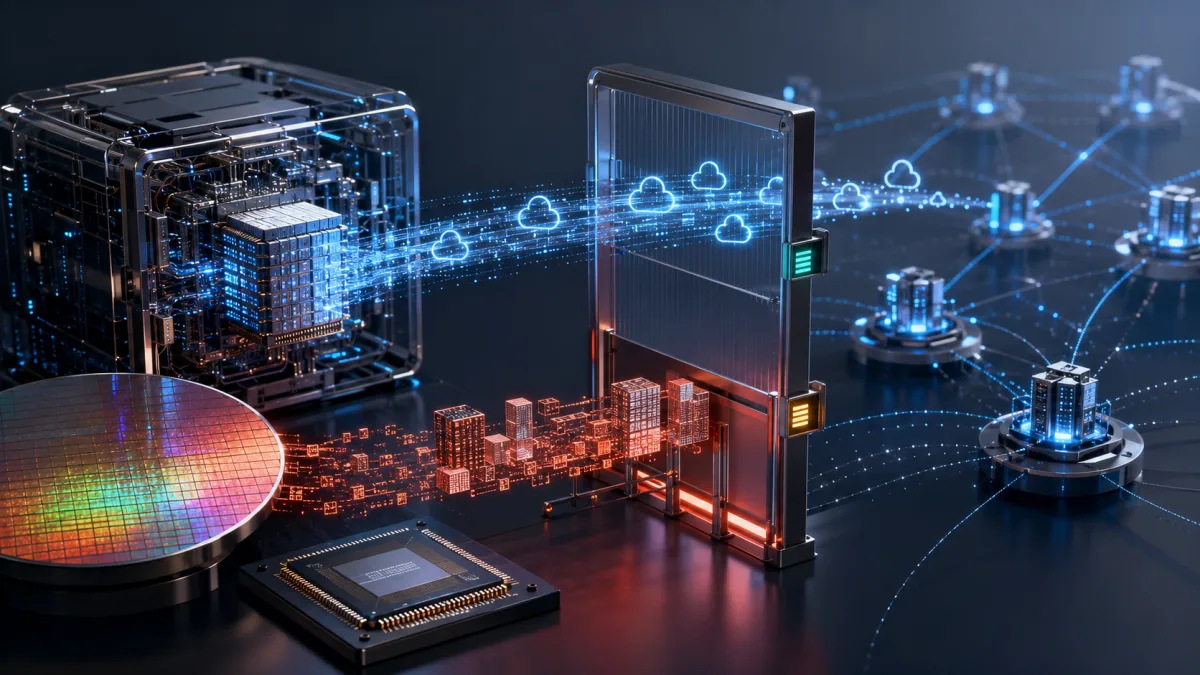
Meta has signed its first artificial intelligence data center deal in India — and it chose Reliance Jio's new facility in Jamnagar, Gujarat, as the host. Announced June 10, 2026, the deal marks a significant inflection point: the first time a top-three global tech company has committed AI compute infrastructure on Indian soil at meaningful scale. Here is what it means for India's AI ambitions, for Meta's global AI strategy, and for the renewable energy economics that will define where AI compute gets built in the next decade.

The Jamnagar Deal: What Was Actually Announced
According to TechCrunch's June 10 report, Meta is leasing capacity at Reliance's Jamnagar data center facility — and the terms are notable. Meta is "committing to covering the entire cost of energy and water required to support its operations there." That is not a standard lease arrangement — it is a full cost-of-operations commitment, signaling Meta treats this as a long-term strategic anchor facility rather than a short-term capacity lease. Reliance's Jamnagar facility has more than 120 megawatts of capacity expected online in H2 2026. It runs on renewable energy and uses desalinated seawater for cooling — dramatically reducing environmental footprint versus standard air-cooled, grid-powered data centers in the US or Europe. The renewable energy economics are significant: US data centers for AI training typically pay $0.07–$0.12 per kWh for grid power. Reliance's solar-powered Jamnagar facility targets meaningfully lower costs — a significant saving at the gigawatt-scale AI compute budgets Meta is now deploying.
Why Meta Chose India — And Why Now
Meta's AI infrastructure spending is on a trajectory that would strain even its balance sheet if conducted solely in the US and Europe. CEO Mark Zuckerberg has committed to spending $60–65 billion on AI infrastructure in 2026 — the largest single-year AI capex budget in corporate history. At that scale, geographic diversification of compute is both a cost strategy and a risk management strategy. India offers a different risk profile: pro-technology government policy, rapidly scaling renewable energy capacity, and Reliance as a partner that controls both land and energy supply end-to-end. For Meta, Jamnagar is not just cheap compute — it is compute that Reliance controls entirely, insulating Meta from supply chain complexity.
For India, the deal validates Mukesh Ambani's $110 billion AI infrastructure investment thesis announced at the India AI Impact Summit in February 2026. Meta's commitment is the first major proof point that global tech companies will anchor compute in India rather than treating it purely as a consumer market. As we covered in our tracking of Sarvam AI's unicorn round and India's AI investment acceleration, the Reliance-Meta deal is one more data point that India is transitioning from AI consumer to AI infrastructure host. For broader context on the global AI infrastructure race, see our enterprise AI competitive landscape analysis.
The Renewable Energy Angle That Coverage Is Missing
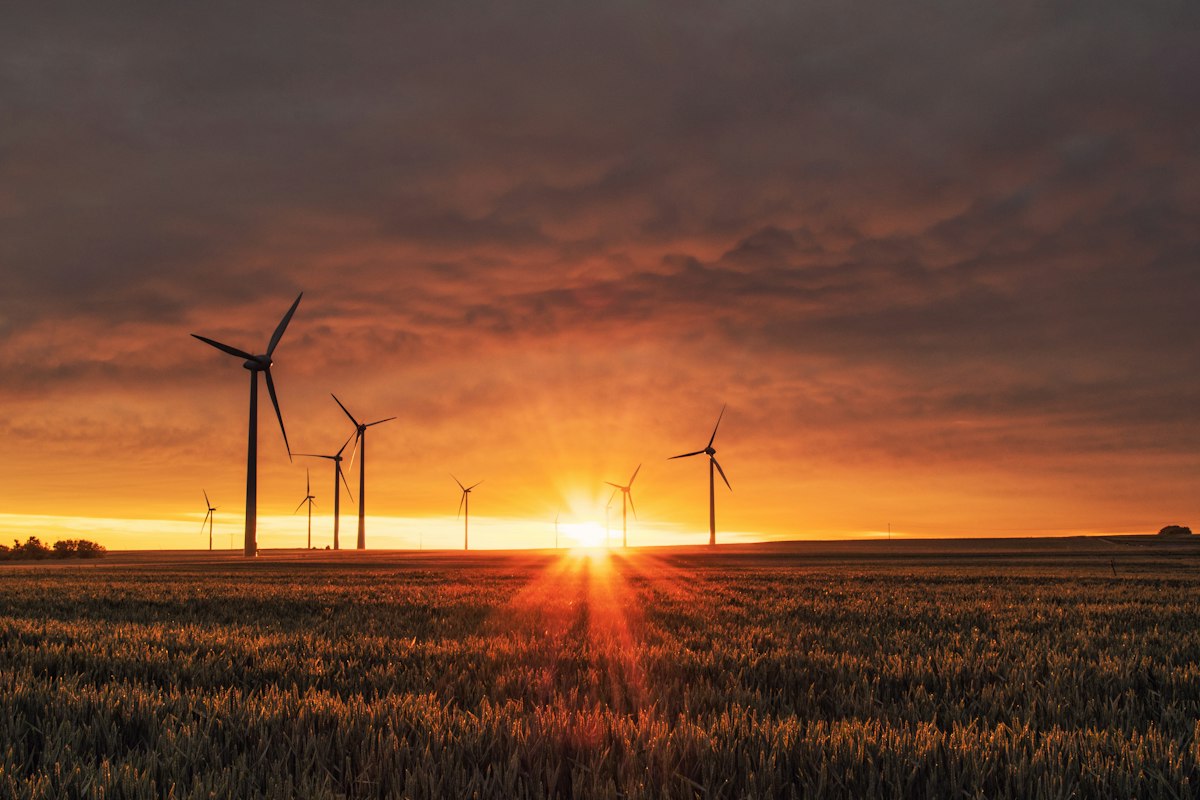
Almost every report on the Reliance-Meta deal focuses on the technology and business angle. The environmental angle is underreported and more important. AI training runs are extraordinarily power-intensive. Training a frontier model like GPT-5 or Gemini consumes roughly the same electricity as a small town uses in a month. As AI compute demand scales toward the exaFLOP range in 2026–2028, data center power demand will become one of the largest new electricity loads the global grid has ever seen. Reliance's Jamnagar facility using desalinated seawater for cooling instead of freshwater is meaningful beyond carbon: freshwater scarcity is a growing constraint on data center expansion globally. India's solar capacity hit 25 GW of new installations in 2025 (BloombergNEF) — second only to China. The Jamnagar model — solar power, seawater cooling — is the template for sustainable AI infrastructure at scale.
What This Means for India's Tech Ecosystem
Meta's presence in India's AI infrastructure market signals to Google, Amazon, and Microsoft that India is a viable anchor for AI compute. Expect competitive announcements from hyperscalers in the next 12 months. For Indian startups building AI products, domestic AI compute availability could eventually reduce the cost and latency of running models — currently a significant cost because Indian AI companies route inference through US-based cloud regions. For Indian engineers in operations, energy management, and infrastructure: the Reliance-Meta deal represents a new category of high-value jobs in India that did not exist two years ago.
What This Means for You
For Indian professionals in engineering and energy management: AI infrastructure operations is a new high-value job category. For policymakers: Meta's choice validates pro-technology policy as a competitive advantage for attracting AI investment. For investors: AI infrastructure (data centers, renewable energy for compute) is now a proven investable category with global anchors. For global AI watchers: the Jamnagar model of renewable-powered, seawater-cooled AI compute at gigawatt scale is the template the rest of the world should be studying.
Frequently Asked Questions (FAQs)
Q: What is the Meta Reliance Jio India data center deal?
A: Meta has signed a deal to lease capacity at Reliance's new AI data center in Jamnagar, Gujarat — Meta's first AI compute facility in India. The facility runs on renewable energy and uses desalinated seawater for cooling, with Meta committing to cover all energy and water costs.
Q: Why did Meta choose India and Reliance Jio for its first India data center?
A: Meta chose India for cost optimization through lower renewable energy costs, geographic diversification of AI compute, and partnership with Reliance which controls both land and energy supply. Jamnagar's 120+ MW capacity and renewable infrastructure made it strategically attractive.
Q: What does the Meta-Reliance deal mean for India's AI ambitions?
A: It validates Reliance's $110B AI infrastructure investment thesis and signals global tech companies will host meaningful AI compute in India. It is expected to trigger competitive investments from Google, Amazon, and Microsoft in Indian data center capacity.
Q: Will the Meta India data center create jobs for Indians?
A: Yes. AI infrastructure operations, engineering, energy management, and security roles will be required. Meta's long-term infrastructure presence is expected to grow its local engineering and research workforce in India over time.
The Reliance-Meta deal in Jamnagar is not just a real estate transaction. It is the moment global AI infrastructure stopped being purely a US and Europe story — and India became a foundational part of where the world's AI is actually computed.