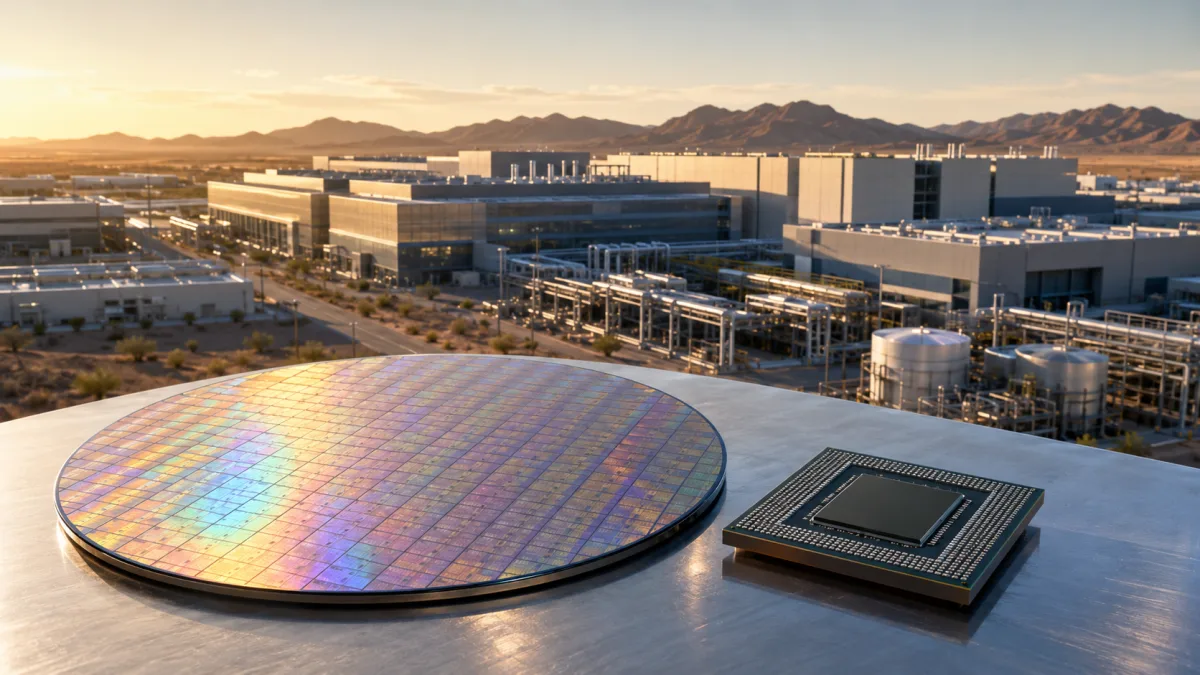
Make in India Chips: Four Semiconductor Plants Go Live in 2026
India semiconductor moment is here — Tata, Micron, Kaynes, and CG Power begin commercial chip production in 2026 under the Rs 1.6 lakh crore Semicon India Programme.
By TechPopDaily Editorial Team
Updated May 18, 2026
India Silicon Dream Is No Longer a Dream
For decades, India has been the world's IT services powerhouse — writing software that runs global corporations while importing virtually every chip that powers its own devices. That era is ending. In 2026, four semiconductor manufacturing facilities across India are beginning commercial production, marking what MeitY is calling India's most significant industrial milestone since liberalisation in 1991.
The four companies — Tata Electronics, Micron Technology, Kaynes Semicon, and CG Power — represent foreign investment and homegrown ambition coming together under the Semicon India Programme. With ISM 2.0 announced in Union Budget 2026-27, total investment committed now exceeds Rs 1.6 lakh crore (approximately US$17.31 billion).
Tata in Dholera: India First Fab Becomes Reality
The most consequential facility is Tata Electronics semiconductor fabrication plant in Dholera, Gujarat — India's first true chip fab. On April 9, 2026, the central government notified a Special Economic Zone for Tata Semiconductor at the Dholera Special Investment Region, clearing the final regulatory hurdle. Tata's Dholera fab will manufacture chips using 28nm process technology — a mature and commercially critical node used in automotive chips, industrial controllers, IoT devices, and display drivers. India does not need to win the bleeding-edge fab race to benefit enormously from domestic production. The global shortage of mature-node chips that disrupted automobile manufacturing from 2021 to 2024 demonstrated exactly how strategically vital these chips are. The facility is expected to create approximately 20,000 direct and indirect jobs in Gujarat.
Micron Sanand: A Global Giant Bets on India
Micron Technology — one of America's largest semiconductor companies — is expected to assemble and test tens of millions of chips at its Sanand facility in 2026, scaling to hundreds of millions in 2027. Unlike Tata's fab, Micron's India facility focuses on OSAT operations — Outsourced Semiconductor Assembly and Testing — packaging and validating chips manufactured elsewhere. India breaking into OSAT with Micron's backing is significant: the US chip giant is essentially certifying India as a reliable, high-quality semiconductor manufacturing destination before the global market. For Indian consumers, the near-term impact will be in memory products — DRAM and NAND flash memory components in smartphones and data centre servers. Made in India memory stickers on global devices could become commonplace within 24 months.
Kaynes Semicon: The Domestic Champion
Kaynes Semicon's OSAT facility in Sanand, inaugurated on March 31, 2026, represents India's domestic semiconductor industry coming of age. With an investment of Rs 3,300 crore and a production capacity of around 60 lakh chips per day, Kaynes Semicon is producing at commercial scale already — a remarkable achievement for a company that barely existed in the semiconductor space five years ago. The Kaynes story is particularly resonant: the company began as a contract electronics manufacturer and pivoted aggressively into semiconductor assembly when the Semicon India Programme created the financial incentive to do so.
What This Means for India Digital Economy and Atmanibhar Bharat
The macroeconomic significance extends far beyond the factories. NITI Aayog's AI roadmap projects that AI-driven manufacturing, enabled in part by domestically produced chips, could add nearly 1.7 trillion dollars to India's GDP by 2035. The semiconductor sector directly enables every other digital priority — AI, 5G, electric vehicles, and smart manufacturing under Atmanirbhar Bharat. For India's 140 crore citizens, electronics prices will be less vulnerable to global supply chain disruptions, more high-skill manufacturing jobs will exist, and India's global economic identity will gradually shift from services exporter to integrated technology power. The silicon dream is real — and it is coming from Dholera, Sanand, and the ambitions of a nation that has waited long enough.
Bill Gates wants some work kept permanently or temporarily in human hands, even when AI can perform it. Here is how his “Human Reserved” proposal and AI tax would work—and why both would be difficult to implement.
Paytm Payments Services has applied to the RBI for a prepaid payment instrument licence. Approval would restore a key consumer product, but under a structure separated from the shuttered payments bank.
TSMC is increasing its planned US investment to $265 billion as AI demand accelerates. The Arizona expansion strengthens domestic manufacturing but cannot eliminate global supply-chain dependence overnight.