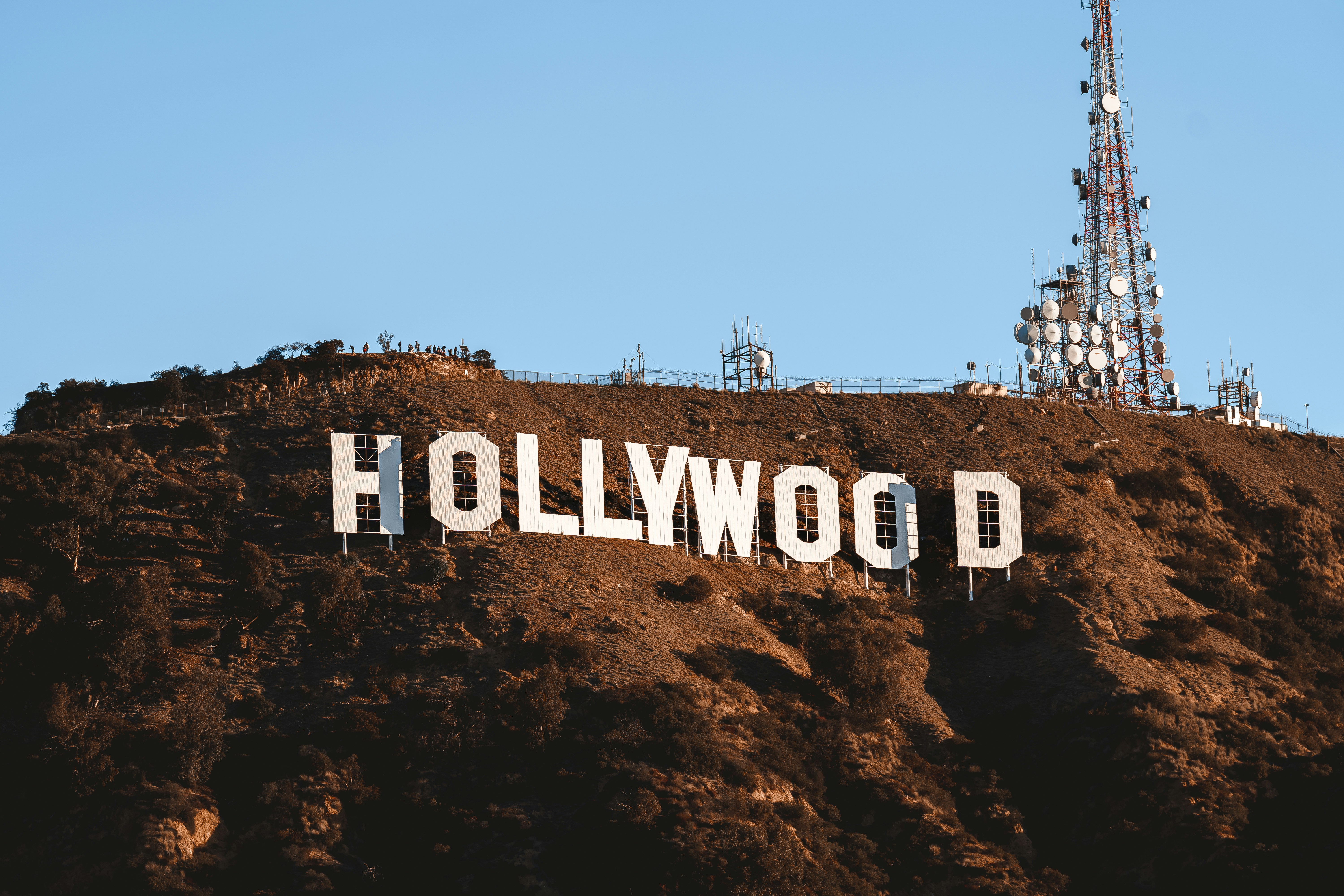
Google DeepMind announced in June 2026 a $75 million strategic partnership with A24 — the indie studio behind Everything Everywhere All At Once, Midsommar, and Hereditary — to develop AI tools for filmmaking. It is the largest single investment by a foundation model lab into a creative production company. The deal covers AI-powered scriptwriting assistance, VFX pre-visualization, sound design generation, and casting analysis tools built on DeepMind's Gemini and Veo video generation platforms. Hollywood has resisted AI longer and more fiercely than any other creative sector — the DeepMind-A24 deal signals that resistance is softening, and the implications stretch from Los Angeles to Mumbai.
What the DeepMind-A24 Deal Actually Covers
The $75 million is structured as a combination of direct investment in A24 and a multi-year contract for AI tool development. Under the agreement, DeepMind's teams will build a production tool suite tailored to A24's specific creative workflow — not generic AI generators, but purpose-built systems trained on A24's archive of footage, scripts, and production documentation with appropriate rights clearances. The tools fall into four categories: script analysis and development assistance (AI that reads a screenplay and generates scene notes, flags pacing issues, or suggests dialogue variations); VFX pre-visualization (using DeepMind's Veo video generation to create rough visual previews of complex scenes before expensive production begins); sound design generation (AI-composed ambient soundscapes and music motifs that A24's composers use as starting points); and casting analysis (tools that analyze historical performance data and script tone to suggest non-obvious casting choices). Notably absent from the announced scope: AI-generated lead actors, AI-written final scripts, or any replacement of A24's directors. The framing from both parties is explicitly "AI as tool, human as author" — a positioning that deliberately sidesteps the SAG-AFTRA and WGA union tripwires that derailed earlier Hollywood AI experiments. As we analyzed in our coverage of the AI market competition between ChatGPT, Gemini, and Claude, Google DeepMind's cross-sector strategy is to embed Gemini's capabilities into specific workflow tools rather than selling a generic AI assistant. The A24 deal is the creative economy version of that strategy.
Why A24 Makes Unexpected Sense as DeepMind's Hollywood Partner
A24 is not the obvious choice. The studio built its reputation on auteur-driven, visually distinctive films with relatively modest budgets ($5–40 million) and strong artistic control — exactly the kind of studio expected to resist AI on creative-integrity grounds. The logic is precisely inverted: A24's constraint is budget, not creative vision. AI pre-visualization cutting VFX costs by 30% on a $15 million film has much more proportional impact than on a $200 million Marvel film. A24's directors already have strong aesthetic visions — they need AI to help them make those visions efficiently, not AI to tell them what to make. "We're not interested in AI that replaces the filmmaker's eye," said an A24 spokesperson in the announcement. "We're interested in AI that removes the friction between what a filmmaker imagines and what ends up on screen." For DeepMind, A24's indie-prestige brand is also a strategic asset. Being associated with the studio behind Oscar-winning films carries different connotations than partnering with a studio primarily known for franchise blockbusters. The deal positions DeepMind's Veo and Gemini as tools for serious creative work, not just industrial content production.
What AI Can — and Cannot — Do in Filmmaking Right Now
It's worth being precise about 2026 AI filmmaking capability, because both hype and fear exaggerate what's technically possible. AI can now generate photorealistic short video sequences up to 60 seconds largely indistinguishable from real footage (DeepMind's Veo, OpenAI's Sora, Runway Gen-3). AI can write competent first-draft dialogue given detailed scene and character context. AI can generate film scores in the style of specific composers with significant fidelity. AI can analyze existing footage for editing patterns and recommend cut points. AI cannot yet sustain visual consistency across a 90-minute film — character faces, lighting, and set geometry drift in ways immediately visible to trained eyes. AI cannot generate the unexpected creative insight — the "what if the camera does this" moment — that defines memorable filmmaking. AI-generated music lacks the tonal intentionality that experienced film composers apply. The 2026 consensus among working directors who have tested AI tools: "It removes 40% of the work and creates 0% of the art." The DeepMind-A24 deal is built on that understanding. As we covered in our analysis of OpenAI's IPO filing, every major AI lab is racing to find vertical-specific applications generating recurring revenue beyond general-purpose chat. DeepMind's Hollywood bet is Google's answer to that question.
What This Means for Bollywood and India's Creative Economy
India produces more films annually than Hollywood by volume — roughly 1,800–2,000 feature films per year across Bollywood, Tollywood, Tamil cinema, and regional industries. The average Bollywood mid-budget film ($3–8 million range) faces the same production cost pressures as A24's films, with even tighter VFX budgets. If DeepMind's A24 tools prove effective, the logical extension is a Bollywood licensing deal — either directly through DeepMind enterprise partnerships or through Indian post-production companies integrating the underlying Veo technology. Mumbai's Reliance Entertainment, Yash Raj Films, and Dharma Productions all have the scale and existing tech investment appetite to evaluate AI production tools seriously. For independent content creators globally — the YouTube filmmaker, the Instagram short-form video creator — professional-grade AI pre-visualization and sound design at consumer price points is likely within 18–24 months of the A24 tools being production-ready. India's massive YouTube creator economy (over 100 million active creators) could benefit disproportionately from democratized AI production tools that reduce the cost gap between amateur and professional content.
What This Means for You
If you work in film or video production anywhere, AI tools from the DeepMind-A24 collaboration will reach the broader market within 2–3 years. Start learning to work with AI pre-visualization and sound design tools now — the competitive advantage goes to creators who can direct AI tools effectively. If you're an investor in the creative economy, AI pre-visualization tools reducing per-project costs will enable more films on smaller budgets, expanding the market rather than just making existing studios more efficient. If you're a Bollywood industry watcher, expect the first major Indian studio to announce an AI production partnership within 12 months of A24's tools going into production use.
Frequently Asked Questions (FAQs)
Q: What did Google DeepMind and A24 agree to in their AI deal?
A: Google DeepMind invested $75 million in a partnership with A24 to develop AI filmmaking tools including script analysis assistance, VFX pre-visualization using Veo, AI sound design, and casting analysis — all built specifically for A24's creative workflow under a "AI as tool, human as author" principle.
Q: Will AI replace actors and directors in Hollywood?
A: Not in the foreseeable future. The DeepMind-A24 deal explicitly excludes AI-generated lead actor performances and AI-authored final scripts to avoid conflict with SAG-AFTRA and WGA union agreements. Current AI assists pre-production and VFX work but cannot replicate human creative direction at feature film scale.
Q: How will AI filmmaking tools affect independent content creators?
A: Professional-grade AI pre-visualization, sound design, and editing tools are expected at consumer pricing within 18–24 months as the underlying technology (DeepMind's Veo, OpenAI's Sora, Runway) matures. This will reduce production costs for independent filmmakers and YouTube creators, enabling higher-quality output on smaller budgets.
Q: Will Bollywood benefit from Google DeepMind's AI filmmaking tools?
A: Yes, potentially significantly. Indian film studios face the same production cost pressures that make AI tools attractive to A24. Major Bollywood houses including Reliance Entertainment, Yash Raj Films, and Dharma Productions are expected to evaluate these tools as they mature. Regional Indian language studios with tighter per-film budgets may benefit most proportionally from AI-driven VFX cost reductions.
The DeepMind-A24 partnership is the first high-profile collaboration treating AI as a genuine filmmaking partner rather than a threat. Whether it produces great films and great economics will be visible in A24's 2027–2028 release slate. Follow the AI creative economy story at our Enterprise AI 2026 hub.