The $700 Billion Bet: What's Driving It
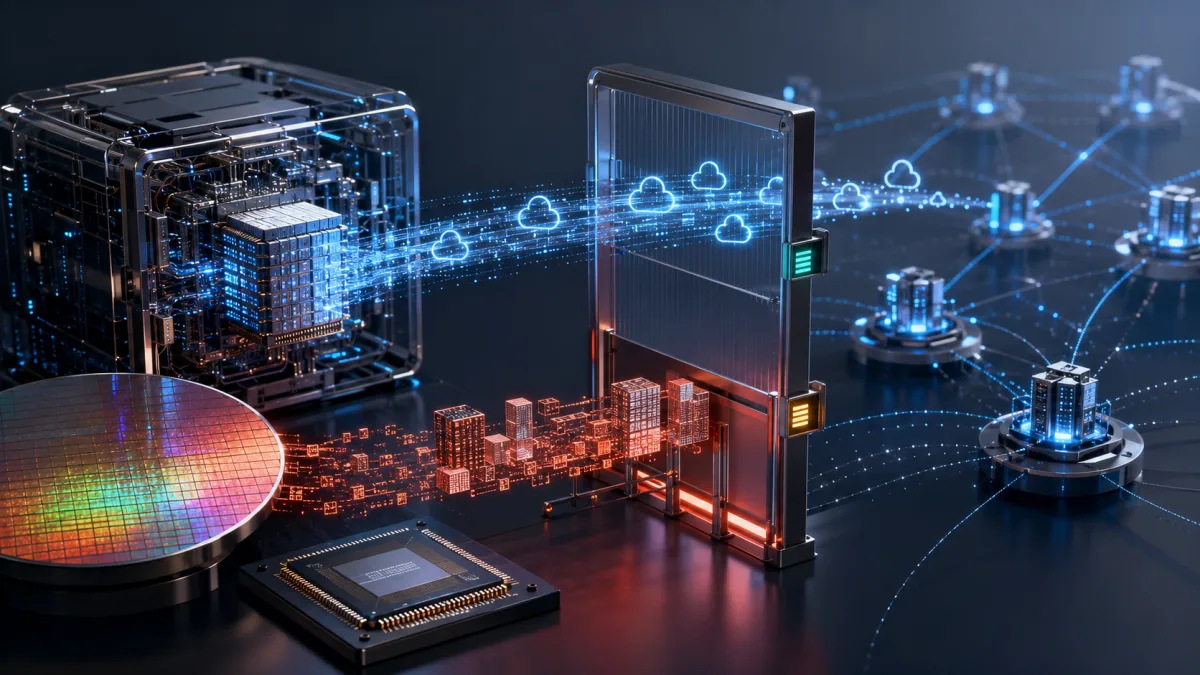
Big Tech is on track to spend a staggering $700 billion on AI infrastructure in 2026 alone, according to analysis from Fortune and multiple Wall Street investment banks. The four hyperscalers — Microsoft, Google, Amazon, and Meta — account for the bulk of this figure, with each company committing to capex levels that dwarf anything the technology industry has spent on a single category of infrastructure in history. Microsoft and Google each project over $100 billion in AI-related capex. Meta has guided to $115–135 billion. Amazon Web Services is expanding its AI-dedicated data center footprint across seventeen US states.
The scale of this investment has no clear precedent outside of wartime industrial mobilization. To put it in perspective: the entire US interstate highway system cost approximately $500 billion in today's dollars and took decades to build. Big Tech will exceed that number on AI compute alone in a single fiscal year.
No One Knows Where It Ends
The striking feature of the 2026 AI infrastructure buildout is that no major technology executive — not Satya Nadella, not Sundar Pichai, not Jensen Huang — has articulated a clear endpoint. When pressed by analysts on earnings calls in April and May 2026, executives across the board responded with variations of the same answer: demand continues to outpace supply, and there is no signal that investment should slow.
This dynamic is partly self-reinforcing. Each dollar spent on AI compute generates new AI capabilities, which generates new enterprise demand, which requires more compute to serve. NVIDIA's Jensen Huang has described this as a "scaling law for business value" — the more AI compute an enterprise deploys, the more valuable use cases it discovers, which creates the justification for yet more compute. Critics, including several prominent economists, warn this reasoning could be circular — an AI-era version of the fiber-optic overbuild that preceded the 2001 dot-com crash.
The Semiconductor Supply Chain Cannot Keep Up
One concrete bottleneck in the AI buildout is semiconductor supply. NVIDIA's Blackwell GPUs — the current workhorse of AI training and inference — remain on allocation through at least Q4 2026. AMD has begun production of its 6th Generation EPYC processors on TSMC's 2nm process, the first high-performance computing chip at this node, but volume is limited. TSMC itself is running near full utilization at its advanced nodes and is rapidly constructing new fabs in Arizona, Japan, and Germany.
The constraint means that not all $700 billion in planned AI capex will actually be spent in 2026 — some portion will slip into 2027 due to hardware unavailability. This has created a secondary market phenomenon where hyperscalers are entering multi-year advance purchase agreements with NVIDIA and AMD at premium pricing to secure supply priority.

Energy: The Hidden Constraint
Electricity is emerging as the most binding constraint on AI infrastructure expansion. A large AI training cluster consumes as much power as a small city — NVIDIA's next-generation Vera Rubin system is projected to require 600 megawatts per rack-scale deployment. The US power grid was not designed for this kind of localized, instantaneous demand increase.
Hyperscalers are responding by acquiring nuclear power options — Microsoft signed a deal to restart the Three Mile Island nuclear plant, and Amazon has signed long-term power purchase agreements with nuclear operators across the country. Data in the southeastern US where Duke Energy serves hyperscaler campuses shows electricity demand growth has jumped to levels not seen since World War II industrial production.
What Enterprises and Investors Should Watch
For US enterprise leaders, the AI infrastructure buildout has two key implications. First, AI compute prices are likely to fall dramatically over the next 24 months as new capacity comes online — organizations that wait may find significantly cheaper AI inference available in 2027 and 2028. Second, companies that are not already integrating AI into their core business processes risk being structurally disadvantaged against competitors who are building AI capabilities at scale today.
For investors, the buildout has created a multi-year tailwind for NVIDIA, AMD, TSMC, and the hyperscalers themselves. It has also created speculative opportunities in power infrastructure, cooling systems, and networking equipment — the "picks and shovels" of the AI gold rush. What remains genuinely uncertain is whether the AI applications being built on top of this infrastructure will generate economic returns commensurate with the investment — the question every investor is trying to answer as 2026 unfolds.