
Hook 1: The Underdog That Became the Enterprise Standard
Eighteen months ago, OpenAI's ChatGPT was the undisputed default for enterprise AI adoption. Its brand recognition was unmatched, its ecosystem was growing at speed, and "ChatGPT" had become a synonym for AI assistants in the same way "Google" became a verb for search. Anthropic's Claude was seen by many as the thoughtful alternative — technically impressive, but commercially behind.
The 2026 Enterprise AI Adoption Survey, covering 2,400 decision-makers across Fortune 500 companies, mid-market businesses, and fast-growing tech firms, tells a dramatically different story. Claude now leads ChatGPT in enterprise preference by 70% to 30% — a reversal that has sent shockwaves through the AI industry and forced a major reassessment of what enterprise buyers actually want from an AI platform.
Hook 2: Safety Isn't a Feature — It's a Business Requirement
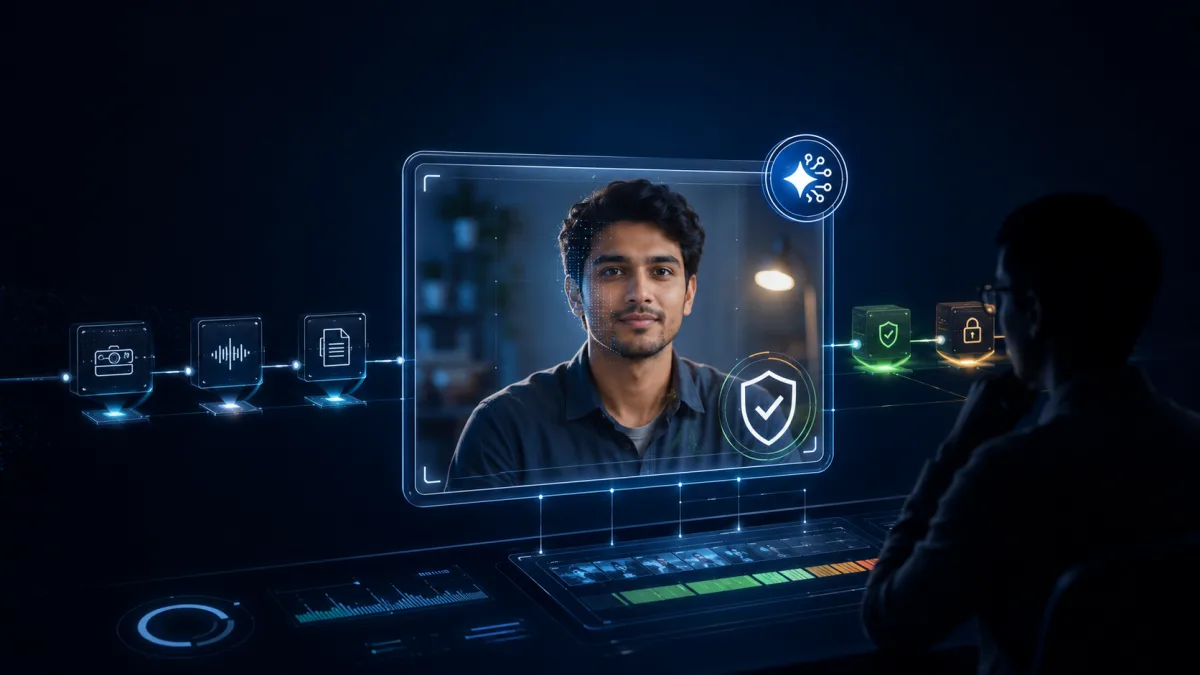
Enterprise procurement teams in 2026 aren't asking "Can this AI help us?" That question was settled long ago. They're asking "Can we trust this AI with our customer data, our legal documents, our financial models, and our brand reputation?" That question has a different answer depending on which company built the model — and increasingly, enterprise buyers are concluding that Anthropic built the one they can trust.
What's Actually Driving the Shift
The survey data points to five specific factors that are driving enterprise preference toward Claude. None of them are about raw benchmark performance — which remains competitive between both companies. They're about the properties that make AI deployable at scale inside real organisations.
Reliability and consistency tops the list, cited by 68% of respondents as their primary reason for preferring Claude. Enterprise users need AI that behaves predictably across thousands of daily interactions. Claude's Constitutional AI training approach — which bakes in values and reasoning patterns at the model level — produces more consistent outputs than systems that rely more heavily on post-training fine-tuning and RLHF alone.
Data handling and privacy architecture is the second major driver, cited by 61% of respondents. Anthropic's enterprise tier comes with explicit contractual commitments about data not being used for model training, zero data retention by default, and compliance certifications that procurement and legal teams can actually point to. OpenAI has made significant improvements here, but Anthropic's design-first approach to privacy resonates more strongly with enterprise buyers.
Reasoning quality on complex tasks ranks third. While both models perform comparably on simple tasks, enterprises running complex multi-step analysis — legal review, financial modelling, code architecture, strategic planning — report that Claude's extended thinking capabilities and more careful reasoning processes produce meaningfully better results on the tasks that matter most to them.
Fewer harmful outputs and hallucinations in production is fourth. The cost of an AI hallucination in a consumer chatbot is frustration. The cost in an enterprise legal brief or a customer-facing support response is potentially enormous — reputational, legal, and financial. Claude's lower rate of confident-but-wrong outputs in production deployments is a significant commercial differentiator.
API stability and developer experience rounds out the top five. Enterprises building on top of AI APIs need stability — consistent versioning, predictable behaviour across model updates, and tooling that works reliably at scale. Anthropic's 2025 platform improvements, particularly around tool use and the Model Context Protocol, have significantly narrowed what was previously an OpenAI advantage in developer experience.

Where OpenAI Still Leads
The survey data isn't uniformly negative for OpenAI — it's more nuanced. OpenAI retains significant leads in specific segments and use cases. In creative work — content generation, image creation, video production — OpenAI's multimodal capabilities, particularly with DALL-E and Sora, are still the enterprise default. The majority of marketing and creative teams surveyed still prefer OpenAI tools for visual and multimedia work.
In developer tooling, OpenAI's Codex and GPT-4 family maintain strong preference among engineering teams, particularly for code completion and generation tasks. The GitHub Copilot integration, which is powered by OpenAI models, has massive enterprise penetration and isn't going anywhere soon.
OpenAI also leads significantly in consumer brand recognition, which matters for businesses that want their customers to feel familiar with the AI brand powering their products. "Powered by ChatGPT" carries consumer trust that "Powered by Claude" is still building — though that gap is closing fast.
What This Means for the AI Industry
The enterprise preference shift signals something important about how the AI market is maturing. In the early adoption phase, capability was everything — whoever had the most impressive demo won the conversation. As AI moves deeper into enterprise operations, the criteria are shifting: safety, reliability, compliance, and trust are becoming competitive differentiators that matter as much as raw performance.
That's a structural advantage for Anthropic, whose entire research philosophy — from Constitutional AI to its Responsible Scaling Policy — is built around the properties enterprises now value most. It's also a significant strategic challenge for OpenAI, which built much of its early enterprise success on capability leadership and consumer momentum, and now needs to convince procurement teams that its safety and reliability commitments are equally robust.
The competition between these two companies will define the enterprise AI landscape for the next several years. In 2026, the early verdict is clear: when it comes to serious business work, enterprises are betting on Claude. Whether OpenAI can reverse that trend — or whether Anthropic can convert enterprise preference into the market share dominance it implies — is the most interesting business story in technology right now.