
The AI Chip Race Just Hit a New Milestone
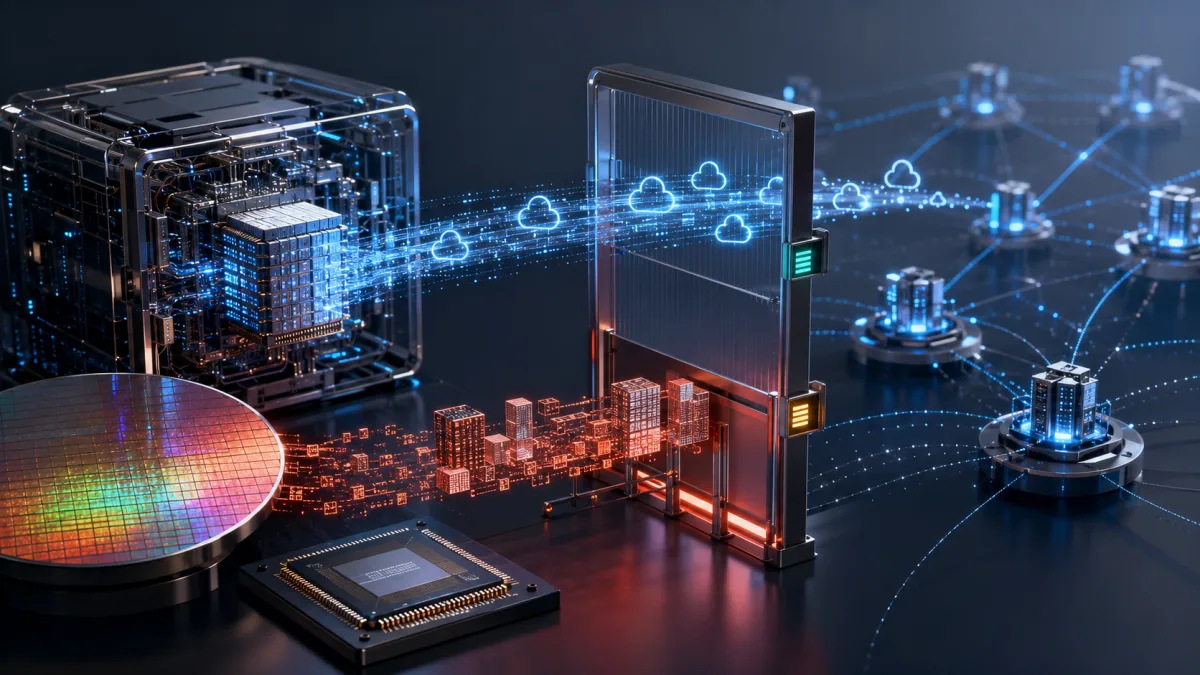
AMD announced on May 20, 2026 that it has begun volume production ramp of its 6th Generation EPYC processor, codenamed Venice — making it the first high-performance computing chip in the world to enter production on TSMC's cutting-edge 2-nanometer process node. With up to 256 Zen 6 cores and a claimed 70% compute performance gain over the current EPYC Turin lineup, Venice represents a generational leap that could reshape the AI infrastructure market.
TSMC's 2nm process (N2) is the most advanced semiconductor manufacturing node ever deployed at commercial scale. Getting the first major HPC product onto this process before Intel or NVIDIA is a significant competitive achievement — and it arrives as AMD holds a record 46% server CPU revenue share as of Q1 2026.
What 256 Cores Actually Means for AI Workloads
Server chips are measured in their ability to handle parallel workloads — the kind of simultaneous processing that AI training, inference, and data analytics require. EPYC Venice's 256-core configuration is unprecedented in a commercially available HPC CPU. Combined with AMD's EFB 2.5D packaging technology, the result is a chip purpose-built for the agentic AI era.
Enterprise customers running large language model inference workloads stand to benefit enormously. A 70% performance per core improvement translates directly to lower cost-per-query at scale. For a hyperscaler running billions of inference calls per day, this is worth hundreds of millions of dollars in annual savings.

TSMC Arizona: The American Manufacturing Angle
AMD confirmed that EPYC Venice production is happening at TSMC's Arizona fabrication facility — a politically significant detail in the era of US semiconductor policy. The CHIPS and Science Act has poured billions of federal dollars into reshoring chip manufacturing, and AMD's choice to use the Arizona fab for its flagship product validates the strategy. An AMD Venice chip manufactured in Arizona carries a geopolitical premium that pure offshore alternatives cannot offer.
The AMD Helios Platform: Rack-Scale AI Infrastructure
Venice doesn't operate in isolation. AMD is preparing the AMD Helios rack-scale platform — pairing Venice CPUs with Instinct MI450X GPUs for multi-gigawatt AI deployments starting in mid-2026. This is AMD's answer to NVIDIA's NVLink-connected HGX systems: an end-to-end rack designed for hyperscale AI training and inference. The Helios platform targets hyperscalers — AWS, Google, Microsoft Azure, Meta, Oracle Cloud — where single customers routinely order thousands of racks at a time.

NVIDIA Still Leads, But the Gap Is Narrowing
NVIDIA's dominance in AI accelerators remains overwhelming — its CUDA software ecosystem, H100 and B200 GPU installed base, and NVLink interconnect technology give it advantages a faster CPU cannot easily displace. But the narrative is shifting. Two years ago, AMD's AI ambitions were dismissed as distant. Today, with 46% server CPU revenue share, the world's first 2nm HPC chip in production, and a credible rack-scale platform, AMD is a genuine #2 in AI infrastructure — and the gap to #1 is shrinking with every process node generation.
What This Means for US Enterprise Buyers in 2026
For American CIOs evaluating AI compute procurement, the Venice launch creates a genuinely competitive market for the first time in years. Use NVIDIA GPUs for AI training and heavy inference; consider AMD Venice CPUs for CPU-intensive inference and data preprocessing; watch the Helios platform as a potential alternative to NVIDIA's complete systems. With US enterprise AI infrastructure spend forecast to exceed $180 billion in 2026, having a credible AMD option is good for the bottom line.
The Verdict: A New Era for AI Silicon
AMD EPYC Venice is the most significant CPU launch in years. As the world's first 2nm HPC chip in volume production, it establishes AMD as the leading-edge process leader in server computing. Combined with AMD's strong market share trajectory and the complete Helios rack-scale platform, 2026 may be the year AMD's AI infrastructure ambitions finally get the respect they deserve from enterprise America.