
Every major AI company has made climate promises. Microsoft pledged to be carbon negative by 2030. Google promised to run entirely on carbon-free energy. Amazon Web Services committed to 100% renewable energy — a deadline that came and went with little accountability. A new analysis just delivered a stark verdict on all of these promises: most are unsupported by evidence, and some are actively misleading.
The Analysis: Only 26% of AI Climate Claims Have Evidence Behind Them
A German nonprofit examined more than 150 climate-related claims from the world's biggest AI companies. Only 26% of those claims cited published academic papers to support them. The analysis — published in a Euronews Next investigation — found no single example where generative AI systems like ChatGPT, Gemini, or Copilot led to a "material, verifiable and substantial level of emissions reductions." Not one. The remaining 74% of claims relied on internal projections, vague commitments, or marketing language with no independent verification pathway.
The UNEA 2026 report (United Nations Environment Assembly) specifically called for standardized frameworks to measure AI's environmental impact — because right now, every company measures differently and none of the measurements are independently audited. This isn't a minor disclosure gap; it's a structural accountability failure at the heart of the AI industry's climate narrative.
The Energy Numbers Are Getting Impossible to Ignore
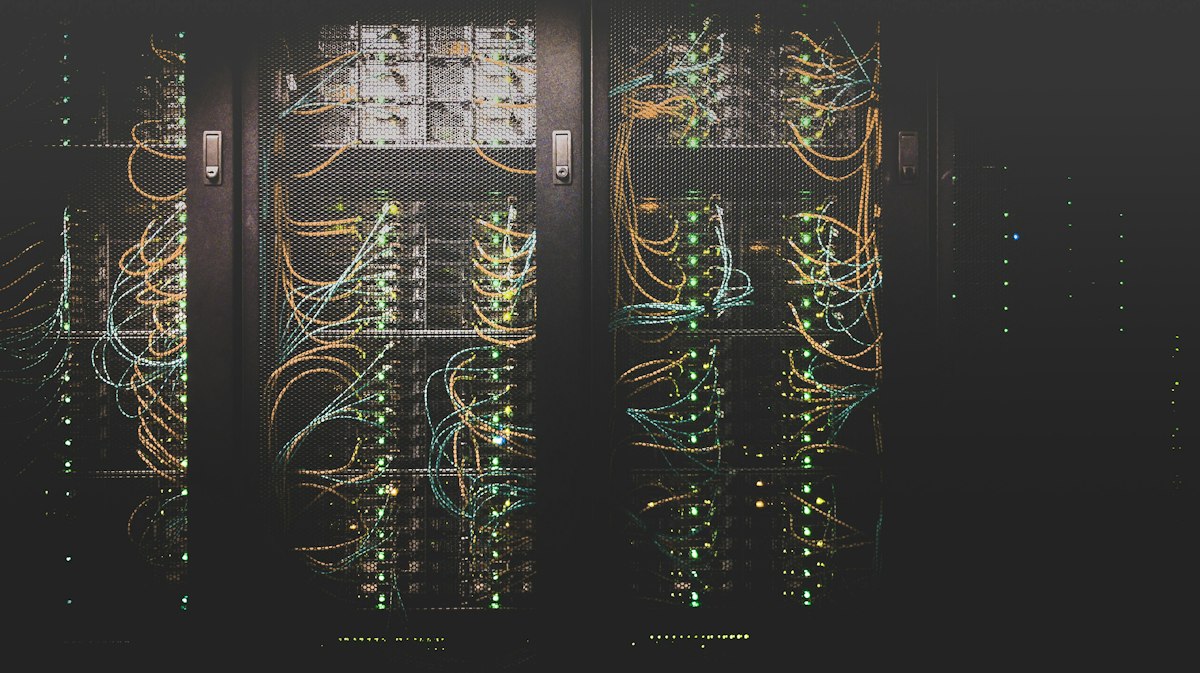
Global data centers consumed approximately 448 terawatt-hours (TWh) of electricity in 2025 — making them, if treated as a country, the world's 11th largest electricity consumer, ahead of Spain and Saudi Arabia. According to the Lamont-Doherty Earth Observatory, AI training and inference energy demands are growing faster than the renewable energy capacity being added to power them. The industry's standard response — buying Renewable Energy Certificates (RECs) — doesn't mean the data center runs on clean energy. It means an equivalent amount of renewable energy was produced somewhere else, at some other time, for some other buyer. Before RECs vs after RECs: the data center's actual energy mix doesn't change at all. Only the accounting changes.
India's Data Center Buildout: A Genuine Green Energy Test Case
This debate is directly relevant to India's massive AI infrastructure push. Reliance Industries committed ₹1.6 lakh crore to build India's largest AI data center cluster in Andhra Pradesh, powered by up to 10 gigawatts of solar energy. Adani Group has committed comparable investment. Together, they represent one of the largest explicitly solar-powered AI infrastructure commitments in the world — not REC-purchased offsets, but actual co-located solar generation in one of India's highest solar-irradiance regions. If Reliance delivers on its solar commitment, it would be the most credible large-scale green AI data center claim anywhere. The contrast with US hyperscalers — building in fossil-fuel-heavy grids then purchasing RECs to claim neutrality — is architecturally significant. As we covered in our analysis of Reliance's AI data center investment in Andhra Pradesh, the key differentiator is physical co-location, not purchased certificates.
What "AI for Climate" Actually Delivers — and Where It Falls Short
It's worth being precise about where AI genuinely helps. AI-assisted drug discovery is accelerating research timelines — legitimate and documented. AI for energy grid optimization (demand forecasting, renewable dispatch) has demonstrated measurable efficiency gains in documented pilot programs — legitimate. AI for materials science (new battery chemistries, carbon capture materials) has produced real research outputs — legitimate. What hasn't been demonstrated: that deploying ChatGPT, Copilot, or Gemini in enterprise workflows reduces an organization's carbon footprint in any measurable way. The productivity-to-energy-offset claim is plausible in theory and essentially unverified in practice. This matters for enterprise buyers: if your sustainability report claims AI tools are part of your emissions reduction strategy, you need verifiable evidence or you face the same greenwashing exposure as the AI companies themselves. As we covered in our piece on EU AI Act compliance and enterprise AI accountability in 2026, sustainability disclosure requirements are now converging with AI governance frameworks across multiple jurisdictions.
What This Means for You
For enterprise AI buyers: when evaluating vendors, add an energy transparency question — ask where inference infrastructure runs, what percentage of that grid is genuinely renewable (not REC-based), and whether carbon claims are independently audited. For Indian startups and policymakers: India's combination of massive solar capacity and ambitious AI data center buildout is a structural advantage — execute with solar-first principles, not purchased offsets. For investors in climate tech: the greenwashing gap creates genuine opportunity — companies that build verifiably green AI infrastructure will have a durable competitive advantage as disclosure regulations tighten. For consumers of AI products: use AI for tasks where it genuinely adds value rather than as a default for every workflow, as each AI query has a real energy cost.
Frequently Asked Questions (FAQs)
Q: How much electricity do AI data centers use globally?
A: Global data centers consumed approximately 448 terawatt-hours (TWh) of electricity in 2025, making them the world's 11th largest electricity consumer if treated as a country. This figure is growing rapidly as AI inference demand scales with user adoption across ChatGPT, Copilot, Gemini, and other services.
Q: What did the German nonprofit find about Big Tech AI climate claims?
A: A German nonprofit analyzed over 150 climate-related claims from major AI companies and found only 26% cited published academic research. The analysis found no documented case where generative AI systems led to a material, verifiable, and substantial reduction in emissions.
Q: What is the difference between renewable energy certificates (RECs) and actual renewable power?
A: RECs represent the right to claim a unit of renewable energy was generated somewhere on the grid — they don't guarantee your facility is powered by clean energy in real time. Actual renewable power means physical co-location with generation capacity or direct 24/7 power purchase agreements with renewable generators. Most Big Tech "100% renewable" claims are REC-based.
Q: Is India's AI data center buildout genuinely green?
A: Reliance's Andhra Pradesh project claims power from up to 10 GW of solar energy and is co-locating with solar generation in a high-irradiance region — making it architecturally more credible than REC-based claims. Independent verification will be needed once operational, but the approach is structurally different from how US hyperscalers handle renewable claims.
Q: Will AI companies face regulation for their carbon footprint in 2026?
A: Yes, increasingly. The EU AI Act includes environmental documentation requirements for large AI models. US SEC climate disclosure rules require material climate risk disclosure for public companies — including AI energy consumption. As OpenAI and Anthropic pursue IPOs, ESG scrutiny of data center energy use will intensify significantly.
The AI industry's climate moment is not a choice between AI and the planet — it's a choice between honest accounting and marketing spin. The 74% of climate claims that can't cite a published study should be the starting point of every serious conversation about AI's environmental future.