
The World's Most Profitable Industry Is Also Its Fastest-Growing Polluter
The artificial intelligence boom is reshaping the global economy in ways that will take decades to fully understand. It is also reshaping the global energy system in ways that are already measurable, and not comfortably so. Google's 2025 environmental report disclosed that the company's greenhouse gas emissions had increased 48% compared to 2019 levels — driven primarily by the energy demands of AI data centres. Microsoft reported a 29% increase in emissions against its 2020 baseline. Meta's emissions grew 27% year-over-year. These are not companies that have abandoned their climate commitments; they are companies that have made sincere net-zero pledges and are now discovering that the AI workloads they are scaling are growing faster than their ability to decarbonise the energy supply powering them. The collision between the AI boom and the climate crisis is the defining sustainability story of 2026 — with consequences that stretch from Silicon Valley to Singapore to Surat.
Why AI Data Centres Are So Energy-Hungry
Training a large language model at the scale of GPT-5 or Gemini Omni requires enormous compute — estimates suggest the training run for a frontier-class model consumes between 500 and 1,000 gigawatt-hours of electricity, roughly equivalent to the annual energy consumption of a small European city. But training is only the beginning. Inference — running the model to answer user queries — is continuous and scales with usage. With 400 million weekly ChatGPT users, tens of millions of Gemini interactions, and enterprise AI deployments expanding across every major industry, the inference load on global data centres is growing exponentially. A single conversational AI response requires roughly ten times the energy of a traditional search query. Multiply that by billions of daily interactions and the arithmetic becomes uncomfortable.

The Nuclear Bet: Meta, Amazon, Google, and Microsoft Go Atomic
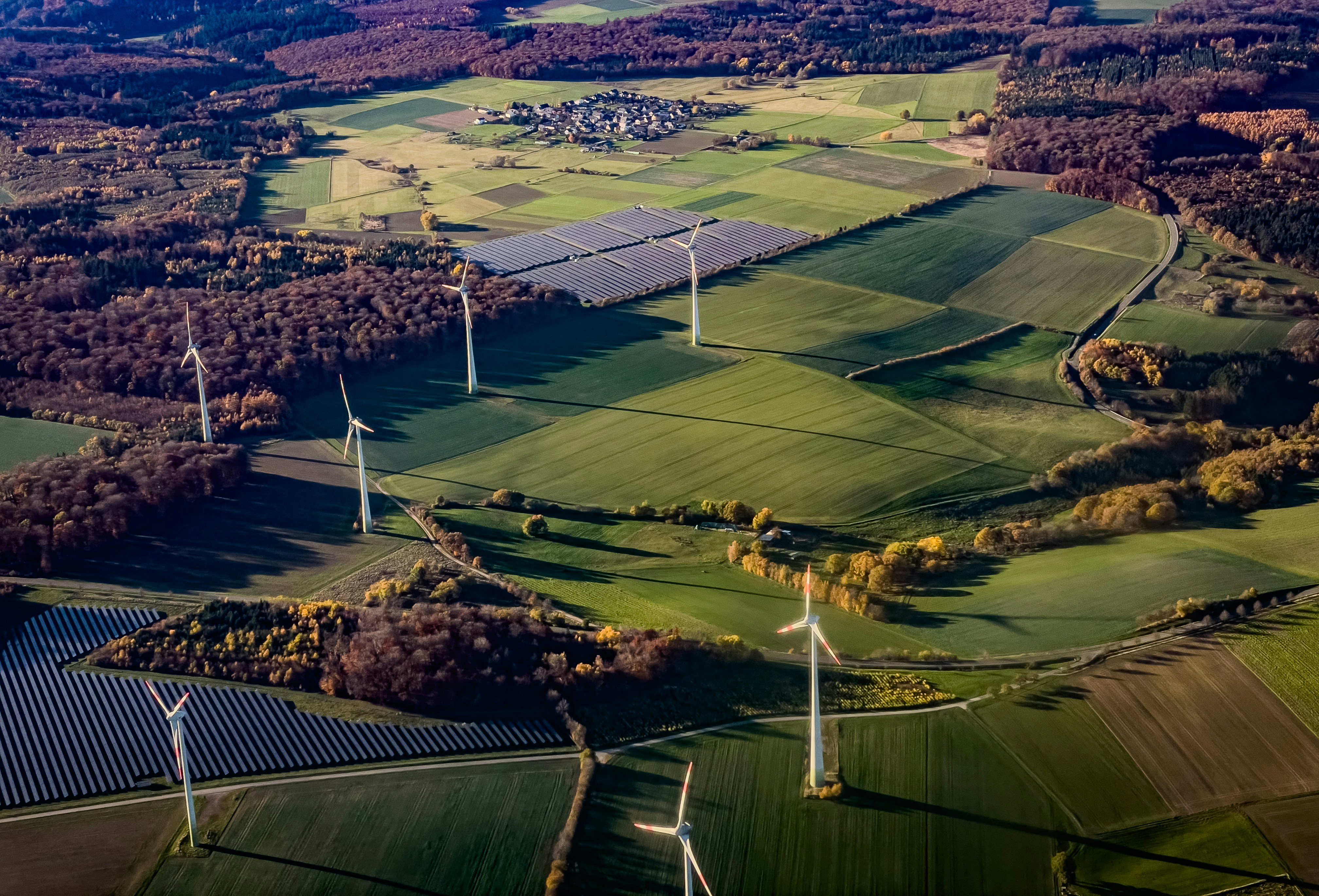
Big Tech's primary response to the energy dilemma is a historic bet on nuclear power. Meta, Alphabet, Amazon, and Microsoft have all signed nuclear energy purchase agreements in the past eighteen months, collectively representing commitments to procure over 10 gigawatts of new nuclear capacity — enough to power roughly 7.5 million average American homes. Microsoft signed a landmark deal to restart a unit at Pennsylvania's Three Mile Island in 2024, now generating power under the name Crane Clean Energy Center. Amazon has invested in small modular reactor (SMR) technology through X-energy. Google has committed to purchasing power from Kairos Power's SMR fleet when it comes online in the early 2030s. The appeal of nuclear is straightforward: it is carbon-free, reliable 24/7, and scalable in ways that solar and wind cannot match for always-on data centre workloads.
Carbon Credits: Billions Spent, Legitimacy Still Debated
While nuclear deals represent long-term solutions, the immediate gap between current emissions and net-zero commitments is being filled with carbon credits — and the scale is staggering. Big Tech companies collectively purchased an estimated $4.2 billion in carbon credits in 2025, a figure expected to exceed $6 billion in 2026 as AI emissions continue rising. The carbon credit market, however, is under significant scrutiny. A 2024 investigation by The Guardian found that the majority of rainforest carbon offsets certified by one major registry were of questionable quality — representing little actual carbon sequestration. The industry is responding with stricter verification standards, and the Science Based Targets initiative has tightened its criteria for what counts as a credible offset, but questions about additionality and permanence remain live debates among sustainability researchers in the US, Europe, and India.
India's Position: Bearing the Costs, Seeking the Benefits
For India and the broader Global South, the AI energy story carries particular weight. India is the world's third-largest emitter of greenhouse gases, and Indian data centre capacity is growing rapidly to serve both domestic AI adoption and international cloud workloads. At the same time, India is among the countries most vulnerable to climate change — extreme heat events, monsoon disruption, and coastal flooding disproportionately affect Indian communities. The irony is sharp: AI systems being used by corporations headquartered in San Francisco and Seattle are generating emissions that contribute to climate pressures felt most acutely in Bihar, Rajasthan, and Odisha. India's National Data Centre Policy is attempting to mandate renewable energy procurement for new data centres, and the government has set an ambitious target of 500 gigawatts of renewable energy capacity by 2030 — but the pace of AI-driven demand growth is testing those targets.

The EU AI Act and Climate Disclosure: Regulation Is Coming
Regulators are beginning to move. The European Union's Corporate Sustainability Reporting Directive now requires large companies operating in Europe to disclose the energy consumption and carbon footprint of their AI systems — a requirement that will, for the first time, force transparent reporting of AI-specific emissions rather than aggregating them into data centre figures. The EU AI Act, beginning enforcement in August 2026, includes provisions requiring high-risk AI system providers to document energy consumption as part of their conformity assessments. In the United States, the SEC's climate disclosure rules, though facing legal challenges, are pushing public companies toward granular emissions reporting. The era of AI companies growing their carbon footprint without public accountability is ending.
Efficiency as the Real Solution: What Comes After Carbon Credits
The most durable solution to AI's carbon problem is not purchasing credits or even building nuclear plants — it is making AI systems dramatically more energy-efficient. Significant progress is already underway. NVIDIA's Blackwell Ultra architecture delivers three times the performance per watt of its predecessor. AI companies are investing in model distillation — creating smaller, faster models that perform nearly as well as larger ones at a fraction of the energy cost. Inference hardware purpose-built for AI workloads is dramatically more efficient than general-purpose GPUs. Anthropic's research into constitutional AI training methods has yielded models that achieve comparable capability with fewer training compute cycles. The trajectory of efficiency improvements gives reasonable grounds for optimism: if AI hardware efficiency continues improving at its current pace, the emissions per unit of AI output may fall fast enough to bend the emissions curve even as AI usage grows. The race between AI's energy appetite and efficiency innovation is one of the most consequential technology contests of the next decade.